

Solidaridad West Africa has launched its latest report, Palm Oil Barometer 2025: Procurement for Prosperity, calling for fairer and more equitable palm oil value chains across West Africa.
The report urges a fundamental shift in global palm oil procurement practices, emphasizing the need for more equitable value distribution to support smallholder farmers who form the backbone of the industry in the region.
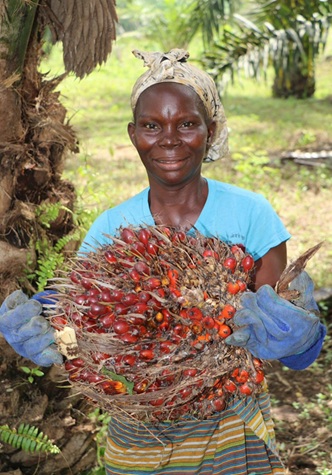
According to Solidaridad, oil palm remains a critical crop for food security and a vital source of income for millions of smallholder farmers in West Africa. The organization argues that with the right support, oil palm cultivation has the potential to lift farming families out of poverty within a single generation.
“Governments and industry, in collaboration with sustainability certification platforms, need to adopt a new business model for engagement, organizational development, and capacity building that supports improved access to inputs and markets for independent smallholder farmers,” said Muthalir Ramasamy Chandran, Chairman of IRGA.AG and Advisor to the Roundtable on Sustainable Palm Oil.
In Ghana, smallholders manage about 81% of the nation’s oil palm area but face challenges such as low yields and limited market access. Similarly, in Nigeria, smallholders contribute 80% of production yet struggle with outdated processing techniques and inadequate infrastructure. In Côte d’Ivoire, smallholders oversee 73% of oil palm cultivation, while in Sierra Leone, small-scale farmers account for around 70% of production, often relying on wild palm groves.
Despite their significant contributions, smallholder farmers across the region continue to face systemic barriers that limit their income and productivity. West Africa consumes more palm oil than it produces, forcing many countries to rely on imports—a gap that the report says could be reduced by strengthening smallholder participation and capacity.
The Palm Oil Barometer 2025 developed by Solidaridad and co-signed by smallholder representatives and industry experts, highlights critical market imbalances, noting that smallholders often receive a disproportionately small share of profits despite their central role in production.
Solidaridad is calling for urgent action to ensure smallholder farmers are better integrated into palm oil value chains, with fairer access to markets, resources, and support systems to improve livelihoods and national food security.
Is sustainable production worth the effort?
The core finding of the 2025 Palm Oil Barometer is that value is inequitably distributed throughout the supply chain, which often leaves smallholders at a loss in their efforts to produce sustainably. Additionally, farmers struggle to invest in practices that support resilience in the face of climate change. Smallholder farmers in Africa, in particular, are reliant on precarious incomes that are subject to volatile prices and extreme weather conditions exacerbated by climate change.
“Oil palm production in our communities faces serious challenges. Most farmers lack access to proper tools, equipment, and infrastructure, which leads to low yields and poor processing capacity. Even with training, our incomes are too low to invest in improvements. This keeps productivity stagnant and prevents the sector from growing,” said Michael Opong, an oil palm farmer in the Eastern region of Ghana.
“We need consistent, targeted support to break through these barriers. With the right help, we can grow stronger and contribute meaningfully to the global palm oil market.”
The consistent underinvestment and lack of equitable value distribution are a threat to the entire sector. Without access to better financing, technical assistance, and sustainable farming incentives, small farmers often resort to short-term survival strategies that can contribute to environmental degradation. Additionally, land tenure insecurity continues to create challenges, limiting smallholders’ ability to invest in long-term sustainability and discouraging compliance with stricter environmental regulations.
Shifting the focus to procurement for prosperity:
The 2025 Palm Oil Barometer advocates for a transition from current sourcing practices to a “Procurement for Prosperity” approach. This means moving beyond sustainability certifications to ensure that palm oil procurement has a positive impact on suppliers, particularly independent smallholders, centered on fairer trading practices and genuine partnership.
The report outlines four core principles for Procurement for Prosperity:
- Policy: Companies integrate procurement practices that recognize independent smallholders in their overall strategy and decision-making processes.
- Pricing: Fair pricing and payment terms must recognize and reward sustainable practices. This includes understanding farmers’ living income gaps and working to close them.
- Partnerships: Partnerships and collaboration across the supply chain need to incorporate farmers’ perspectives and include them in decision-making processes, including the development of pricing mechanisms.
- Programmes: Downstream companies need to support suppliers by investing in organizational strengthening, technical capabilities, and access to finance.
“Simply demanding sustainable production is insufficient. Companies need to commit to an inclusive value chain that recognizes and integrates independent smallholder farmer perspectives and voices, and enables sustainable production by paying fair prices that make a living income possible,” said Marieke Leegwater, Senior Policy Advisor, Solidaridad Europe.
“As new regulations, like the EUDR, come into effect, we need a balanced approach that addresses deforestation by large-scale plantations, while ensuring human rights and smallholder inclusion to create a stable supply chain with reduced risk.”
The Palm Oil Barometer 2025 provides concrete recommendations for value chain actors, multi-stakeholder initiatives, public policymakers, and the financial sector as they work to advance smallholder inclusivity and create a more resilient palm oil industry. Every actor has a role to play in ensuring fair value distribution and supporting the prosperity of independent smallholders who are critical to the sector’s future.
ABOUT SOLIDARIDAD
Solidaridad is an international civil society organization with over 50 years of experience in developing solutions to make communities more resilient and create more sustainable supply chains. Solidaridad works in over 40 countries, on five continents, through seven independently supervised regional offices. In 2022, Solidaridad worked alongside 1.4 million small-scale farmers comprising 3.4 million hectares of land, and over a million workers and miners, along with companies, processors and governments. Learn more at www.solidaridadnetwork.org.