


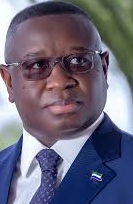
To the average Sierra Leonean, President Bio appears powerful—waving at crowds, cutting ribbons, traveling abroad, and giving speeches. But the truth may be far more complex. The man who once promised “a new direction” is now burdened by the very legacy he helped create. The weight of failed promises, rising public discontent, and alleged human rights abuses are beginning to close in.
“You cannot build peace on top of injustice,” a prominent civil society activist recently said on AYV, and this is the bane of President Bio’s dilemma.
After all the killings—some reminiscent of the politically motivated bloodshed of the 1990s—after the November 26 incident, the Pademba Road prison massacre, the Tombo shootings, and other controversial crackdowns, can all of these make the President sleep soundly in peace?
Who Will Protect Him After Power?
One of the hardest truths for any African strongman is this: power is the only insurance they know. President Bio has no clear successor within his own party who both commands loyalty and inspires national trust. His Chief Minister, David Moinina Sengeh is ambitious but unproven, and Vice President Juldeh Jalloh remains a distant, quiet shadow in the equation. So, the questions become terrifyingly ambiguous:
Who does President Bio trust to hand over power to that will protect his legacy, his properties and his family? Will the next leader guarantee him immunity from prosecution? Will his opponents, should they win in 2028, pardon or pursue him?
President Bio has burnt his bridges on both ends—within the SLPP, many feel betrayed; within the APC, many are bitter over the elections, arrests, and political intimidation. The opposition has long memories. In private rooms, they are already whispering the word accountability.
“He has created more enemies than allies,” a political analyst noted. “That’s the worst insurance policy for any outgoing president.”
Will he be on Exile or at the ICC? The Shadow of International Justice: President Bio’s past as a military ruler and now as a civilian president is stained by bloodshed, disappearances, and repression. Already, calls are mounting for international investigations. Human rights groups continue to raise flags about unlawful killings and political persecution under his watch.
The looming question now is whether the International Criminal Court (ICC) might one day knock on Bio’s door. It’s a possibility that cannot be dismissed. Precedents exist: from Sudan’s Omar al-Bashir to Liberia’s Charles Taylor, African leaders have faced justice after power.
“History may not remember your slogans, but it will remember your sins,” a Sierra Leonean Bishop once preached. For President Bio, that truth is chilling; it could catch up with him.
Should he choose exile, as some speculate, where would he go? Would a post-Bio SLPP still protect him abroad? Or would he live the rest of his life looking over his shoulder—mentally imprisoned, isolated, and paranoid?
He is trapped in His Own Circle: Even within State House, Bio is said to be increasingly mistrustful. Insiders claim he no longer relies on long-time allies. Rumors swirl about constant reshuffling, paranoia, and surveillance—even among his closest aides. Every new appointment seems to serve one purpose: protection. “Power has become his only shield, and his only curse,” said one senior journalist in Freetown.
He cannot trust the judiciary, which has been politicized. He cannot trust the police, now viewed as a political tool. He cannot even trust his party fully—many within SLPP believe Bio’s reign may have cost them their future.
He is surrounded by praise-singers but starved of sincere counsel. This is what mental imprisonment looks like—power without peace, control without trust, and applause without love.
The Guilt of Deception: President Bio came to power promising transformation. But today, many Sierra Leoneans feel betrayed. He promised to end corruption, yet scandals continue. He promised free quality education, yet children study under trees. He promised economic revival, yet the cost of living has never been higher.
“You cannot deceive a people and expect their prayers,” says a common proverb in Krio. The people are watching. They are remembering. They are waiting.
In quiet moments, does he feel remorse for those who died during protests or for his silence over corruption? Is he concerned about the growing gap between himself and the ordinary people?
He may laugh in public, but he carries a burden in private—a burden made heavier by every broken promise and every silenced voice.
Imprisoned with no walls: President Bio is physically not in a cell at any prison establishment, may be not yet. But in many ways, altruistically, he is already confined. He is in paranoia in fear of everything around him, he is uncertain about any uncertainty, of mistrust, and of the truth he desperately tries to avoid.
He cannot roam freely without armed guards. He cannot speak without scripting. He cannot leave power without a thousand questions chasing him. He cannot plan his retirement without planning his protection.
In the final analysis, my President is an imprisoned man in the inside, not by law, but perhaps by conscience and of morality. In William Shakespeare’s epic, “Julius Caesar, one of his leading protagonists, Mark Anthony in his famous tribute to his friend Julius Caesar and bemoaning their friend Brutus and Co., he famously stated: “The evil that men do lives after them, the good is oft interred with their bones; so let it be with Caesar.” And the Reggae music Maestro, Robert Nesto Marley (Bob Marley) in his solo track sound sang: “Emancipate ourselves from mental slavery. None but ourselves can free our own minds…” President Bio’s imprisonment is metaphoric as exemplified by the quotes above. And when the music stops, the lights fade, and the guards vanish—will he finally face the judgment of the people he once deceived?
“He who digs a pit for others to fall, most often ends up falling into it himself.”- African Proverb.