


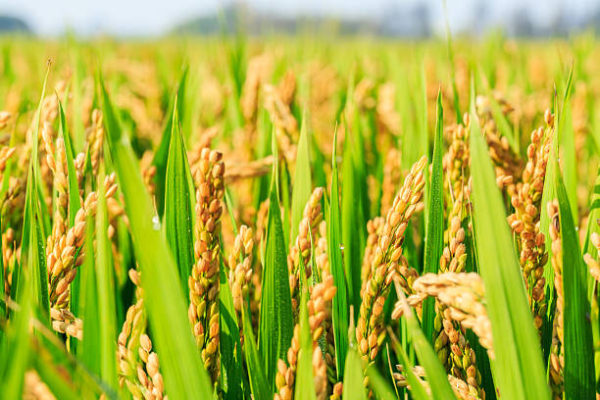
As the rainy season sweeps across Sierra Leone, many citizens look to the skies not just for relief from the dry heat, but for something far deeper—hope. Hope that the rains are watering the vast lands of the Toma Bum farm in Bonthe District and other ambitious state-backed agricultural projects scattered across the country. Hope that those farms, long in the pipeline, are finally sprouting real results—rice fields heavy with grain, vegetables ripe for harvest, and a local food system sturdy enough to end our dependency on imported food. Hope, above all, that Sierra Leoneans will no longer go to bed hungry in a country blessed with so much arable land.
But hope alone is not enough. It is now time for tangible outcomes, for measurable harvests, and for visible impact on household dinner tables across Sierra Leone. The SLPP government, which has made agricultural revitalization one of its flagship promises, must be more transparent and real with the people. After years of policy declarations and public investments, Sierra Leoneans want to know: what exactly have we harvested?
The Promise of Toma Bum and State Farms:
The Toma Bum rice project, stretching over thousands of hectares, was conceived as a national game-changer—a cornerstone in the government’s “Feed Salone” agenda. Launched with fanfare and high expectations, it promised to produce rice on an industrial scale, create jobs, empower rural communities, and slash the billions of Leones spent annually on food imports.
Other farms in Port Loko, Bombali, and Kenema were similarly announced as part of a broader drive to return Sierra Leone to agricultural self-sufficiency. The government, through the Ministry of Agriculture and Forestry, partnered with foreign investors, engaged local farmers, and deployed mechanized farming equipment to fast-track production.
On paper, these are exactly the kinds of bold steps Sierra Leone needs. With over 75% of our population engaged in agriculture—mostly subsistence farming—the shift toward large-scale, coordinated farming operations is a logical and necessary evolution.
But a country cannot eat paper promises. The time has come to see the fruits of these labors—literally.
Hunger Still Stalks the Land:
Despite all the investments and programs, Sierra Leoneans are still reeling under the weight of food insecurity. According to the World Food Programme, nearly half of our population is food insecure. Malnutrition remains alarmingly high among children, and food prices in the market are volatile and unaffordable for many.
Imported rice—low-quality and expensive—continues to dominate our consumption, draining valuable foreign exchange and undermining local production. Imported onions, tomatoes, palm oil, and even gari flood our markets, while local farmers struggle with access to seeds, fertilizers, irrigation, and storage.
This is why the rains now falling on the Toma Bum fields carry more than just water—they carry expectation. They water not only the soil but the growing impatience of a people who are tired of being told to wait.
What Have We Harvested?
That is the question echoing across the country. After all the media tours, groundbreaking ceremonies, and pilot phases, what exactly has the Toma Bum project yielded? How many metric tonnes of rice were produced last year? How much of it has entered our local markets? How many jobs were created, and how many rural households have seen real income growth?
Accountability is critical. These are not merely government projects—they are funded by taxpayers, by donors, and by development partners who expect results. The government must release clear, independently verified reports on harvest volumes, production costs, distribution plans, and farmer engagement.
It is not enough to say “the farm is ongoing” or “the rains are helping.” Sierra Leoneans deserve metrics. If the goal is to replace 30%, 50%, or 100% of our rice imports within a specific timeframe, then show us the roadmap, the progress, and the gaps.
SLPP Must Be Real:
This is a moment for the SLPP government to move beyond political slogans. “Feed Salone” must not be another campaign tagline. It must become a national reality. Feeding a nation requires more than rainfall and rhetoric. It requires strategy, coordination, investment in farmer cooperatives, rural infrastructure, storage facilities, market access, and agricultural research.
Moreover, corruption and inefficiencies must be rooted out of the system. Fertilizers meant for farmers must not disappear. Tractors must not be abandoned in warehouses. Land allocation must be transparent. If farming is to work at scale, it must work for the people—not just the elites.
The People Are Watching:
The people of Sierra Leone are not demanding miracles. They are demanding honesty and commitment. They are asking their leaders to show that they understand the urgency of hunger and the indignity of relying on foreign food in a fertile land.
As the 2025 political calendar draws closer and economic pressure tightens, food security will be a decisive issue. The government’s credibility will hinge not on what it promised in manifestos, but on what it delivered in the rice fields.
Let the rains fall, yes. But let them fall on prepared ground. Let them awaken crops planted with purpose, grown with care, and harvested with accountability.
Sierra Leone is ready to eat from its own land. The question is: are our leaders truly ready to feed us?