


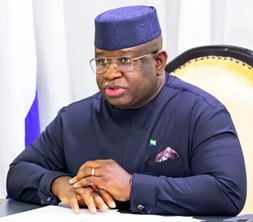
In a powerful and controversial sermon that has sparked intense discussion across Sierra Leone and beyond, a Nigerian gospel minister, Pastor Theophilus Sunday, has called on the Government of Sierra Leone to take decisive action against what he described as the real enablers of the country’s persistent drug problem.
Speaking during a recent sermon that has since gone viral on social media, Pastor Sunday commended President Julius Maada Bio for his administration’s continued commitment to fighting drug abuse and trafficking.
However, he cautioned that without addressing the deeper institutional rot that allegedly allows drugs to flow freely into the country, all efforts at combating narcotics may amount to mere window dressing.
The Nigerian pastor, known across West Africa for his fiery preaching and spiritual activism, began by acknowledging Sierra Leone’s growing campaign against drug abuse, especially the government’s crackdown on Kush a synthetic drug that has ravaged youth populations in recent years.
“I appreciate what your President is doing to fight drugs. But until the gatekeepers are held accountable, until those who open the borders for these substances are exposed, Sierra Leone will continue to suffer,” he said.
Pastor Sunday argued that the drug problem in Sierra Leone cannot be solved by targeting only street users and petty dealers. Instead, he said, attention must be focused on where and how these drugs enter the country. “The real problem is not the young man in the ghetto who is smoking Kush. The real problem is those who are making sure the drugs find their way into the streets and those people are not ordinary citizens,” he said.
In his sermon, Pastor Sunday identified three major entry points he claimed are central to the trafficking of drugs into Sierra Leone including the Lungi International Airport the country’s main air gateway, the Sierra Leone Ports and Harbour Authority (SLPHA), including the Sea Coach Terminal; and land border crossings managed by immigration and security personnel.
He alleged that these key institutions, which are meant to safeguard Sierra Leone’s borders and protect its sovereignty, have become vulnerable points exploited by powerful individuals and networks involved in illicit trade.
“Who are working at these places?” he asked rhetorically. “Are they not government workers? Are they not people appointed by those in authority? If you say you are fighting drugs then start with those who control these entry points.”
His remarks drew applause and murmurs from the congregation, with many expressing shock that a foreign preacher would speak so boldly about such sensitive national issues.
The Nigerian cleric went further to question the integrity of the officials working within these agencies. He asserted that some of those occupying top positions in the very institutions responsible for border security and law enforcement could be complicit in the drug trade either through negligence or direct involvement.
He singled out three institutions for urgent internal reform and scrutiny including the Sierra Leone Immigration Department (SLID).
The Sierra Leone Police (SLP) “These are noble institutions. But when corruption and compromise enter them, they become weapons against the very nation they are meant to defend. Sierra Leone cannot win this war if its defenders are the ones helping the enemies.”
In addition, Pastor Sunday urged President Bio to take bold steps to investigate and, if necessary, restructure the leadership of these institutions. He emphasized that fighting drugs effectively requires moral courage, not just policy declarations.
“If you truly want to deliver your country from this scourge then begin from within. Replace those who have failed the people. Discipline those who betray the trust of their positions. This is how true leadership works,” he said.
Beyond the politics of the matter, Pastor Sunday’s sermon also carried a spiritual tone. He framed the drug crisis as both a national and moral challenge, calling for repentance, accountability, and unity in confronting what he described as “the spirit of destruction” targeting Sierra Leone’s youth.
“The youth are the strength of any nation. But if the youth are being destroyed by drugs, then the future of the nation is being stolen. This is not just a physical problem it is spiritual. Those who profit from the suffering of others must answer before God,” he said.
He lamented that despite several government and NGO-led initiatives, the grip of drugs like Kush remains firm in many communities, largely because the supply chain remains unbroken.
“You cannot kill a tree by cutting its leaves. You must uproot it. The root of this drug crisis is corruption at the top not just the young men at the bottom, Pastor Sunday said.
Pastor Sunday’s comments have since drawn a mixture of praise and criticism across Sierra Leone.
Some civil society activists and anti-drug campaigners have applauded his courage, saying that he voiced what many Sierra Leoneans have been afraid to say publicly. Many of us have been saying this for years. Freetown. The problem is not only on the streets it’s in the institutions. Drugs cannot enter Sierra Leone without help from inside.” a Sierra Leonean activist supported Nigerian pastor.
However, others have criticized the pastor for making what they see as unverified allegations against national institutions and government officials. A senior security officer, speaking on condition of anonymity, dismissed the sermon as “sensational and unhelpful. While we respect religious leaders, it is important that claims of this nature are backed by evidence. The government has been working hard to strengthen border control and law enforcement capacity. We must not undermine these efforts with sweeping accusations,” a police officer said.
Furthermore, President Julius Maada Bio’s administration has made the fight against drugs one of its central policy priorities. The government recently launched a National Task Force on Drug and Substance Abuse, bringing together multiple agencies to coordinate prevention, enforcement, and rehabilitation strategies.
The President has also personally visited rehabilitation centers and called on parents, communities, and religious leaders to help in the moral reawakening of young people.
Nevertheless, critics argue that the government’s response remains reactive rather than preventive, with too much focus on arresting users instead of dismantling supply networks.
Pastor Sunday’s sermon, therefore, touches a nerve, echoing a growing public sentiment that the real fight must move from the streets to the corridors of power.
“Who Is Deceiving Who?”
Concluding his sermon, Pastor Theophilus Sunday made one final, pointed appeal:
“Who is deceiving who? I have spoken as a servant of God to tell the truth. Sierra Leone must choose between protecting the truth; or protecting corruption. You cannot fight a fire while pouring petrol on it.”
His message, though controversial, has resonated deeply among citizens weary of the devastating impact of drugs on families, communities, and the nation at large.
Whether the government will respond directly to his challenge remains to be seen. But one thing is certain: Pastor Sunday’s bold words have reopened the national conversation about where Sierra Leone’s drug problem truly begins and who is truly committed to ending it.