

By Musa Paul Feika
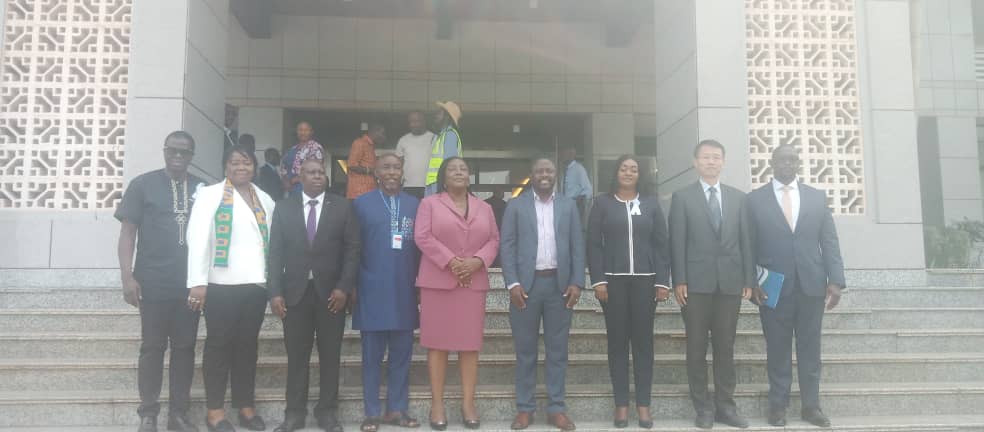
The Ministry of Foreign Affairs and International Cooperation (MOFAIC), in collaboration with the Office of the Attorney General and Minister of Justice, on Monday 19th January 2026 commenced a two-day national validation workshop on the Government of Sierra Leone’s Fourth Cycle Universal Periodic Review (UPR).
The opening ceremony was held at the Conference Room of the Ministry of Foreign Affairs and International Cooperation at Tower Hill, Freetown, and attracted a broad range of stakeholders, including representatives from the Human Rights Commission of Sierra Leone, Civil Society Organisations (CSOs), and various Ministries, Departments and Agencies (MDAs).
The workshop was organised by MOFAIC and the Office of the Attorney General and Minister of Justice, with support from development partners, notably the Embassy of the People’s Republic of China in Freetown and the Global Centre for Health Diplomacy and Inclusion (CeHDI), based in Geneva.
In his welcome address, the Director General of MOFAIC, Mr. Alan C. E. Logan, acknowledged the presence of representatives from MDAs, development partners, the Embassy of the People’s Republic of China, and human rights institutions. He described the gathering as a significant milestone in Sierra Leone’s human rights reporting journey.
Mr. Logan said the validation workshop, organised by the National Reporting Mechanism (NRM), was intended to review and validate Sierra Leone’s National Human Rights Report ahead of submission under the Fourth UPR Cycle. He noted that the exercise reflected the collective hard work and commitment of officers across MDAs and members of the NRM.
He explained that the NRM Secretariat, housed at MOFAIC, is responsible for preparing and submitting Sierra Leone’s periodic reports to international human rights treaty bodies and ensuring that the reporting process is inclusive, coordinated, and credible. He further disclosed that, in the current reporting period, the Office of the Attorney General and Minister of Justice leads the process, while MOFAIC continues to chair the work of the NRM.
On behalf of the NRM, Mr. Logan expressed gratitude to all MDAs for providing timely and reliable data, as well as to the Human Rights Commission for its contributions. He also commended members of the NRM for diligently discharging their responsibilities. Special appreciation was extended to development partners, including the People’s Republic of China, the United Nations Development Programme (UNDP), and the Human Rights Commission, for their unwavering support.
While providing a technical update, a representative of the Global Centre for Health Diplomacy and Inclusion (CeHDI), Mr. Magnus Conteh, highlighted Sierra Leone’s progress over the past two decades in advancing the right to health and sexual and reproductive health and rights (SRHR).
Mr. Conteh noted that maternal mortality had declined from over 1,100 deaths per 100,000 live births in 2013 to an estimated 354 in 2023, describing the improvement as a significant national achievement. He attributed the progress to sustained investments such as the Free Health Care Initiative, strengthened Reproductive, Maternal, Newborn, Child and Adolescent Health (RMNCAH) policies, the integration of SRHR into Universal Health Coverage, and targeted interventions to reduce adolescent pregnancy and child marriage.
“These gains matter. They demonstrate that sustained policy commitment saves lives,” he stated.
However, he cautioned that Sierra Leone’s maternal mortality rate remains five times higher than the Sustainable Development Goal (SDG) target. He observed that adolescent pregnancy remains widespread, contraceptive use among girls aged 15–19 is extremely low, and unsafe abortion continues to contribute to preventable maternal deaths. According to him, these challenges are driven by gaps in access to quality emergency obstetric care, modern contraception, adolescent-friendly services, and an enabling legal framework.
Mr. Conteh further revealed that health-related and SRHR-focused recommendations have steadily increased across Sierra Leone’s first three UPR cycles, accounting for nearly 40 per cent of all recommendations by the third cycle. He identified recurring themes such as maternal mortality, adolescent health, family planning, and emergency obstetric care as evidence of both progress made and work still required.
He called for renewed national dialogue to unblock the stalled Safe Motherhood and Reproductive Health Care Bill, describing its enactment as critical to strengthening Sierra Leone’s legal framework and reducing maternal mortality. He assured participants of CeHDI’s continued support to the Government of Sierra Leone in ensuring that the Fourth UPR Cycle translates commitments into tangible outcomes.
Delivering remarks on behalf of the Embassy of the People’s Republic of China, Deputy Ambassador Mr. Zhan Dianbin commended Sierra Leone for gains made in human rights protection and conflict prevention. He cited reforms such as the abolition of the death penalty as notable milestones in the country’s human rights journey.
In his statement, the Attorney General and Minister of Justice, Mr. Alpha Sesay Esq., expressed appreciation to his former colleagues at the Human Rights Commission, noting that the country’s human rights journey began over two decades ago. He stressed that the validation exercise was critical to accurately reflecting Sierra Leone’s progress and challenges ahead of the Fourth UPR Cycle.
Mr. Sesay acknowledged that challenges persist but maintained that significant reforms and progress had been achieved, many of which were reflected in previous UPR cycles. He described the validation process as both a learning opportunity and a platform to showcase achievements while identifying areas requiring reform.
He emphasised that a coordinated and inclusive reporting process would enhance Sierra Leone’s international reputation, strengthen adherence to democratic governance and the rule of law, and potentially attract foreign direct investment aligned with the Sustainable Development Goals. He thanked all stakeholders and development partners for their contributions as the validation exercise approached its conclusion.
The keynote address was delivered by the Deputy Minister of Foreign Affairs and International Cooperation, Madam Frances Alghali. She thanked representatives from CSOs, MDAs, and the Human Rights Commission for participating in the validation of the national human rights report, which she said was prepared on behalf of all Sierra Leoneans.
Madam Alghali underscored the importance of reliability and accuracy in the report, noting that the involvement of stakeholders was essential to ensuring a balanced and credible submission. She announced that the report would be submitted by the 26th of January 2026 and expressed confidence that the deadline would be met.
Speaking on behalf of President Julius Maada Bio, the Minister of Foreign Affairs, and the Government of Sierra Leone, Minister Alhgali encouraged stakeholders to ensure consistency between government reports and civil society submissions to avoid contradictions during international review.
She reaffirmed the government’s commitment to fulfilling its human rights obligations and highlighted the strengthened role of the National Reporting Mechanism in ensuring coordination and transparency. She noted that the NRM was established following recommendations from Sierra Leone’s First UPR Cycle to address previous challenges of fragmented reporting.
Madam Alghali explained that the report details developments since 2021 that have impacted civil, political, economic, social, and cultural rights including the government’s response to events such as the August 10, 2022 disturbances and the 2023 general elections. She added that the report also documents progress in education, health, access to safe drinking water, and measures taken to implement 216 recommendations accepted during earlier UPR cycles, including steps to strengthen the protection of women and girls against harmful practices.
“We want to ensure that the report we present is factual, reliable, and truly reflective of the realities in Sierra Leone,” she concluded.