


By Musa Paul Feika
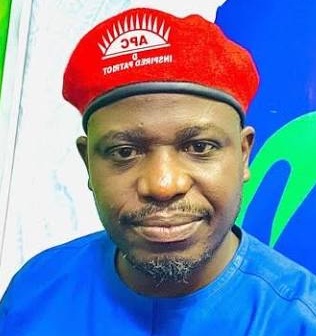
Opposition Leader in Parliament, Hon. Abdul Kargbo, has rejected the proposed amendment to Section 32(3) of the 1991 Constitution, arguing that Parliament cannot lawfully alter a constitutional provision without first meeting the threshold prescribed by the Constitution itself.
Hon. Kargbo’s objection came during proceedings on the Constitutional Amendment Bill Act, 2026, when he challenged a voice vote and demanded a formal division to establish the exact number of Members of Parliament supporting or opposing the question.
After the Speaker put the question to the House for a second time, Hon. Kargbo said he was not convinced by the outcome of the voice vote.
“My challenge is as a result of the fact that I am not convinced,” Kargbo told the House, before insisting that the matter be subjected to a division.
The Opposition Leader stressed that Parliament is a House governed by established procedures and that parliamentary decisions should not be determined simply by the loudness of Members’ voices.
“Parliament is a House of procedure,” he said, calling for Members to be physically counted so that the House could establish the precise number of MPs voting for and against the question.
Hon. Kargbo invoked Standing Order 46.1 in challenging the voice vote, prompting the Speaker to acknowledge his request for a division.
A division is a formal parliamentary voting procedure in which Members are counted according to whether they support or oppose a question. It provides a numerical record of votes, unlike a voice vote, which relies on Members responding verbally.
However, Kargbo’s opposition went beyond the voting procedure. During the debate on the Constitutional Amendment Bill, he argued that the proposed amendment itself did not satisfy the constitutional threshold required for an amendment.
According to Hon. Kargbo, the relevant constitutional provision requires the participation of at least 100 Members of Parliament, while only 96 MPs were available to participate in the process.
“96 Members of Parliament are seeking to amend a document that is to be amended by 100 Members of Parliament. So we on this side cannot be a part of that,” he declared.
Hon. Kargbo said the opposition had consistently supported genuine reforms brought before Parliament and had not opposed legislation simply for political reasons.
“We have supported various reforms brought to this House. If we were not willing to support reforms, we would never have voted for them,” opposition Leader said.
He, however, maintained that supporting reform did not mean endorsing a process which, in the opposition’s interpretation, failed to comply with the Constitution.
The Opposition Leader said the central issue was not whether Parliament possessed the political will to amend the Constitution, but whether the required constitutional threshold had been satisfied.
He urged Parliament to treat the matter with seriousness, stressing that constitutional amendments should be undertaken strictly within the framework established by the Constitution.
Addressing Speaker Hon. Segepoh Solomon Thomas, Kargbo said he respected the authority of the Chair but was concerned about the implications of proceeding with the amendment.
“With all due respect, I respect you all so much, and in fact I am constrained because of the respect I have for your office,” he told the Speaker.
Hon. Kargbo subsequently announced that opposition MPs would not participate in what he described as an amendment that failed to meet the required constitutional threshold.
“We on this side will not be part of an amendment that lacks the threshold of an amendment,” he stated.
He then called on opposition MPs to peacefully withdraw from the chamber, leaving the majority side to continue with the proceedings.
Hon. Kargbo further warned that while the government and its parliamentary majority might have the numbers to proceed, those responsible for the decision would ultimately be judged by history.
“If you want to touch the Constitution, you have the arm here. You have the ambience. But posterity, posterity, posterity will hold you responsible,” he cautioned.
Following the dispute, Speaker Segepoh Thomas indicated that he would rule on the matter concerning the proposed amendment. He further indicated that he would refer the constitutional question to the Supreme Court for an opinion.
Despite the opposition’s withdrawal, Members on the ruling SLPP side continued consideration of the Constitutional Amendment Bill Act, 2026.
The dispute has brought renewed attention to the constitutional safeguards surrounding amendments to Sierra Leone’s 1991 Constitution. It also raises broader questions about the interpretation of parliamentary Standing Orders, the required voting threshold for constitutional amendments and the role of the Speaker in resolving procedural disputes.
Hon. Kargbo’s position places the opposition on record as rejecting participation in the proposed amendment unless the constitutional threshold, as interpreted by his side, is satisfied.
The Speaker’s proposed referral of the matter to the Supreme Court could therefore become significant in determining the constitutional interpretation of the disputed provision and the legality of the parliamentary process.
The controversy is expected to generate further public debate over the powers of Parliament and the safeguards designed to prevent constitutional provisions from being altered through ordinary parliamentary majorities.