


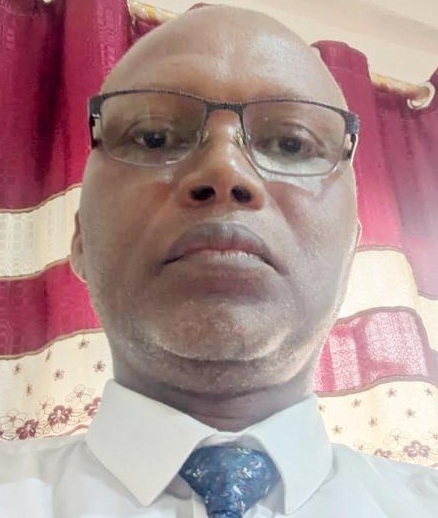
By Musa Beretay Esq. M. Beretay & Associates
I have heard the voices of certain members of the public maintaining the stance that the decision of the Speaker is final, and that it cannot be inquired into in any court. They have made this assertion pursuant to section 94(2) of the Constitution of Sierra Leone, 1991. Let me state the texts of the said section verbatim for the benefit of those who may not have time to look up the very section of the Constitution:
‘Notwithstanding anything to the contrary in this Constitution or in any other law contained, no decision, order or direction of Parliament or any of its Committees or the Speaker, relating to the rules of procedure of Parliament, or to the application or interpretation of such rules, or any act done or purporting to have been done by Parliament or by the Speaker under any rules of procedure, shall be inquired into by any court.’
The aforementioned section protects the Speaker in so far as it has to do with the normal run of things in Parliament. That is to say, where the Speaker follows the laid down procedures in the discharge of his duties in Parliament, his decision, ruling, interpretation of the law and/or directions cannot be inquired into. The Speaker cannot be brought before any court personally to answer questions in respect of same.
The Speaker’s position in respect of section 94(2) of the constitution can be juxtaposed with the position of Benchers (Judges & Magistrates) who cannot be personally held accountable for their decisions or rulings in the exercise of their duties within the four walls of the court room. However, a dissatisfied litigant can appeal the decision or the ruling of the given Bencher.
By the same token, where the Speaker, in arriving at a decision in parliament violates or misinterprets the laid down procedures of parliament, especially those enshrined in the Grund norm known as the Constitution of Sierra Leone 1991, the said decision can be challenged in the Supreme Court, as it has jurisdiction to hear and determine same. Section 124(a) &(b) of the Constitution of Sierra Leone 1991 is very instructive in this regard. You may be interested in the texts of section 124(1)(a)&(b) of the constitution:
‘The Supreme Court shall, save as otherwise provided in section 122 of this Constitution, have original jurisdiction, to the exclusion of all other Courts—
- in all matters relating to the enforcement or interpretation of any provision of this Constitution; and
- where any question arises whether an enactment was made in excess of the power conferred upon Parliament or any other authority or person by law or under this Constitution.’
Additionally, section 125 of the Constitution of Sierra Leone has also given the same power to the Supreme Court over any adjudicating authority such as the Speaker or parliament. I have reproduced section 125 below for the benefit of those who may not have time to look up the constitution:
‘The Supreme Court shall have supervisory jurisdiction over all other Courts in Sierra Leone and over any adjudicating authority; and in exercise of its supervisory jurisdiction shall have power to issue such directions, orders or writs including writs of habeas corpus, orders of certiorari, mandamus and prohibition as it may consider appropriate for the purposes of enforcing or securing the enforcement of its supervisory powers.’
Furthermore, Section 127(1) of the 1991 constitution gives persons who allege that certain acts have been done in contravention of an enactment or provisions of the constitution to approach the Supreme Court for the enforcement of a given provision enshrined therein. In this case, the Speaker of Parliament has caused a constitutional amendment bill to be passed without regard to section 108(2)(b) of the Constitution of Sierra Leone,1991. In light of the foregoing instance, a dissatisfied person can approach the Supreme Court for certain remedies regarding the issue at hand.
By the same token, section 134 of the Constitution of Sierra Leone has given the High Court the power to hear and determine complaint brought before it against any adjudicating body. I have given below the full text of section 134 of the Constitution:
‘The High Court of Justice shall have supervisory jurisdiction over all inferior and traditional Courts in Sierra Leone and any adjudicating authority, and in the exercise of its supervisory jurisdiction shall have power to issue such directions, writs and orders, including writs of habeas corpus, and orders of certiorari, mandamus and prohibition as it may consider appropriate for the purposes of enforcing or securing the enforcement of its supervisory powers.’
In the prevailing circumstances, the Speaker of Parliament is captured under the second limb of section 134 of the 1991 constitution; that is, ‘any adjudicating authority’. The Speaker presides over matters in parliament and he makes decisions afterwards. In light of the foregoing, should any person be dissatisfied with his decision or ruling that person will be left with no option but to approach the High Court so that the said decision can be quashed.
Having given the foregoing highlights, I should let it be known that it is not a novelty in Sierra Leone to challenge the wrong decision made by the Speaker of Parliament in court. In the year 2000, a wrong decision made by the Speaker of Parliament to set up an ad hoc committee to investigate the non-attendance of parliamentary plenary by certain members of parliament and the subsequent declaration that the said members of parliament should lose their seats.
The decision was challenged in the High Court and on appeal in the matter between All Peoples Congress and others and The Speaker of Parliament and others (CIV/APP13/2000). Subsequently, the Court of Appeal ruled in favour of the Appellants.
The issue in contention then was that a Private Member Motion was moved by the Hon. Gaiva Labor and seconded by Hon. Williams Jusu pursuant to section 77(e) of the constitution of Sierra Leone,1991 in tandem with Standing Order 77 of the Sierra Leone Parliament, same was approved. The failure of the Speaker of Parliament to serve in the ad hoc committee as chairman in accordance with the existing Standing Order 77(c) of the Sierra Leone Parliament at the time rendered that decision as well as the subsequent decision of the Speaker faulty and void.
It follows that any decision arrived at from a faulty procedure, the decision itself is faulty, it can be challenged and it cannot stand. I am hopeful that the foregoing exposition has been helpful to those people who are of the view that the decision of the Speaker of Parliament is final and it cannot be challenged. The constitution of Sierra Leone is a sacred document, therefore there should be stringent safeguards to have it altered or amended.
CREDIT: M. Beretay & Associates
33 Victoria Street Freetown