


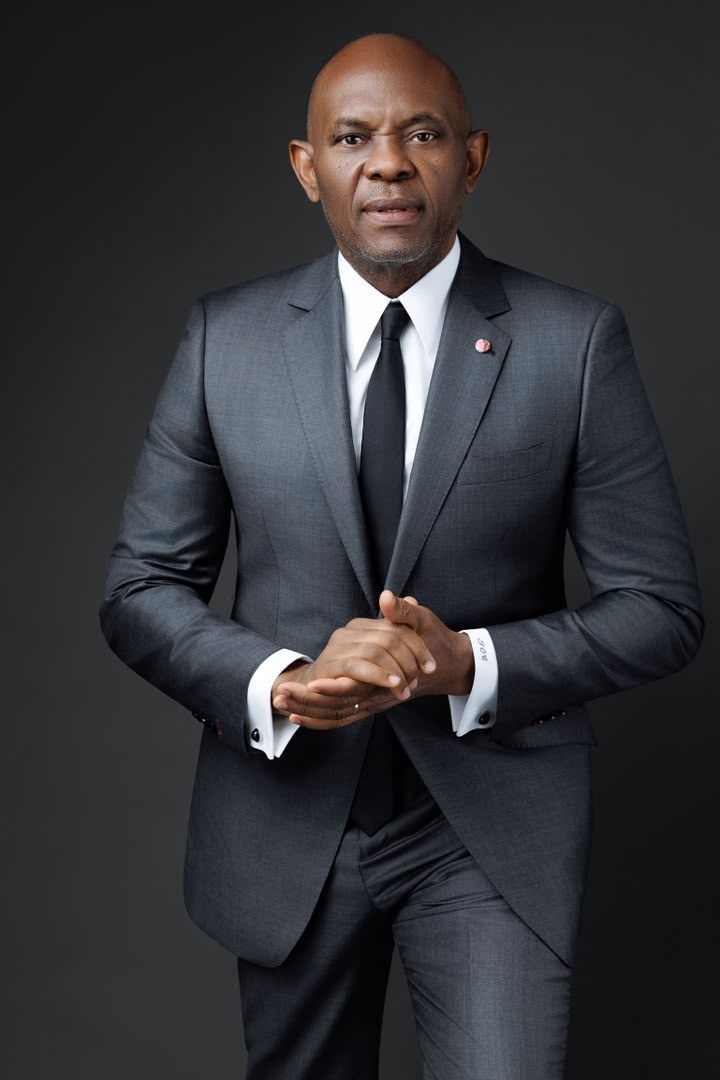
NEW YORK Chairman of Heirs Holdings, Tony Onyemaechi Elumelu, widely known as Tony Elumelu, and founder of the Tony Elumelu Foundation, has called for a fundamental shift in Africa’s development model, urging the continent to move away from dependence on foreign aid towards trade, investment, entrepreneurship and private sector led growth.
Elumelu made the call during a fireside chat on the sidelines of the 2026 United Nations General Assembly (UNGA) in New York.
The session, titled the “Darryl G. Behrman Lecture on Africa Policy,” was moderated by Michael Froman, President of the Council on Foreign Relations (CFR), and examined Africa’s changing role in the global economy, entrepreneurship, energy security, private sector development and the future of US-Africa relations.
Elumelu argued that Africans must take greater ownership of the continent’s economic transformation, while international investors and policy partners should change the way they perceive Africa.
He challenged the longstanding image of Africa as a continent primarily dependent on aid, calling instead for Africa to be viewed as a commercial investment destination with significant opportunities for sustainable returns.
According to Elumelu, international investors must also bridge the gap between perceived risks and the realities of doing business across African markets.
He cautioned against treating Africa as a single high risk investment environment, noting that the continent’s 54 countries have different economies, markets, resources, institutions and investment opportunities.
He said global investors seeking growth could unlock substantial opportunities by forming strategic partnerships with credible African business leaders who understand local markets and operating conditions.
Elumelu also reaffirmed his philosophy of Africapitalism, which promotes private sector led development and positions entrepreneurship and business investment as important drivers of Africa’s economic transformation.
While acknowledging that aid programmes can provide short term relief, he maintained that aid alone cannot create sustainable industries or deliver the structural transformation required to develop African economies.
He therefore called on foreign venture capital firms, pension funds and development finance institutions to work more closely with African financial institutions to finance critical infrastructure and strengthen trade corridors across the continent.
Elumelu placed particular emphasis on Africa’s rapidly growing youth population, describing young entrepreneurs as central to the continent’s economic development, security and long-term stability.
He warned that youth unemployment must be addressed as a matter of urgency, arguing that limited economic opportunities can contribute to irregular migration and social instability.
Citing the work of the Tony Elumelu Foundation, which has committed $100 million to empowering young African entrepreneurs, he advocated greater investment in micro, small and medium sized enterprises.
He said providing young entrepreneurs with non-refundable seed capital of about $5,000, combined with business training, could help create jobs and stimulate economic activity in both rural and urban communities.
He urged international philanthropies, multilateral institutions and corporations to support the expansion of youth led businesses across Africa.
The businessman also addressed Africa’s energy crisis, calling for a pragmatic and equitable approach to the global energy transition.
He noted that more than 600 million Africans still lack access to electricity, arguing that industrialisation, digital transformation and economic expansion would remain difficult without reliable and affordable power.
Elumelu advocated the use of Africa’s abundant natural gas resources as a transition fuel to power industries and stabilise electricity grids, while countries continue to invest in renewable energy infrastructure.
He argued that Africa’s energy needs must be considered within the broader global climate debate, particularly as the continent seeks to industrialise and improve living standards.
On US-Africa relations, Elumelu called for future economic partnerships to move beyond traditional concessionary arrangements towards stronger commercial relationships.
While supporting the African Growth and Opportunity Act (AGOA), he said greater attention should be paid to the cost of producing, transporting and delivering African goods to US markets.
He further called for bilateral trade arrangements that would strengthen supply chain integration, support domestic manufacturing and remove regulatory barriers affecting intra African trade.
With the African Continental Free Trade Area (AfCFTA) providing a framework for deeper continental integration, Elumelu said Africa must increasingly position itself to produce, trade and compete in global markets.
He stressed that stronger African economies would not only benefit the continent but would also serve the interests of the international community.
According to him, economic prosperity in Africa is closely linked to global economic peace and security, as persistent poverty and lack of opportunity can create consequences that extend beyond national borders.
Elumelu’s message at the UNGA therefore placed the private sector, entrepreneurship, investment and trade at the centre of the debate about Africa’s future, calling for a development model in which Africans increasingly become producers, investors and owners of businesses rather than remaining dependent on external assistance.