


By Musa Paul Feika
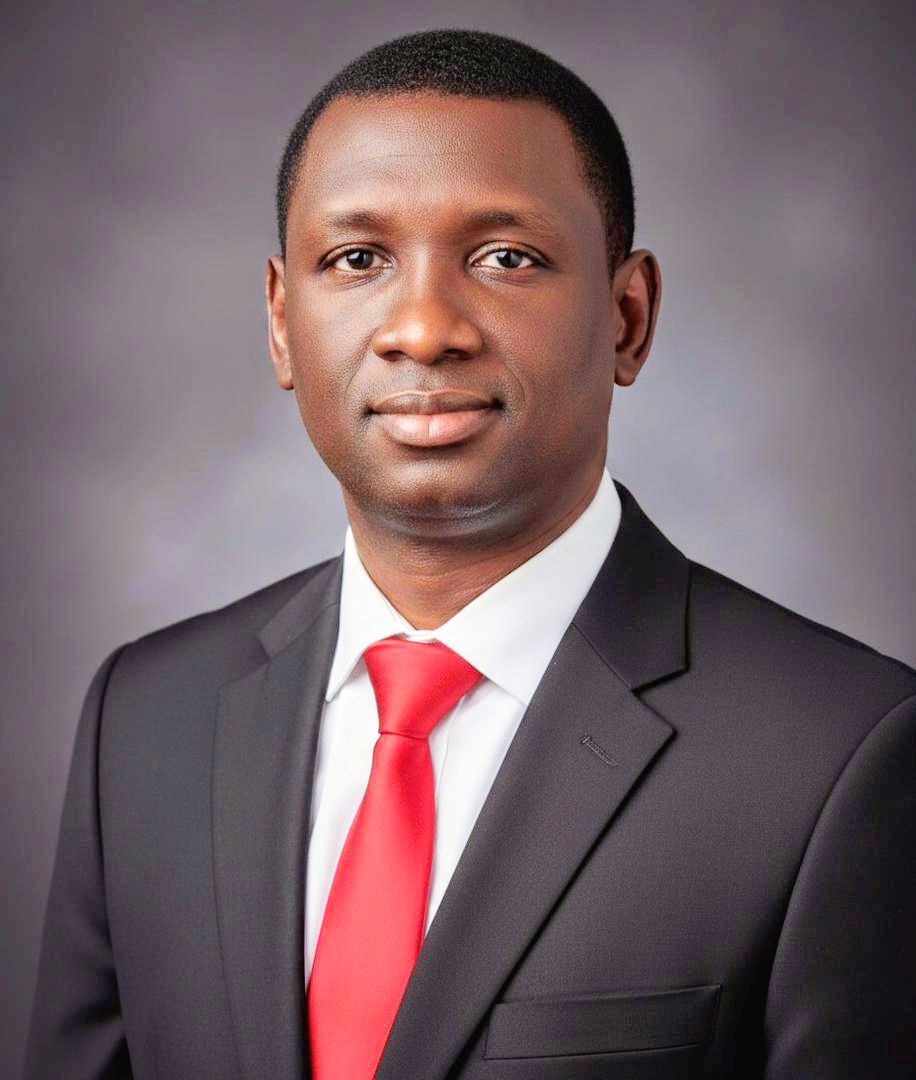
The leading aspirants of the APC, Dr Ibrahim Bangura has called for a stronger connection between law, justice and national resilience, arguing that the true strength of democracy lies not merely in elections and constitutional provisions, but in the ability of institutions to protect citizens, uphold accountability and restore public confidence in governance.
Delivering a keynote address titled “The Soul of Democracy: Bridging Law, Justice, and National Resilience,” Bangura stressed that the existence of laws and law enforcement institutions does not automatically guarantee justice, noting that even authoritarian regimes operate under legal frameworks.
“Not all light is guidance. Not all law is justice,” he declared, highlighting the distinction between the existence of laws and their fair application.
According to him, justice gives the law its moral purpose, while the absence of justice can reduce legal institutions to instruments of bureaucracy, oppression and political control.
“Law without justice is bureaucracy. Justice without law is chaos, but together, they are hope,” he stated.
Bangura explained that the relationship between law and justice should guarantee ordinary citizens access to legal remedies, ensure that powerful individuals are held accountable and make institutions instruments of protection rather than persecution.
His message carries particular significance for Sierra Leone, a country whose democratic development continues to be shaped by the legacy of civil war, institutional weaknesses, corruption and public concerns about accountability.
Reflecting on the country’s history, Bangura acknowledged the deep scars left by war, exploitation and injustice, warning that societies suffer when guns become more powerful than constitutions and corruption replaces accountability.
He argued that Sierra Leone’s experience demonstrates the importance of maintaining credible institutions capable of protecting citizens and resolving disputes peacefully.
He cited the establishment of the Special Court for Sierra Leone as an important reminder that even individuals who occupy positions of considerable authority can be held accountable for serious crimes.
The Truth and Reconciliation Commission was also highlighted as an important part of the country’s efforts to confront its past, promote reconciliation and rebuild relationships damaged by conflict.
For Bangura, these experiences demonstrate that justice must extend beyond punishment. It must also provide opportunities for reflection, healing and the restoration of public trust.
He maintained that the law, when applied fairly, can serve as a bridge between pain and peace, helping societies confront historical grievances while building a more stable future.
One of the central arguments in Bangura’s address was that elections alone cannot guarantee genuine democracy.
Although elections provide citizens with the opportunity to choose their leaders, he argued that democratic governance must also be measured by the protection of fundamental rights, respect for due process and the willingness of public institutions to hold power accountable.
A country may conduct elections, maintain a parliament and possess a constitution, yet still struggle to deliver meaningful justice if citizens cannot freely exercise their rights or obtain fair treatment from public institutions.
Bangura therefore described democracy as a daily commitment to dignity, fairness and accountability rather than an achievement secured at the ballot box.
He illustrated this principle through ordinary situations, including the protection of tenants from unlawful eviction, the rights of detained persons and the responsibility of law enforcement officers to assess evidence fairly rather than favouring individuals with greater influence or financial resources.
These examples underline a fundamental democratic principle: justice should not depend on wealth, political affiliation, social standing or personal connections.
For Sierra Leone, this raises important questions about access to justice, the independence of institutions, police conduct and the ability of ordinary citizens to seek redress without fear or discrimination.
Bangura warned that when citizens lose confidence in the justice system, the consequences can extend far beyond courtrooms.
People may become reluctant to report crimes, resort to personal retaliation or withdraw from civic participation. Such developments, he suggested, can weaken democratic institutions and create opportunities for authoritarian tendencies to emerge.
The warning highlights the importance of ensuring that citizens regard courts, law enforcement agencies and other public institutions as credible, impartial and accessible.
Public confidence cannot be secured through constitutional declarations alone. It requires institutions to demonstrate fairness through their everyday decisions and actions.
The effective administration of justice also demands that allegations of wrongdoing be investigated professionally, that accused persons receive fair hearings and that the law be applied consistently, regardless of the identity or influence of those involved.
Bangura further emphasised that the responsibility for protecting justice does not rest solely with government. Citizens, journalists, legal practitioners, civil society organisations and political leaders all have a role to play in defending democratic principles.
He urged people to remain committed to the rule of law even when doing so becomes difficult or unpopular.
His position reinforces the argument that justice must be guided by principle rather than political convenience, public pressure or the interests of powerful individuals.
Reclaiming the law for ordinary citizens
Another significant aspect of the keynote address was Bangura’s insistence that the law should not be regarded merely as a foreign inheritance or a legacy of colonial rule.
Instead, he argued that legal institutions must be redefined and strengthened to reflect the lived experiences and legitimate expectations of Sierra Leoneans.
He referred to women fighting for inheritance rights, young people seeking fair trials and journalists exposing wrongdoing as examples of situations in which the law must demonstrate its practical value.
For him, the true test of a legal system is whether it protects the vulnerable, safeguards individual freedoms and provides effective remedies when rights are violated.
This perspective places access to justice at the centre of national development. It also challenges political leaders and public officials to ensure that legal protections are not reserved for those who possess money, influence or privileged access to decision makers.
The DIB Movement and the challenge of national unity
Towards the conclusion of his address, Bangura welcomed supporters to the DIB Movement, declaring its commitment to healing, uniting and building a stronger All People’s Congress (APC) and a better Sierra Leone.
The message connects his broader argument about justice and national resilience with the challenges facing political parties as they prepare for future electoral contests.
Internal political competition can strengthen democracy when it encourages debate, policy innovation and accountability. However, it can also produce divisions when personal ambitions take precedence over shared principles and national interests.
For the APC, the challenge will be to ensure that competition among aspirants does not undermine party cohesion or weaken its capacity to present credible alternatives to the electorate.
Bangura’s emphasis on healing and unity suggests that political strength should be built on shared values, respect for internal democratic processes and a commitment to national development.
Nevertheless, the broader democratic test will lie in translating these principles into practical action. Calls for unity must be accompanied by respect for dissent, fair internal competition, transparent decision-making and accountability.
Ultimately, Bangura’s keynote address presents a compelling message for Sierra Leone: democracy cannot thrive where laws exist without justice, institutions operate without accountability or citizens lose faith in the systems established to protect them.
As the country continues to consolidate its democratic institutions, the challenge is to make justice accessible, the law impartial and public authority accountable.
The soul of democracy, as his address suggests, is not simply the power to govern. It is the responsibility to govern fairly, protect human dignity and ensure that no individual stands above the law.
For Sierra Leone, achieving that objective will require more than speeches and political promises. It will demand sustained institutional reform, responsible leadership and a national commitment to making justice a lived reality for every citizen.