
By Musa Paul Feika
Members of Parliament of the ruling Sierra Leone People’s Party (SLPP) have enacted the Constitutional Amendment Bill 2025 into law while MPs of the All People’s Congress (APC) walked out of the House Parliament.
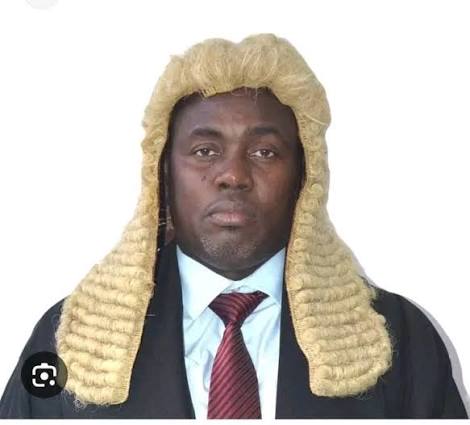
However, the Speaker Hon. Segepoh Solomon Thomas has also referred the matter to the Supreme Court for an opinion on the constitutional question surrounding the parliamentary threshold required to amend certain provisions of the 1991 Constitution.
The ruling came during proceedings on the Constitution of Sierra Leone (Amendment) Bill, 2025, as Parliament continued consideration of proposed amendments to the country’s supreme law.
In his ruling, Speaker Thomas emphasized that constitutional amendments are fundamentally different from ordinary legislation and must be considered with strict adherence to constitutional procedure.
He said the Constitution represents the supreme expression of the sovereign will of the people and, therefore, any attempt to amend it must comply not only with the letter but also with the spirit of the constitutional provisions governing amendment.
The Speaker said he had been invited to determine the appropriate voting threshold applicable to the amendment Bill and, in doing so, drew attention to the relationship between Section 91(1) and Section 108 of the 1991 Constitution.
He stressed that constitutional provisions must be interpreted as a coherent whole rather than in isolation.
“Constitutional interpretation requires that provisions of the Constitution be read as a coherent rule and not in isolation,” he stated, adding that one provision should not be interpreted in a manner that renders another provision ineffective where both can operate together.
According to the Speaker, Section 91(1) establishes the general rule for decision making in Parliament.
The provision states that, except where the Constitution provides otherwise, any question proposed for decision in Parliament shall be determined by a majority of the votes of members present and voting.
Speaker Thomas argued that this provision therefore establishes the general parliamentary rule, while specific provisions of the Constitution provide exceptions where a higher threshold is expressly required.
He referred members to several constitutional provisions that expressly provide for two-thirds majorities, including Sections 29(3), 119(9), 137(7), 137(10) and other relevant provisions.
The Speaker’s central argument was that the two-thirds requirement contained in Section 108 should not automatically be applied to every constitutional amendment.
He drew particular attention to the wording of Section 108, noting that the drafters repeatedly used the words “this section” in setting out the requirements governing constitutional alteration.
Section 108(1), he observed, provides that, subject to the provisions of that section, Parliament may alter the Constitution.
He further referred to Section 108(2), which establishes additional requirements for the passage of a Bill under that section.
According to Speaker Thomas, the provisions requiring a two-thirds parliamentary majority are principally contained within Section 108 itself.
He consequently questioned whether those requirements could be extended to constitutional provisions falling outside the scope of Section 108.
“The much trumpeted Section 108 of the Constitution deals specifically with the provisions of Section 108 and no other section,” the Speaker stated in substance.
He maintained that where the Constitution expressly establishes a special voting threshold, Parliament must comply with it. However, where no such threshold is expressly prescribed, the general rule under Section 91(1) may apply.
Speaker Thomas also cited previous parliamentary practice as part of his reasoning, referring to the amendment of Section 79 in 2012, which he said was effected through a voice vote rather than a two-thirds majority.
However, despite setting out his interpretation of the constitutional provisions, the Speaker acknowledged that the issue raises a significant constitutional question of public interest.
He therefore decided that the matter should be referred to the Supreme Court of Sierra Leone for an authoritative opinion.
The Speaker directed that the Supreme Court’s opinion should be returned to Parliament within three months.
His ruling effectively places the constitutional interpretation of the required parliamentary threshold before the country’s highest court, rather than allowing Parliament alone to conclusively settle the issue.
The development is significant because the constitutional amendment process has generated intense debate between members on both sides of the House, particularly over whether a simple majority or a two-thirds majority is required for particular amendments.
The Opposition Leader, Hon. Abdul Kargbo, has previously challenged the process, arguing that Parliament cannot lawfully alter a constitutional provision without first satisfying the constitutional threshold applicable to that amendment.
The Speaker’s ruling now introduces a judicial dimension into the dispute, with the Supreme Court expected to provide clarity on the relationship between the general voting provision under Section 91(1) and the specific amendment procedures contained in Section 108.
The ruling also underscores the importance of constitutional interpretation in determining the limits of Parliament’s constituent authority.
As proceedings continued, members were reminded that the Bill before the House concerns the supreme law of Sierra Leone and that its passage must therefore be guided by constitutional legality and parliamentary procedure.
The Supreme Court’s eventual opinion could have implications beyond the present amendment Bill, particularly for future attempts by Parliament to amend provisions of the 1991 Constitution that are not expressly subject to a special voting threshold.
For now, the constitutional question remains before the Supreme Court, leaving the interpretation of the applicable parliamentary threshold to judicial determination.