


By Sahr Sandi Kortequee- Staff Writer
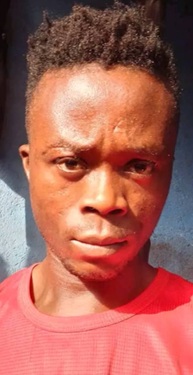
Santigie Bai Koita, a concerned distant brother of a young Sierra Leonean former Senior Secondary School student, Alusine Mansaray, has recounted to this media, Alusine’s harrowing experiences of loss, detention, and alleged political persecution following the violent protests that shook parts of Freetown on August 10, 2023.
Koita explained that Alusine Mansaray, who was born on May 15, 2005, and raised in the Kissy Road area of the capital, and his parents were petty traders operating a small shop along Kissy Road, where they were killed during the unrest that erupted amid nationwide demonstrations against the government.
The protests were driven by public frustration over rising living costs and political grievances linked to the administration of President Julius Maada Bio.
According to Koita, Alusine’s parents were known supporters of the opposition Peoples National Democratic Congress (PNDC) and had openly expressed dissatisfaction with the government’s handling of economic and governance issues. According to him, their political affiliation made them vulnerable during the security crackdown that accompanied the protests.
Koita narrates that on the morning of the protests, August 10, 2023, Alusine had gone to attend classes at his Albert Academy School when sounds of gunshots were heard in areas within the city center, forcing students to flee in panic. As security forces moved in to disperse demonstrators using live ammunition and tear gas, Alusine reportedly managed to reach his father by phone.
Alusine reportedly returned home later that day to find soldiers everywhere and the smell of tear gas filled the air. According to Koita when Alusine reached their house, neighbors told him to go to the hospital because his parents were earlier attacked by assailant security personnel.
At the hospital, Alusine reportedly was faced with the bodies of his father and mother who had been fatally shot.
These deaths, Koita narrates, left an indelible pain in the family especially the in Alusine who saw his hope being shattered and his life ruined because he has now lost all those he depended on for support.
In the days following the protests, security forces intensified arrests across Freetown and Alusine became an immediate target. At one instance, he was stopped by state security agents, accusing him of being a party to the incitements that resulted in the unrest, and he was abruptly arrested taken into custody at the notorious Camp Benghazi operated by the Operations Support Division (OSD) the paramilitary wing of the Sierra Leone Police without a warrant.
Alusine was reportedly transferred to the Pademba Road Maximum Correctional Center in Freetown. Hello reportedly spent about a year in that detention without any formal charges or court appearances.
Koita narrates that while Alusine was in detention, he was subjected to forced labor, physical abuse, and other inhumane treatments by prison guards, particularly because of his perceived association with opposition politics. He informed how Alusine narrates how during his detention, some of them believed to be in support of opposition groups were routinely singled out for punishment.
He narrated how on a given day, several of them were beaten badly because they were opposition sympathizers. “It was all aimed to break us,” Alusine is quoted as saying to Koita.
According to Koita’s account to this reporter, Alusine Mansaray was eventually released without informal charges and explanation but that he was told he would continue to be under the surveillance of security agents for as long as they care. According to Koita, it this fear of insecurity and the possibility of losing his life under some queer circumstances that he disappeared leaving his younger siblings in the care of relatives.
Human rights groups have previously raised concerns over the use of excessive use of force, arbitrary arrests, and prolonged detentions without trial by security forces in the aftermath of the political unrest in Sierra Leone, though the government has consistently denied targeting individuals based on political affiliation.
Alusine Mansaray’s case adds to a growing number of accounts from young Sierra Leoneans who say they have been directly affected by political instability and security operations in recent years. Giving the circumstances and the apparent spread of fear in the people by security forces, Alusine’s return to Sierra Leone remains a high risky venture that would put his life at risk.
As the country continues to grapple with political polarization and economic hardship, stories such as Mansaray’s underscore the human cost of political violence and the enduring impact of unrest on ordinary citizens.