

There are moments in the life of a nation when silence becomes dangerous, political loyalty becomes a burden, and the truth demands more courage than the comfort of looking away. For Sierra Leone, this is one of those moments.
On October 14, 2026, The Guardian, a respected international newspaper, published a deeply disturbing investigation entitled -How Europe’s most wanted cocaine trafficker turned Sierra Leone into the world’s first true narco state. The publication alleges that a convicted international cocaine trafficker, Jos Leijdekkers, established an extensive criminal network in Sierra Leone, cultivated relationships with influential individuals, and penetrated institutions entrusted with protecting the Republic.
For Sierra Leoneans at home and across the world, this is not simply another international headline. It is a moment of profound national concern. It raises questions about the security of our country, the integrity of our institutions, the safety of our citizens, and the future we are preparing for our children.
SLAM-GLOBAL speaks today not as the defender of a political party, a government, or an individual, but as an independent, non-partisan movement standing for the dignity, security, and democratic rights of the Sierra Leonean people.
We are not interested in debating the label attached to our country. We are interested in the conditions that made such an alarming international investigation possible.
How did we get here? Who knew what, and when? Who had the authority to intervene? Who raised the alarm? Who failed to act? And what must now change so that Sierra Leone never again faces allegations of this magnitude without credible institutional answers? These are questions that no patriotic Sierra Leonean should be afraid to ask.
THE ALLEGATIONS ARE TOO SERIOUS TO DISMISS – AND TOO SERIOUS TO TREAT AS PROVEN WITHOUT INVESTIGATION
The Guardian’s investigation, drawing on interviews with law enforcement and intelligence sources, alleges that Leijdekkers developed connections within Sierra Leone’s security and government institutions, including elements of the police, military, immigration services, and maritime infrastructure.
The publication reports that Spanish authorities intercepted the vessel Arconian in May 2026 and discovered a massive cocaine shipment, estimated in the investigation at between 30 and 45 tonnes. It alleges that the vessel had previously loaded cocaine in Freetown. It also reports intelligence estimates of approximately $150 million in monthly criminal profits associated with the alleged network.
These financial figures are intelligence estimates reported by the newspaper, not independently audited findings. Likewise, the alleged loading of cocaine at Freetown’s port requires verification through shipping records, surveillance evidence, witness testimony, and international investigative cooperation.
The report further describes allegations of abductions, killings, intimidation, and interference with law enforcement. It recounts the disappearance of Alan Jalloh and others, whose families deserve answers, protection, and justice.
The investigation identifies alleged connections between Leijdekkers and members of President Julius Maada Bio’s family. Family relationships, however, are not proof of criminal participation. The President’s personal criminal involvement has not been established by the investigation. The report also records denials of allegations concerning port operations and challenges to the credibility of its accusations.
SLAM-GLOBAL therefore insists on a fundamental principle: Every credible allegation must be investigated, every relevant institution must be scrutinized, every accused person must receive due process, and every victim must have access to justice.
We must neither dismiss disturbing evidence because it is politically inconvenient nor declare people guilty because an allegation has appeared in an international newspaper. Truth must be established through evidence. Justice must be administered through law. Accountability must reach wherever the evidence leads.
- PRESIDENT, THE RESPONSIBILITY OF LEADERSHIP CANNOT BE DELEGATED
President Julius Maada Bio and his administration carry the primary constitutional and executive responsibility for the protection of Sierra Leone’s institutions, national security, and lawful administration. Mr. President, this moment demands more than assurances, more than carefully prepared statements, and more than appeals to national pride.
It demands answers capable of withstanding independent scrutiny.
What did the government know about Leijdekkers’ reported presence and activities in Sierra Leone? When did relevant authorities become aware of international requests or intelligence concerning him? What investigations were initiated? What actions were taken to protect the integrity of our ports, immigration services, security institutions, and financial system?
Were any officials instructed to obstruct investigations? Were warning signs ignored? Were honest officers or witnesses threatened? If allegations of interference are substantiated, who authorized it, who benefited, and who must answer before the law?
These questions are not attacks on the presidency. They are questions demanded by the responsibilities of the presidency. A President’s international standing cannot substitute for accountability at home. Diplomatic recognition cannot replace institutional integrity. Speeches about justice cannot take the place of justice itself.
The highest measure of national leadership is not how respectfully a President is received abroad, but how faithfully the Republic and its people are protected at home.
WHERE WAS THE OPPOSITION? DEMOCRACY REQUIRES MORE THAN WAITING FOR THE NEXT ELECTION
SLAM-GLOBAL must also address an uncomfortable question to the All People’s Congress and other opposition parties. Where were the opposition executives, parliamentary representatives, and political leaders as the threats now described in this investigation allegedly developed?
Opposition is not simply the business of criticizing government decisions, mobilizing supporters, or preparing for elections. In a functioning democracy, opposition also serves as an early-warning mechanism against the abuse of power.
Parliamentary representatives have opportunities to question ministers, seek records, initiate committee scrutiny, demand explanations, and press for investigations into matters of national importance. Opposition executives can organize lawful public advocacy, commission research, support credible whistleblowers, and build coalitions for institutional reform.
We therefore ask: What warnings were received? What questions were raised? What parliamentary interventions were attempted? What public demands for investigation were made? What obstacles prevented further action?
These are questions to be answered by evidence, not assumptions. We recognize that opposition parties do not control the police, prosecution services, or executive agencies. They cannot be held responsible for powers they do not possess. But they can and should be assessed by how effectively they used the lawful means available to them.
And this standard must apply equally to every party, whether in government today or in opposition tomorrow. An opposition that seeks to inherit power must demonstrate that it knows how to defend the Republic even when it does not hold power. Sierra Leone deserves more than politicians who discover the language of accountability only when it becomes useful against their opponents.
WHERE WERE OUR MORAL VOICES? THE RESPONSIBILITY OF RELIGIOUS AND TRADITIONAL LEADERS
We turn with respect, but also with urgency, to our imams, pastors, bishops, religious councils, and traditional authorities. Sierra Leone is blessed with a rich tradition of religious coexistence. Our faith communities have helped sustain families, encourage reconciliation, and preserve social bonds through difficult national moments.
But moral leadership must extend beyond preaching peace and blessing public ceremonies. It must also have the courage to challenge corruption, violence, intimidation, and the destructive worship of unexplained wealth.
When a powerful individual enters a place of worship, are we prepared to ask whether that person’s conduct serves the public good? Or have we become so impressed by titles, generosity, and proximity to power that difficult questions remain unspoken?
A donation cannot purchase moral innocence. A position of influence cannot place anyone above ethical scrutiny. A public prayer cannot substitute for the responsibility to confront injustice.
We do not accuse religious leaders collectively of knowledge or complicity. We ask them to examine how their extraordinary moral influence can better protect the vulnerable, support honest public servants, challenge criminal wealth, and defend the independence of justice. A nation needs leaders who can pray for its future. It also needs leaders courageous enough to confront what threatens that future.
CIVIL SOCIETY, THE MEDIA, AND PROFESSIONAL BODIES MUST BE THE NATION’S EARLY-WARNING SYSTEM
The responsibilities of national protection do not end with politicians.
Journalists, lawyers, academics, human rights defenders, women’s organizations, youth movements, trade unions, and professional associations all have roles in preserving democratic accountability. The Sierra Leone Bar Association and other legal institutions can help examine whether the justice system has the independence and safeguards required to confront sophisticated organized crime. Journalists can investigate suspicious activities while verifying their findings and protecting confidential sources. Universities can examine institutional weaknesses and propose practical reforms. Civil society organizations can monitor public commitments and insist on transparent results.
But these institutions must also examine themselves. Are we sufficiently independent to question wrongdoing among those we support? Do we protect citizens who bring us credible information? Are we prepared to challenge the powerful when doing so may cost us access, funding, influence, or popularity?
We should not assume that no one raised concerns before this publication. Some may have spoken courageously and faced serious obstacles. Their efforts must be documented and acknowledged. Yet one question remains unavoidable: Why should Sierra Leoneans have to rely on an international investigation to obtain answers that their own public institutions should be capable of providing?
The answer must lead to stronger domestic investigative capacity, not hostility toward the journalists who have raised these concerns.
THE PEOPLE’S TEST: WHAT DOES THIS MEAN FOR THE ORDINARY SIERRA LEONEAN?
Let us leave the corridors of power for a moment.
Let us walk into a market in Freetown. Let us visit a fishing community in Tombo, a farming household in Kambia, a classroom in Bo, or a family struggling to survive in Kenema.
What does an alleged international criminal network mean to these people?
For the market woman who wakes before sunrise, it raises questions about whether honest enterprise can survive in an economy where illicit wealth may distort competition. For the fisherman, it raises questions about the integrity of coastal security and the protection of national resources.
For the young graduate searching for employment, it raises a painful question: What kind of society are we building when the visible rewards of unexplained wealth appear greater than those of education, discipline, and honest work?
For the police officer who refuses a bribe, it raises a question of personal safety. For the parent watching a child struggle with drug dependency, it raises questions about prevention, treatment, rehabilitation, and the country’s commitment to its most vulnerable citizens.
We must not conflate international cocaine trafficking with Sierra Leone’s domestic kush crisis or assume that the same networks are responsible for both. But both compel us to examine the devastating human costs of drug-related criminality and institutional weakness.
Governments often measure success by the number of meetings held, agreements signed, committees established, and speeches delivered. Ordinary citizens measure success differently.
Can their children go to school and find meaningful opportunities? Can they trust the police? Can they report a crime without fear? Can they obtain justice when someone powerful is implicated? Can honest businesses compete fairly? Can families find treatment when addiction enters their homes?
Governments are often judged by what they announce. The people judge them by what they deliver. If the result of all our political activity is a nation where honest citizens feel powerless while criminal networks allegedly operate with impunity, then the system has failed the very people it exists to serve. This is the People’s Test. And every institution must be prepared to face it.
WE MUST ALSO EXAMINE THE CULTURE THAT MAKES INSTITUTIONAL FAILURE POSSIBLE
There is a deeper national question that cannot be answered through arrests alone. Have we become too impressed by wealth to question its origins? Too attached to political personalities to scrutinize their decisions? Too divided by party loyalties to recognize a danger that threatens us all?
When unexplained wealth becomes a symbol of achievement, when political connections are treated as immunity from scrutiny, and when citizens fear questioning powerful individuals, criminal influence finds conditions in which it can grow.
This does not mean every wealthy Sierra Leonean is suspicious. Wealth earned honestly deserves respect. Nor does it mean every public official is corrupt. Many serve their country with dedication under difficult circumstances. It means that integrity must become more important than influence, and evidence more important than allegiance.
A society that celebrates power without examining responsibility risks teaching its children the wrong lessons about success. We cannot tell our young people to study hard, respect the law, and serve their country while allowing them to believe that connections and unexplained riches are the surest paths to opportunity.
The Republic must once again make honesty a source of pride, public service a position of trust, and justice a principle that no amount of money can purchase.
THE INTERNATIONAL COMMUNITY CANNOT STAND OUTSIDE THIS CRISIS
The trafficking networks described in the Guardian investigation are transnational. They connect production, transportation, financing, distribution, and consumption across multiple countries. Sierra Leone must answer for the integrity of its own institutions. But international partners must also confront their responsibilities.
European governments, international law enforcement bodies, ECOWAS, the African Union, the United Nations, and relevant development partners should support evidence-sharing, financial investigations, witness protection, and the prosecution of transnational criminal networks.
They should also examine whether credible warnings were received and whether appropriate responses followed. International cooperation must be principled, not selective. And assistance intended to strengthen governance should be evaluated by measurable improvements in institutional independence and public safety.
At the same time, SLAM-GLOBAL rejects any approach that indiscriminately punishes ordinary Sierra Leoneans for alleged misconduct by powerful individuals. Our people need stronger institutions, not collective condemnation. They need justice, not international abandonment.
SLAM-GLOBAL’S DEMANDS: FROM NATIONAL SHAME TO NATIONAL RENEWAL
SLAM-GLOBAL calls upon the Government of Sierra Leone, Parliament, opposition parties, the judiciary, independent oversight bodies, and international partners to support a credible, time-bound national response.
First, there must be an independent investigation, with appropriate international cooperation, into the specific allegations raised by the Guardian, including alleged official interference, illicit financial activity, suspicious maritime operations, abductions, and killings. The investigation must have the authority to obtain relevant evidence and must protect witnesses, whistleblowers, and the rights of all persons concerned.
Second, Parliament must exercise its oversight responsibilities through a transparent, cross-party examination of institutional vulnerabilities in law enforcement, immigration, customs, maritime security, and financial supervision. Proceedings should be public wherever possible, with confidentiality maintained when necessary to protect witnesses and active investigations.
Third, the authorities must examine suspicious financial flows, beneficial ownership arrangements, unexplained conflicts of interest, and vulnerabilities in political financing. Investigations must follow evidence rather than political affiliation or family relationships.
Fourth, government and relevant independent institutions must establish secure reporting mechanisms for public servants and citizens who possess credible information. No honest officer, port worker, journalist, or witness should be forced to choose between serving the Republic and protecting their family.
Fifth, Sierra Leone must strengthen drug prevention, treatment, rehabilitation, and economic opportunities for vulnerable young people. Criminal enforcement without social protection will leave too many families behind.
Sixth, SLAM-GLOBAL calls for a publicly available implementation framework with responsible institutions, proposed deadlines, independent monitoring, and regular progress reports. An initial public account of the investigative arrangements should be provided within 30 days, followed by periodic reporting on institutional reforms, subject to legitimate investigative safeguards.
Finally, all political parties, religious bodies, civil society organizations, and professional associations should undertake a serious examination of their own preventive and oversight responsibilities. This must not become another exercise in exchanging accusations while avoiding self-examination. Sierra Leone does not need another committee created merely to announce that a committee has been created. Sierra Leone needs answers, accountability, institutional reform, and results that ordinary people can see.
A MESSAGE TO SIERRA LEONEANS EVERYWHERE: THIS COUNTRY IS STILL OUR RESPONSIBILITY
To the Sierra Leonean mother who wonders what kind of country her children will inherit: your concern matters.
To the honest police officer who has resisted corruption: your integrity matters.
To the teacher who continues to educate our children despite hardship: your service matters.
To the young person tempted to believe that dishonesty is the only route to success: your future matters.
To our brothers and sisters in the diaspora, from London to Washington, from Brussels to Toronto, from Accra to every corner of the world: distance does not diminish our responsibility to the land we call home.
We must not allow this investigation to become another contest between supporters of the SLPP and APC. Organized crime does not respect party colors. Institutional corruption does not spare communities according to how they vote. And when public trust collapses, the suffering is not confined to one political constituency.
We have inherited a nation whose people endured slavery, colonialism, civil war, epidemic disease, and profound economic hardship. Yet through these trials, Sierra Leoneans have continued to demonstrate resilience, compassion, and the determination to rebuild.
We must not confuse resilience with an obligation to tolerate endless institutional failure.
Patriotism is not the refusal to acknowledge what is wrong with our country. Patriotism is the courage to confront what is wrong because we believe our country deserves better.
Let no one use the dignity of Sierra Leone as a shield against accountability. Let no one use allegations against powerful individuals as an excuse to demean the Sierra Leonean people.
Sierra Leone is not its alleged traffickers. Sierra Leone is not the sum of its scandals. Sierra Leone is the market woman, the farmer, the fisherman, the teacher, the nurse, the student, the honest public servant, and the millions of citizens who deserve a country governed by law rather than fear or influence.
The world has heard disturbing allegations about our Republic. Now the world must see how seriously we respond. Not through denial. Not through political revenge. Not through empty promises. But through truth. Through justice. Through courage. Through reform.
For the greatest tragedy would not be that an international newspaper raised devastating questions about Sierra Leone. The greatest tragedy would be if we failed to demand the answers, failed to protect those willing to tell the truth, and failed to build the institutions that could prevent such a crisis from happening again.
Our children will not judge us by how passionately we defended our political leaders. They will judge us by whether we defended their future. Let this be the moment when Sierra Leone chooses accountability over allegiance, integrity over influence, and the welfare of its people over the protection of the powerful.
Our Republic is worth defending. Our people are worth protecting. And our children’s future is worth more than the silence of every powerful person who would rather we stopped asking questions.
Sierra Leone must rise-not merely from the damage to its reputation, but from the institutional weaknesses that threaten its future.
P.S. We invite you to explore our recently published analysis in a book, “Building a Nation: Good Governance and Democratic Principles in Sierra Leone.” As we unite for change in 2026, this resource provides valuable insights for activists, policymakers, and concerned citizens committed to Sierra Leone’s transformation. Find it here: link.
Signed,

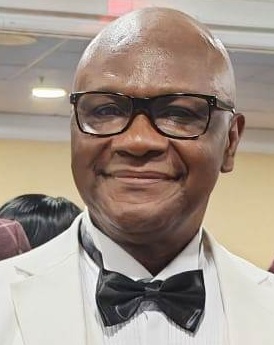
Dr. Alfred A. Veenod Fullah
DIRECTOR-GENERAL
CC: Office of the President of Sierra Leone
” Office of the Vice President of Sierra Leone
” Speaker of the Sierra Leone House of Parliament
” Office of the First Lady of Sierra Leone
” Office of the Chief Minister of the Government of Sierra Leone
” Electoral Commission for Sierra Leone (ECSL)
” Inspector General of Sierra Leone Police
” Chief of Defence Staff, Republic of Sierra Leone Armed Forces (RSLAF)
” Office of National Security, Sierra Leone
” Independent Commission for Peace and National Cohesion
” Leonardo Santos Simao, Representative of the Secretary-General & Head of UN Office for West Africa and the Sahel (UNOWAS)
” African Union (AU)
” Economic Community of West African States (ECOWAS)
” Amnesty International
” Marco Rubio, United States Secretary of State
” Vice President, Congressional and Public Affairs
” The Commonwealth Secretary-General
” Karim Ahmad Khan, Chief Prosecutor, International Criminal Court (ICC)
” Richard YOUNG, Chief de Division, Afrique de l’Ouest
” Ms. Ursula Von Der Lyen, European Commissioner
” The United Nations Representative in Sierra Leone
” H. E. Oumar Touray, President of ECOWAS Commission
” Madam Fatoumata Jallow-Tambajang, former VP of The Gambia
” H.E John Dramani Mahama, President of Ghana
” H. E. Bassiru Faye, President of Senegal
” H.E. Mamadi Doumbouya, President of Guinea
” H.E. Joseph Boakai, President of Liberia
” David Lammy, Secretary of State for Foreign, Commonwealth & Dev Affairs, UK
” Neil Alan John Coyle, MP for Bermondsey & Old Southwark, UK
” Ambassador Aly Diallo, Ambassador of the Republic of Guinea to the UK&I
” Ambassador Mohammad Maidugu, Acting High Commissioner of Nigeria in the UK&I
” Her Excellency Dr Fatou Bensouda, Head of Mission, The Gambia high Commission, UK&I
” H.E Fatimata Dia, Ambassador of Senegal to the UK&I
” H.E Gurly T. Gibson-Schwarz, Ambassador of Liberia to the UK&I
” Her Excellency Josephine Gauld, British High Commissioner to Sierra Leone
” Ambassador of the United States of America to Sierra Leone
” Head of the European Union Delegation in Sierra Leone
” General Consul of Canada in Sierra Leone
” Ambassador of China to Sierra Leone
” Ambassador of Germany to Sierra Leone
” Ambassador of Lebanon to Sierra Leone
” Ambassador of Iran to Sierra Leone
” Ambassador of Brazil to Sierra Leone
” Ambassador of Sweden to Sierra Leone
” Ambassador of Libya to Sierra Leone
” Ambassador of Egypt to Sierra Leone
” Ambassador of Cuba to Sierra Leone
” Ambassador of Guinea to Sierra Leone
” Ambassador of Liberia to Sierra Leone
” High Commissioner of the Federal Republic of Nigeria to Sierra Leone
” High Commissioner of Ghana to Sierra Leone
” High Commissioner of The Gambia to Sierra Leone
” General Consul of Italy in Sierra Leone
” Honorary Consul-General of the Islamic Republic of Pakistan in Sierra Leone
” Honorary Consul-General of Ireland in Sierra Leone
” Honorary Consul-General of Japan in Sierra Leone
” Honorary Consul-General of India to Sierra Leone
” Honorary Consul of Senegal in Sierra Leone
” Honorary Consul of Switzerland in Sierra Leone
” Honorary Consul of Syria in Sierra Leone
” Honorary Consul of Turkey in Sierra Leone
” Honorary Consul of Mali in Sierra Leone
” Honorary Consul of Ukraine in Sierra Leone
” Honorary Consul of Romania in Sierra Leone
” Honorary Consul of Norway in Sierra Leone
” Honorary Consul of Hungary in Sierra Leone
” Honorary Consul of France in Sierra Leone
” Honorary Consul of Belgium in Sierra Leone
” Honorary Consul of The Netherlands in Sierra Leone
” Honorary Consul of Spain in Sierra Leone
” Honorary Consul of Serbia in Sierra Leone
” Honorary Consul of Austria in Sierra Leone
” Honorary Consul of Denmark in Sierra Leone
” Honorary Consul of Russia in Sierra Leone
” Honorary Consul of Malaysia in Sierra Leone
” Honorary Consul of South Africa in Sierra Leone
” Civil Society Movement – Sierra Leone (CSM – SL)
” Media Reform Coordinating Group of Sierra Leone (MRCG)
” Sierra Leone Association of Non-Governmental Organizations (SLANGO)
” Civil rights Defenders – Sierra Leone
” National Elections Watch (NEW) – Sierra Leone
” Campaign for Good Governance (CGG) – Sierra Leone
” Women’s Forum – Sierra Leone
” Network Movement for Justice and Development (NMJD)
” Sierra Leone Legal Aid Board
” Faith-Based and Interfaith Organizations – (Interreligious Council of Sierra Leone)
” Council of Churches in Sierra Leone (CCSL)
” Fourah Bay College – University of Sierra Leone
” Institute of Governance Reform (IGR)
” Youth Partnership for Peace and Development (YPPD)
” Children’s Forum Network
” Anti-Corruption Commission (ACC) – Sierra Leone
” Awoko Newspaper – Sierra Leone
” Liberty TV Online – Sierra Leone
” Radio Democracy 98.1 FM Station – Sierra Leone
” The New York Times
” The Washington Post
” The USA Today
” The Cable News Network (CNN)
” The MicroSoft National Broadcast Corporation (MSNBC)
” The Fox News
” The Associated Press
” Thomson Reuters
” The National Public Radio (NPR)
” The Brookings Institution
” The Heritage Foundation
” The Center For American Progress
” The National Association For The Advancement Of Colored People (NAACP)
” The American Civil Liberties Union (ACLU)
” The MoveOn
” The Democratic National Committee
” The Republican National Committee
” The EMILY’s List
” The British Broadcasting Corporation (BBC)
” The Sky News
” Al Jazeera
” The Independent Television (ITV)
” The Times
” The Financial Times
” The Guardian
” The Daily Telegraph