

The tenure of the Sierra Leone People’s Party government in Sierra Leone will undoubtedly be remembered as one of the most controversial and troubling periods in the country’s democratic history. While governments are often judged by their achievements in economic growth, infrastructure, education, healthcare, and national unity, a growing number of Sierra Leoneans believe that the SLPP era has instead become deeply overshadowed by the frightening rise of drug abuse and a series of international drug-related scandals that have tarnished the country’s image before the world.
Today, across the streets of Freetown, in the ghettos of urban settlements, in provincial towns, and even in rural communities, one crisis dominates conversations among worried citizens: drugs. The spread of dangerous narcotics, especially the deadly synthetic substance widely known as kush, has reached catastrophic levels. Entire communities are watching helplessly as young men and women slowly destroy their lives through addiction. The nation’s future its youth appears trapped in a dangerous cycle of hopelessness, dependency, and despair.
What makes the situation even more painful is that this crisis did not emerge overnight. The warning signs were visible for years. Citizens, activists, community leaders, and religious organizations repeatedly raised concerns about the increasing presence of narcotics within communities. Yet many Sierra Leoneans believe the response from the authorities was too slow, too weak, and too inconsistent to match the seriousness of the threat.
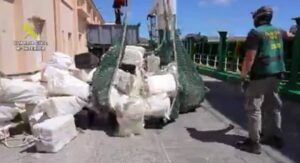

The consequences are now visible everywhere. Young people collapse on the streets under the influence of dangerous substances. Families are torn apart emotionally and financially. Schools are struggling with increasing indiscipline and substance abuse among students. Crime rates and social instability are rising in many communities. A generation that should be building the future of Sierra Leone is instead battling addiction and hopelessness.
For many citizens, the rise of drug abuse during the SLPP tenure reflects deeper failures in governance and national leadership. Drug addiction thrives most aggressively where unemployment, frustration, poverty, and hopelessness dominate society. Unfortunately, many young Sierra Leoneans today face exactly these conditions. Graduates leave universities with no jobs waiting for them. Skilled youths struggle to access opportunities. Families battle rising living costs while economic hardship continues to deepen.
In such an environment, drugs become an escape route for vulnerable young people searching for relief from pain, frustration, and uncertainty. The tragedy is that instead of investing aggressively in youth empowerment, skills training, rehabilitation programs, and economic opportunities, the country appears increasingly overwhelmed by the crisis.
But beyond the devastating local impact lies an even more dangerous dimension: the growing international embarrassment associated with drug-related scandals connected to Sierra Leone during the SLPP era.
Over recent years, international headlines and foreign security reports have repeatedly linked Sierra Leone to alleged drug trafficking concerns and suspicious narcotics activities. Such reports have generated global attention and raised troubling questions about the country’s security systems, border controls, and institutional credibility. For a nation that spent years rebuilding its reputation after a brutal civil war, these allegations represent a serious blow to national dignity and international trust.
The damage caused by such scandals goes far beyond politics. A country’s reputation is one of its most valuable assets. Investors, tourists, development partners, and foreign governments all pay attention to how nations are perceived globally. When a country begins appearing in international discussions surrounding narcotics trafficking and organized criminal activities, confidence begins to weaken. Economic opportunities suffer. Diplomatic trust declines. National pride is wounded.
What concerns many Sierra Leoneans most is the perception that accountability has not been strong enough. Citizens increasingly fear that political influence, corruption, and institutional weakness may be preventing a more aggressive and transparent fight against narcotics networks. Public confidence declines whenever people suspect that powerful individuals may escape justice while ordinary citizens suffer the consequences of national decay.
This perception is extremely dangerous for democracy. A nation cannot effectively combat organized crime if citizens lose faith in the fairness and seriousness of its institutions. The fight against drugs requires not only speeches and press conferences but visible action, impartial justice, and unwavering political commitment.
The healthcare system has also struggled enormously under the weight of the growing addiction crisis. Rehabilitation centers remain insufficient, mental health services are limited, and thousands of addicted youths receive little or no professional treatment. Many families are left alone to deal with the devastating effects of addiction without adequate support from the state. Parents live in constant fear as they watch their children descend into substance dependency with few available solutions.
Religious leaders have repeatedly warned that the country risks losing an entire generation if urgent action is not taken. Community organizations continue to plead for stronger intervention. Civil society groups have called for comprehensive reforms, including tougher anti-drug enforcement, border security improvements, rehabilitation investment, and nationwide awareness campaigns. Yet despite these appeals, the crisis continues to spread with alarming speed.
The political implications of this situation are enormous. Increasingly, many Sierra Leoneans are beginning to define the SLPP administration not by its promises or policy announcements but by the visible social breakdown associated with drugs and national insecurity. Whether fair or unfair, this perception is rapidly becoming embedded in public consciousness.
Supporters of the government argue that drug trafficking is a global problem affecting many countries and that Sierra Leone alone cannot completely escape international criminal networks. While this argument contains some truth, citizens also understand that effective leadership is tested precisely during moments of crisis. Governments are expected to anticipate threats, strengthen institutions, protect vulnerable populations, and respond decisively when national security is endangered.
The frustration among ordinary citizens is therefore understandable. People are tired of excuses while communities deteriorate. They are tired of watching addiction consume the nation’s youth while leaders exchange political accusations. They are tired of international humiliation linked to drug scandals while ordinary Sierra Leoneans continue struggling for survival.
What the country desperately needs now is leadership that treats the drug crisis as a genuine national emergency rather than a temporary political inconvenience. Sierra Leone requires stronger law enforcement institutions, serious anti-corruption measures, tighter border surveillance, and independent investigations into alleged trafficking networks. Most importantly, the country needs a comprehensive national strategy focused on saving young people from addiction and restoring hope to vulnerable communities.
The future of Sierra Leone cannot be built on addiction, fear, and scandal. No nation can progress while its youth are destroyed by narcotics and its international reputation suffers repeated damage. The country’s development goals, democratic progress, and economic ambitions all become threatened when social collapse spreads unchecked.
History will eventually judge every government not only by what it promised but by what it allowed to happen under its watch. For many Sierra Leoneans, the painful reality is that the SLPP tenure has become inseparable from the rise of drug abuse and the cloud of international drug-related controversy hanging over the nation.
And unless urgent, honest, and decisive action is taken, the scars left by this era may haunt Sierra Leone for many years to come.
Under SLPP Government…
8 Years Of National Darkness
For nearly eight years, the people of Sierra Leone have waited patiently for one of the most basic promises of modern governance to become reality: sustainable electricity. Yet despite repeated assurances, ambitious speeches, international partnerships, and countless public declarations, the administration of the Sierra Leone People’s Party (SLPP) has struggled to provide stable and reliable power supply to millions of Sierra Leoneans. Today, frustration over electricity has evolved into one of the strongest symbols of public disappointment under the current government.
Electricity is the heartbeat of development. No nation can modernize, industrialize, improve healthcare, strengthen education, create jobs, or attract serious investment without reliable power. In the twenty-first century, electricity is not a luxury reserved for the privileged; it is a basic necessity that shapes the quality of life and determines the pace of national progress. Unfortunately, after almost eight years in office, the SLPP government stands accused by many citizens of failing to deliver this essential pillar of development.
Across the country, darkness remains a painful reality. In Freetown, provincial towns, and rural communities alike, blackouts have become routine. Entire neighborhoods spend long hours without electricity, businesses close prematurely, hospitals struggle to function effectively, and students are forced to study under difficult conditions. For countless families, life has become an exhausting cycle of uncertainty, frustration, and survival.
What makes the situation more disappointing is that Sierra Leoneans expected much more. When the SLPP came to power, many citizens hoped for a new era of infrastructural development and economic transformation. Energy supply was expected to become a national priority. The government promised progress, modernization, and improved living conditions. But nearly eight years later, many Sierra Leoneans still wake up daily to unstable power supply, damaged appliances, and endless excuses.
The economic consequences of this failure are devastating. Small businesses, which form the backbone of Sierra Leone’s economy, continue to suffer enormously from unreliable electricity. Welders, barbers, tailors, internet café operators, cold-room businesses, restaurants, and shop owners depend heavily on stable power to survive. Yet because of constant blackouts, many are forced to rely on expensive generators and fuel. Operating costs continue to rise while profits shrink. Some businesses have collapsed entirely under the weight of energy instability.
At a time when youth unemployment remains dangerously high, the electricity crisis has become another obstacle preventing economic growth and entrepreneurship. Young people with innovative ideas cannot compete effectively in an environment where electricity remains unpredictable. Digital businesses struggle. Technology-driven enterprises suffer. Productivity declines. Instead of empowering the economy, the persistent power crisis continues to suffocate opportunity.
The impact on healthcare is equally alarming. Hospitals and clinics require stable electricity to preserve medicines, operate life-saving equipment, conduct surgeries, and provide emergency services. Yet many health facilities continue to face dangerous interruptions because of unreliable power supply. Doctors and nurses often work under stressful conditions while patients suffer the consequences. In some communities, healthcare delivery has become unnecessarily risky simply because electricity cannot be guaranteed.
Education has also paid a heavy price. Students across Sierra Leone continue to study in darkness, often relying on candles, lanterns, or mobile phone flashlights during examinations and school assignments. Schools and universities cannot fully embrace digital learning in an environment where electricity remains inconsistent. Laboratories, computer centers, and research facilities struggle to operate effectively. While the rest of the world advances rapidly through technology and innovation, many Sierra Leonean students remain trapped by outdated conditions caused largely by poor infrastructure.
Perhaps one of the most painful aspects of the electricity crisis is its effect on ordinary households. Families endure sleepless nights because of excessive heat and lack of power. Food spoils in refrigerators during prolonged outages. Children struggle to study at home. Basic daily activities become stressful and exhausting. Citizens continue to pay electricity bills despite receiving poor and unreliable service. For many struggling families already battling inflation and economic hardship, this situation feels deeply unfair.
The SLPP government has repeatedly attributed the electricity crisis to inherited problems, global economic difficulties, fuel costs, and aging infrastructure. While some of these explanations may contain elements of truth, citizens are increasingly growing tired of excuses. Leadership is ultimately measured not by the problems inherited but by the solutions delivered. After almost eight years in office, many Sierra Leoneans believe the government has had sufficient time to implement sustainable reforms capable of significantly improving electricity supply.
One of the major criticisms directed at the administration is the apparent lack of long-term planning and sustainable investment in the energy sector. Instead of building a stable system capable of meeting national demand, the country continues to depend heavily on temporary arrangements, emergency interventions, and inconsistent supply agreements. This cycle of crisis management has prevented meaningful and lasting progress.
Questions of accountability and transparency have also emerged. Citizens frequently ask how millions of dollars invested in the energy sector have failed to produce stable electricity. Concerns over corruption, mismanagement, and inefficiency continue to dominate public discussions. Many Sierra Leoneans believe that poor governance within the energy sector has contributed significantly to the current state of affairs.
The irony is difficult to ignore. Sierra Leone is a nation blessed with natural resources and enormous potential. The country possesses rivers capable of hydroelectric generation, abundant sunlight suitable for solar energy, and opportunities for diversified energy development. Yet despite these advantages, millions of citizens continue to live with unstable electricity as though reliable power were an impossible dream.
The electricity crisis has also damaged public confidence in governance itself. Every blackout reminds citizens of unfulfilled promises. Every failed power supply weakens trust in leadership. Every darkened home and struggling business becomes a symbol of disappointment. For many Sierra Leoneans, the inability to provide sustainable electricity after nearly eight years in power represents not just a technical failure but a deeper failure of vision, planning, and governance.
Supporters of the government argue that progress has been made in some areas and that the challenges facing the energy sector are complex. However, ordinary citizens judge governments primarily through their daily experiences. And for many Sierra Leoneans, the daily experience remains one of darkness, frustration, and hardship.
The truth is simple: no nation can achieve meaningful development while trapped in chronic electricity instability. Investors need reliable energy. Hospitals need reliable energy. Schools need reliable energy. Businesses need reliable energy. Families need reliable energy. Without sustainable electricity, economic transformation remains impossible.
As the country approaches another critical political period, electricity has become more than just a policy issue. It has become a test of credibility, competence, and leadership. Sierra Leoneans are no longer satisfied with speeches and promises. They want visible results. They want solutions that improve their lives. They want a government capable of delivering one of the most basic services required for modern existence.
History will remember governments not for what they intended to achieve but for what citizens actually experienced under their leadership. And for many Sierra Leoneans, the SLPP era will be remembered as a period when darkness remained a national burden despite years of promises, expectations, and opportunities.
Until sustainable electricity becomes a reality across Sierra Leone, the cries of frustration from homes, businesses, schools, and hospitals will continue to echo across the nation — a powerful reminder that development without reliable power remains nothing more than an illusion.