
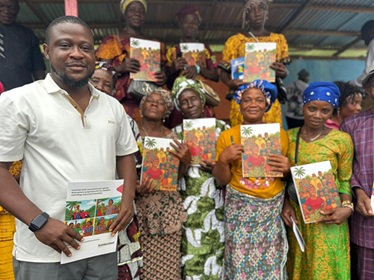
Solidaridad West Africa, in collaboration with the Food and Agriculture Organization (FAO) of the United Nations and the Ministry of Lands, Housing and Country Planning (MLHCP), is spearheading a major initiative to promote inclusive and gender-responsive land governance in Sierra Leone.
The initiative specifically targets rural women, empowering them to actively participate in and be fairly represented within land governance structures in their communities.
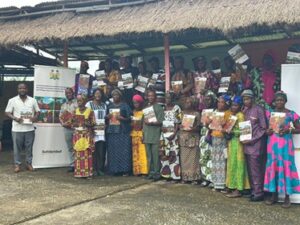
Between July and August 2025, Solidaridad and FAO conducted a participatory training programme in Bo and Kenema districts, aimed at strengthening the capacity of members of Chiefdom Land Committees (CLCs) and Village Area Land Committees (VALCs) — with a particular focus on female members.
According to James Musa, Programme Officer at Solidaridad Sierra Leone, the trainings are equipping women with the skills and knowledge to effectively engage in local governance and land-related decision-making.
“The Gender-Responsive Land Governance training is designed to raise awareness about the rights and responsibilities of women in CLCs and VALCs,” Musa explained. “This supports the full implementation of the Customary Land Rights Act and the National Land Commission Act, which address land ownership, access, and rights across Sierra Leone.”

He emphasized that the initiative is fully aligned with the legal frameworks under the leadership of the Ministry of Lands, Housing and Country Planning (MLHCP). The five-day training, which began on 28 July in Kenema, forms part of a broader effort to strengthen local land governance and promote women’s participation in implementing the 2022 land reform legislation.
Joel Kamara, National Project Coordinator at FAO, highlighted the project’s focus on inclusivity and local land tenure governance.
“We have been supporting the government to ensure that land reforms are implemented across Sierra Leone so that more women can have rightful access to land,” Kamara said.
He explained that FAO is supporting Solidaridad in training and empowering both VALCs and CLCs — key grassroots structures established to enhance land governance at the local level.
Before the training sessions began, Solidaridad conducted a capacity assessment in Bo and Kenema to better understand the needs of committee members. Tailored training modules were then developed to address specific gaps and strengthen overall effectiveness.
Kamara added that the three-year project includes additional components, such as supporting the government to establish a multi-stakeholder approach for addressing land conflicts and related challenges.

“We encourage women to take full advantage of these opportunities. Access to land will enable them to invest in agriculture and secure their livelihoods,” he said.
Mohamed Koroma, Land Commissioner for the Bo Land Commission, praised the training initiative, noting its alignment with the Commission’s mission to empower local land governance actors.
“If these committees are formed to support the government in land governance, then members must clearly understand their roles and responsibilities. That’s why this kind of training is crucial,” Koroma said.
He pointed out that land disputes remain a major challenge in many rural areas, placing stress on families and communities. He encouraged women participating in the training to report any land-related issues to the Land Commission for redress and stressed the importance of women owning and managing land as part of their investment in agriculture.
In Kenema, District Land Commissioner Charlie Tucker also emphasized the need for gender equity in land governance.
“The Land Commission is here to protect the rights of women. Both men and women have the right to inherit and make decisions about family land, as clearly stated in the Customary Land Rights Act. The government is committed to ensuring the full implementation of this law,” Tucker said.
He called on men to support women in claiming their rightful space in land governance and urged women to actively participate in committee roles.
Chief Bob Abdulai, representative of Nongowa Chiefdom, acknowledged the issue of mismanagement and exclusion in land ownership within rural land-owning families.
“In many of these families, women are completely excluded from land decisions and benefits,” he said. “The new land laws introduced by the government are a welcome step in granting equal rights to both men and women to own and invest in land.”
He commended the establishment of the Land Commissions, which he said will help regulate land use and prevent conflicts in rural communities.
Victor Macarthy, Assistant Director at the Ministry of Gender and Children’s Affairs in Kenema, reinforced the importance of women’s empowerment in land governance.
“Access to land has long been a challenge for women in Kenema and beyond. It’s time to end the practice where only men inherit family property,” he said.
Macarthy noted that the new land laws, including the Customary Land Rights Act and the Gender Equality and Women’s Empowerment Act, support the Devolution of Estates Act and give women stronger legal backing to participate in land inheritance and management.