
By: Sulaiman Jawara
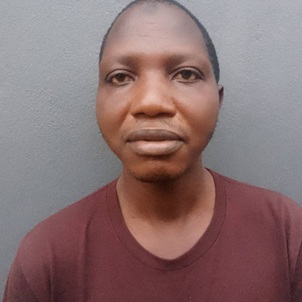
Family members of a resident of Wellington community in the East end of Freetown, are seriously concerned about his whereabouts since he disappeared in the aftermath of the August 10, 2022 violent protest in Freetown that was calling for the resignation of President Julius Maada Bio.
Foday Fofanah was not just a participant in that protest, but one of the key organizers. He was at the frontline of the public outcry, exercising his right to freedom of assembly and expression, rights guaranteed under the International Covenant on Civil and Political Rights (ICCPR), to which Sierra Leone is also a party.
However, following the chaos that ensued; some of which involved looting and the destruction of property—Foday became a specific target of state persecution. Video footage captured by party loyalists of the President implicated him as being involved in the destruction of the Wellington Police Post and Calaba Town Police Station, leading to the release of inmates.
He was initially arrested and detained at Camp Benghazi, a notorious detention and torture center operated by the Operation Support Division (OSD), an armed wing of the Sierra Leone Police. Camp Benghazi has been repeatedly criticized by local and international human rights monitors for its systemic use of torture, inhumane treatment, and arbitrary detention.
Despite a brief escape from this unlawful detention, Foday Fofanah was rearrested by a special reconnaissance team reportedly led by the then Deputy Minister of Internal Affairs, Lahai Lawrence Leeman.
Since he was rearrested, his whereabouts have remained unknown. There is a well-founded fear that his life is either at risk or has already been subjected to further torture or extrajudicial action.
As an individual who might be possibly running for his life in the estimation of his family members and friends, they are appealing for protection to be granted to him since there is a well-founded fear of persecution based on his political opinion or activism, among other grounds.
In the case of Foday Fofanah, the elements of persecution are clear and existential. Foday is being targeted for his role in organizing a protest against the government.
If he is alive and rearrested in Sierra Leone for the third time, he risks torture and inhumane treatment. His prior detention at Camp Benghazi—a recognized site of state-sponsored torture—substantiates this risk.
His current unknown status since he was rearrested aligns with documented patterns of state disappearance tactics against political dissidents.
In Sierra Leone there is no certainty that the state will accord him due protection under the laws. The Sierra Leone security and judicial systems have historically failed to protect individuals in such situations, making internal relocation unfeasible.
Given the circumstances of Foday Fofanah, wherever he may pursue his request for protection and a dignified life, any such country in Europe for instance, that is a signatory to the European Convention on Human Rights is under obligation to exercise Article 3 of that Convention and is prohibited from returning any such individual soliciting that protection to be returned to that country where there is a real risk of him or her to be subjected to torture, inhuman or degrading treatment, or punishment or a fatality.
The fact of Fofanah’s case is not just because he is a political activist; he is a victim of state repression and a candidate for enforced disappearance. His life and freedom are in grave danger if he returns to Sierra Leone.
In today’s world, the protection of human rights remains one of the pillars of European and international humanitarian law.
Including France and most European States that are signatories to the 1951 Refugee Convention, the European Convention on Human Rights (ECHR), and other key international agreements, these States have historically provided sanctuary to individuals such as Foday Fofanah, who have fled from their countries because of persecution and political repression. Today, this moral and legal commitment is called upon once again in the case of Foday Fofanah, a Sierra Leonean national born on 17th May 1991, if he happens to find himself in any of these States where he may wish to seek sanctuary and a protected life.
On August 10, 2022, Sierra Leone witnessed one of its most violent civil uprisings in recent history. The protest, primarily staged in Freetown’s eastern districts such as Wellington and Calaba Town, was fueled by mounting socio-economic hardships, public frustration, and perceptions of government excesses. The demonstrators demanded the resignation of President Julius Maada Bio, citing issues of corruption, political intimidation, and worsening living conditions.
While the government classified the protest as a security threat, human rights organizations documented disproportionate responses, including summary executions, mass arrests, torture, and enforced disappearances.