
December 31, 2026 has been set as a deadline for the full implementation of the 80 recommendations proffered by the Tripartite Committee for electoral reforms.
It now remains six months, and every passing day takes the country close to the deadline which appears to be a redline that must not be stepped on without a consequence.
The December deadline was reportedly announced by the moral guarantors led by former Gambian President, Fatoumtou Tambajang Jallow during their recent visit to Sierra Leone.
The guarantors who brokered a three-day peace deal between the ruling Sierra Leone People’s Party and the opposition, All People’s Congress were in Sierra Leone to assess the state of the implementation of the recommendations.
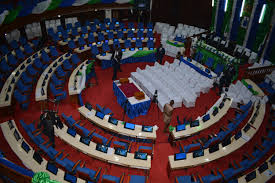
They came at a time the opposition parliamentarians had withdrawn from parliament for what they called a snail-pace implementation of the tripartite recommendations.
APC lawmakers were somewhat moderate in their opposition to the slow implementation, but the appointment of Edmond Alpha, Chief Electoral Commissioner was the straw that broke the camel’s back.
The appointment runs contrary to the tripartite recommendations, and there is fear that the 2028 election would be rigged the same way as 2023 polls.
But, many believe that to walk out of parliament is not the right course of action, but to discuss debate and enact the recommendations as law for them to be legally binding.
Set up in October, 2023, the Tripartite is charged with the responsibility of investigating alleged irregularities of the June, 2023 election and put forward recommendations sanitise future electoral processes.
The aim is to ensure that the anomalies which occurred in the past election could not repeat.
It also came out clear that the international community will implement an additional five recommendations known as the divergent areas.
It is those recommendations that the international community will show who actually win the election, and most likely restore democracy by installing the actual winner.
These recommendations, according to the Constitution of Sierra Leone, 1991, must be laid before parliament for ratification and eventually domestication.
After the committee’s work, there is a general feeling that the implementation should have been rounded up now. However, the two political parties, the ruling Sierra Leone People’s Party (SLPP) and the opposition, All people’s Congress (APC), analysts say, have reneged on the implementation.
The delay did not go down well with the vast majority of the people of Sierra Leone particularly the APC grassroot who voted overwhelmingly for Samura Kamara according to documentary evidence presented during investigation.
Matters became worse when lawmakers boycotted parliament, a move that raised several questions among members of the public. The questions hinge on the parliament’s sincere commitment to the implementation of the recommendations.
But, many believe that it is not easy for any government to implement recommendations that will cost them the power. It is clear that the derail of the election probe does not start today, but years after the 2023 election.
The ruling party with the connivance of the opposition, APC as alleged, delayed the tripartite to have more time to make amends with hope that the people of Sierra Leone and the international community would be appeased.
The delay started on the 26th November, 2023 when a coup was staged by the army just a day to the commencement of the election investigation.
Government’s attention was focused mainly on the investigation of the coup than the election irregularities not until they were urged by former U.S. Ambassador to Sierra Leone, David Bryan Hunt to also equally commence the election probe.
Ambassador Hunt was of the view that although the coup investigation was important, the election probe should reign supreme. For months after the coup investigation, nothing went on with government claiming that there was no money to fund the investigation.
Bent on protecting democracy, the United States provided $1.5m for the investigation of the election. Once money is in the coffers, the investigation commenced and completed in six months, but there was a roadblock lying on the way of the implementation.
Months following the end of the election probe, several African heads of states have visited President Julius Maad Bio at State House, sometimes at State Lodge, but their discussions have always remained closely guarded secrets.
Many Sierra Leoneans however believe that the frequent visits of the African presidents is to see how the two political parties-APC and SLPP-could be brought together under the umbrella of peace and unity.
But, the ruling party must pay the costly price of relinquishing power since according to evidence adduced by the Tripartite Committee, the opposition leader had a commanding lead scoring 57.15% out of the 71% of unchallenged result reconciliation forms.
The ruling party, according to voter records, had a little over 37%, indicating that there was no way it could win the election even if the outstanding balance was counted.
Observers in the media and the public as well as political analysts and commentators are also of the view that it would be difficult for the ruling party to implement the recommendations since it would lead to a power transfer.
President Julius Maada Bio who is at the centre of the political controversy recently came under pressure triggered by his own people.
SLPP members and stalwarts including the party’s secretary-general, Umar Paran Tarawally said their party was not a party to the Agreement for National Unity.
For the SLPP scribe, the party and the government are two separate institutions and that the action of one should not affect the other.
But, opposing arguments have come up holding the view that the SLPP is the party in power, and whatever government does reflect on the party.
But, many say the foundation for such argument from the scribe was laid by senior SLPP members including President Bio.
While addressing a crowd of SLPP supporters, the President rhetorically asked if the Tripartite had the mandate to announce an election result other than the Chief Electoral Commissioner.
“Does the Tripartite Committee have results,” President Bio asked albeit rhetorically while unwary and clueless but jubilant SLPP youth clapped and cheered at him.
Instead of taking on the ruling party on such utterances, the opposition especially members of the executive did not only pamper SLPP but pandered to the party’s desires at the public’s detriment.
For opposition parliamentarians, they are looking forward to 2028 election with hope that President Bio would hand over power to them even though a bird in the hand is worth two in the bush.
The executive members pay no attention to the build up of the one-party project in Sierra Leone which could be a reason for delaying the Tripartite Committee’s recommendations.
President Bio and erstwhile SLPP Chairman said in the eyes of the international community that they would not hand over power to APC regardless the consequences that would follow.
A close look at the government’s action towards the election, analysts say, it is enough to show that they are compelled to go to the negation table with the hope of enjoying international financial support.
At the time the election probe was about to begin, $480m under the MCC (Millenium Challenge Corporation) had been set aside for Sierra Leone, but the money, according to the international community would come only after implementation of the recommendations.
The said sum, to date, is still in American coffers and will be released only after the tripartite recommendations shall have been completed. But, the question people have been posing to the international community is when will the tripartite recommendations be fully implemented.
The hope that everything would come to an end after the three-day peace talks also took SLPP to the negotiation table hoping that the agreement is a gentleman’s agreement meaning it has no binding effect.
It is clear, at this stage, that without any punitive measures from the international community, SLPP will take no action to implement the tripartite recommendations.
The ruling party may be thinking of another plan to derail the implementation of the tripartite recommendations when the deadline draws near.