


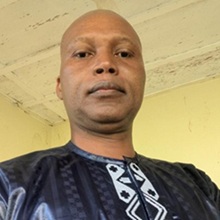
During an online TV Program aired by Amaze TV online tiled: “Focus Salone” Lawyer Musa Beretay, founder of the Beretay Movement raised strong concerns over the 2023 invocation of Section 38(a) of the 1991 Constitution of Sierra Leone, which paved the way for the adoption of the Proportional Representation (PR) system during the last elections.
According to Lawyer Beretay, the decision was both untimely and improper, as Sierra Leone already had established constituencies and electoral boundaries in place across the country. He further explained that Section 38(a) was designed to be applied only in circumstances where no such constituencies existed thereby creating a legal and political vacuum that would warrant the use of the PR system as an alternative.
“In 2023, there were clearly defined constituencies and boundaries. Invoking Section 38(a) in such a situation, in my view, was not consistent with the spirit and intent of the Constitution,” Beretay maintained.
The legal practitioner further argued that the constitutional provision was never intended to serve as a convenient tool for political maneuvering but rather as a safeguard mechanism for the conduct of elections in extraordinary circumstances. He therefore pointed out that its application in the 2023 elections undermined democratic processes and raised legitimate questions about constitutional compliance.
Lawyer Beretay’s remarks on Focus Salone have since sparked public debate on the interpretation of electoral laws in Sierra Leone. Many observers see his position as a reminder of the need for legal clarity and consistency in the country’s governance system, especially on matters that affect representation and democracy.
Responding to Lawyer Beretay’s criticism, another senior Law practitioner, Musa Pious Jr strongly refuted Lawyer Musa Beretay’s assertions that seem to suggest the untimely and wrongful invocation of Section 38(a) of the 1991 Constitution, which ushered in the Proportional Representation (PR) system during the 2023 elections.
According to Lawyer Pious, the use of the PR system was both constitutional and necessary to safeguard Sierra Leone’s democratic process. He maintained that it is the Constitution that empowers the Electoral Commission for Sierra Leone (ECSL) to invoke the PR whenever circumstances warrant it, particularly when fair and credible elections cannot be effectively conducted through established constituencies.
Lawyer Pious said Sierra Leone’s political climate leading up to the 2023 elections was deeply polarized, with boundary disputes and intra tensions which made the traditional constituency-based system impracticable. He maintained that the framers of the 1991 Constitution had anticipated situations like that, which was why Section 38(a) exists in the Constitution in order to ensure that representation in Parliament is not disrupted or manipulated due to logistical or political challenges.
Pious went on to dismiss Beretay’s comparison of the 2023 election scenario with those of 1996 and 2002 elections scenarios when the PR system was used because certain districts were inaccessible due to the war. Pious noted that although Sierra Leone is no longer in civil conflict, but equally so, there were serious challenges including disputes over boundary demarcations and electoral tensions which justified the PR approach in 2023.
“The law is not tied only to war conditions. It is tied to any condition that makes constituencies ineffective for fair elections,” Lawyer Musa Pious emphasized.
On the issue of governance and development under the All People’s Congress (APC), which Beretay praised in terms of development, Pious noted that political narratives should not be mixed with constitutional interpretation. “We must separate party politics from constitutional provisions; so whether APC developed infrastructure or not has no bearing on the legality and timeliness of Section 38(a)” Lawyer Pious stated.
Lawyer Pious concluded by reaffirming that the PR system was both legitimate and beneficial for Sierra Leone at the time it was applied. He said it provided a more inclusive system of representation, reducing the risks of electoral violence while ensuring that smaller political parties had a fair chance to participate in governance.