
By Musa Paul Feika
As Sierra Leone moves towards the 2028 general elections, the All People’s Congress (APC) faces a significant question about its political future: can the party build a united and credible national movement while its internal disagreements remain unresolved?
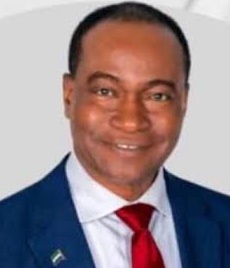
For a party seeking to return to governance, reconciliation, internal democracy and strategic leadership must be central to its preparations. Among the issues deserving serious attention is the relationship between the APC leadership and Dr. Samura Mathew Wilson Kamara, the party’s presidential candidate in the 2018 and 2023 elections.
The argument that the APC should reconcile with Dr. Kamara is not simply about an individual’s political ambition. It concerns the party’s ability to manage disagreements, retain the confidence of its supporters and build a common platform ahead of another competitive national election.
Dr. Kamara remains a significant figure and a force to reckon with in APC’s recent political history. His participation in two presidential elections has given him experience in national appeal, party mobilisation and engagement with voters across the country. Consequently, any discussion about the APC’s future direction should consider how his experience and political relationships can contribute to the party’s broader objectives.
In September 2026, reports indicated that senior APC member Alfred Minkailu Koroma had called for Dr. Kamara’s involvement in the party’s preparations for 2028, arguing that dialogue and unity were important to the party’s future. That intervention reflects a wider debate within the opposition about the importance of bringing influential party figures into a common political conversation.
One of the greatest challenges facing a political party is managing disagreements among its leading figures without allowing those disagreements to weaken its grassroots structures.
Political parties naturally contain competing interests, leadership ambitions and different interpretations of past events. These differences are not necessarily destructive. They become a serious problem when communication breaks down, trust diminishes and party members begin to place personal loyalties above collective objectives.
For the APC, reconciliation with Dr. Kamara could provide an opportunity to address outstanding grievances and establish a more constructive relationship between the former presidential candidate and the party leadership.
In May 2026, reports stated that Dr. Kamara had written to the APC Elders Council seeking expanded engagement to address the party’s internal impasse. His reported willingness to participate in genuine dialogue offered an opportunity for the party to pursue a structured reconciliation process.
The leadership should therefore treat dialogue as a practical political responsibility rather than a symbolic gesture. Such engagement should identify the outstanding disagreements, establish mutually acceptable procedures for resolving them and provide assurances that party members will be treated fairly.
Reconciliation does not mean that every party leader must agree on every issue. It means creating a political environment in which disagreements can be resolved without undermining the party’s institutional strength.
The APC should recognise that internal unity cannot be achieved merely through public declarations. It requires consistent engagement, mutual respect and a willingness to address concerns that may be uncomfortable for the leadership.
If influential figures and their supporters feel excluded from important party decisions, the consequences could include declining participation, reduced cooperation and difficulties coordinating campaign activities. Such outcomes are risks that any political organisation should seek to prevent.
However, it would be premature to conclude that the APC cannot return to governance without Dr. Kamara. Electoral outcomes depend on several factors, including the popularity and credibility of the eventual presidential candidate, the party’s organisation, its campaign message, voter turnout, public confidence and the performance of political competitors.
Nevertheless, reconciliation could help the APC reduce avoidable internal obstacles and concentrate more effectively on the issues that matter to Sierra Leoneans.
The party should also avoid treating reconciliation as a substitute for internal democratic reforms. Supporters need confidence that leadership positions and the selection of a presidential candidate will be determined through credible, transparent and constitutionally compliant procedures.
Beyond the question of Dr. Kamara’s role, the APC must demonstrate that it understands the concerns of ordinary citizens.
Voters are interested in employment opportunities, the cost of living, electricity, education, healthcare, agricultural development, public accountability and the management of national resources. A party seeking public confidence must explain how its policies would address these concerns and how it would measure its performance if entrusted with governance.
The APC should use its internal reconciliation process to develop a coherent national programme that goes beyond personalities and campaign slogans.
Dr. Kamara’s experience could contribute to such discussions, alongside the knowledge and ideas of other party elders, young people, women, district leaders, constituency representatives and prospective presidential candidates. No single individual should be treated as the sole custodian of the party’s political future.
An inclusive approach would allow the APC to benefit from the experience of established figures while creating opportunities for new leaders and fresh ideas.
The APC leadership and Dr. Kamara should consider establishing a clear framework for reconciliation. This could include regular dialogue involving the Elders Council, the party executive and relevant stakeholders, together with agreed procedures for addressing outstanding disputes.
The process should also clarify how Dr. Kamara and his supporters can contribute to party building, regardless of whether he seeks a future leadership position. His own publicly stated position on the 2028 elections should be respected, and any future role should emerge through dialogue rather than pressure or assumption.
Equally important, the party must ensure that reconciliation does not become a private arrangement among senior figures. Grassroots members should have confidence that their concerns and participation matter.
The road to the 2028 general elections presents the APC with an opportunity to strengthen its organisation, rebuild relationships and demonstrate political maturity.
Reconciliation with Dr. Samura Mathew Wilson Kamara should be considered an important part of that conversation because of his experience and established place in the party’s recent electoral history. Yet unity must be broader than one individual, and the party’s future cannot depend exclusively on any single personality.
Eventually, the APC’s challenge is to combine reconciliation with internal democracy, credible leadership selection, effective grassroots mobilisation and a convincing national development agenda.
Whether the party can achieve its ambition of returning to governance will depend on how successfully it addresses these responsibilities and earns the confidence of voters across Sierra Leone.
The message is clear: before seeking the mandate of the nation in 2028, the APC must demonstrate that it can manage its own differences through dialogue, fairness and a shared commitment to democratic politics.