
By: Musa Paul Feika
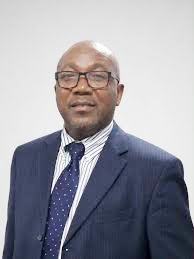
Hon. Keikura Vandi, Chairman of Parliament’s Finance Committee, has challenged the National Revenue Authority (NRA) to intensify revenue mobilisation, improve accountability and ensure that taxpayers meet their obligations, warning that the country cannot afford continued revenue shortfalls at a time when the economy remains under pressure.
Speaking in Parliament during the consideration and approval of Presidential nominees, Hon. Vandi said the debate was fundamentally about strengthening Sierra Leone’s economy and ensuring that those appointed to key public offices deliver measurable results.
He placed particular emphasis on the NRA, stressing that revenue mobilisation remains critical to the Government’s ability to finance development programmes and respond to the economic challenges facing ordinary citizens.
Vandi recalled that while serving as Chairman of the Finance Committee, Parliament wrote to the NRA requesting a list of taxpayers who were in arrears as of December 31, 2025.
According to him, the response revealed outstanding tax liabilities of approximately Le575.631 billion, a figure he described as shocking.
He said Parliament subsequently assisted in identifying the taxpayers and gave specific instructions for the outstanding obligations to be settled.
However, the Finance Committee later requested a report from the NRA indicating how many of the identified taxpayers had actually paid their debts and how much additional revenue had been collected as a result of Parliament’s intervention.
“Up to this point, we have not received a single report,” Vandi told Parliament.
The Finance Committee Chairman said the absence of feedback raises serious concerns about accountability within the revenue authority, particularly when Parliament has taken an active interest in helping the NRA recover outstanding taxes.
He acknowledged that the Commissioner-General may have delegated responsibilities to other officials, but insisted that delegation cannot remove the responsibility to account for results.
“Delegation does not remove the need for accountability. We need to know what has been achieved,” he stressed.
Hon. Vandi also raised concerns over the NRA’s revenue performance during the first half of 2026.
He said that, based on the revised revenue target, the Authority was expected to collect approximately Le11.144 trillion during the first six months of the year. However, actual collections stood at about Le10.327 trillion, resulting in a reported shortfall of roughly Le816 billion.
The Finance Committee Chairman urged the Commissioner-General to ensure that the gap does not become a recurring feature of the country’s revenue performance.
“You know what needs to be done. Go back to work seriously with your team. Parliament is ready to support you, but we also expect results,” he said.
Vandi’s intervention comes against the backdrop of continuing concerns over inflation and the cost of living. He noted that inflation remained a major challenge, putting additional pressure on households and reducing the purchasing power of citizens.
He argued that stronger domestic revenue mobilisation is therefore essential if Government is to create the fiscal space needed to support economic activity, public services and development.
The Finance Committee Chairman also acknowledged the achievements of the former NRA leadership, particularly the significant increase in revenue mobilisation recorded in recent years.
He pointed to the growth of NRA revenue from about Le7.064 trillion in 2023 to approximately Le18 trillion in 2025, describing the progress as evidence that effective reforms can significantly strengthen domestic resource mobilisation.
However, Vandi’s remarks made clear that past achievements cannot substitute for continued performance.
He urged the new leadership and other nominees appointed to economic-related positions to approach their responsibilities with commitment, competence and a clear focus on results.
Beyond the NRA, Vandi also raised broader concerns about economic infrastructure and the country’s port operations. He argued that Sierra Leone must improve infrastructure and facilitate trade if the country is serious about expanding its economy and attracting investment.
He questioned delays surrounding an agreement in Parliament relating to the establishment of another port-related facility, stressing that the country could not afford to lose economic opportunities because of inadequate infrastructure or slow decision-making.
For Vandi, the challenge facing the country’s economic managers is therefore twofold: Government must strengthen revenue collection while simultaneously creating an environment in which businesses can grow and investment can flourish.
His warning to the NRA was particularly direct: Parliament is prepared to provide the necessary oversight and support, but the Authority must demonstrate tangible results.
As Sierra Leone continues to grapple with economic pressures, the Finance Committee Chairman’s intervention places renewed attention on tax compliance, revenue leakages, accountability and the effectiveness of the country’s domestic revenue mobilisation strategy.
The message from Parliament is clear: revenue targets must be met, tax arrears must be recovered, and public institutions must account for their performance.