
By Musa Paul Feika
All People’s Congress (APC) party Member of Parliament for Bombali District, Hon. Suliaman Osman Sesay has smeared the Government of Sierra Leone’s Supplementary Appropriation Act, 2026 as a portrayal of the poor and unprogressive state of country’s economy as it fails to translate positive macroeconomic indicators into meaningful improvements in the lives of ordinary Sierra
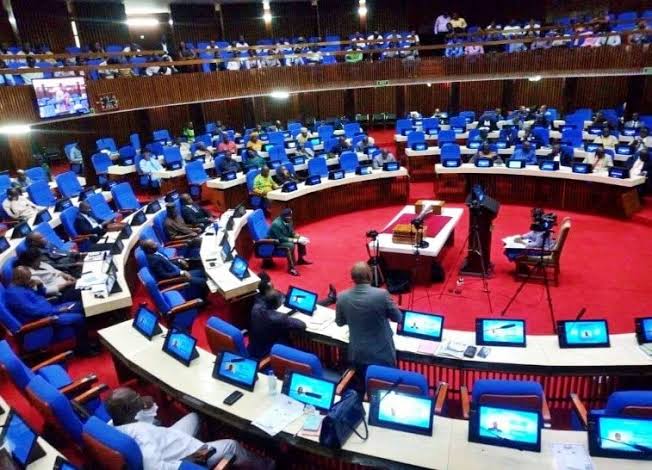
His comments came last Friday, 31st July, 2026 in his contribution to the debate in the Well of Parliament on the Supplementary Appropriation Bill 2026.
Hon. Sesay acknowledged that the Government had presented encouraging economic statistics, but that the reported economic gains remain largely invisible to citizens who continue grappling with the high costs of living and a persistent economic hardship.
He stressed that strengthening domestic revenue mobilization should remain one of Government’s foremost priorities, warning that any nation unable to generate sufficient domestic revenue would struggle to achieve sustainable economic growth and fiscal stability.
According to the APC Legislator, Sierra Leone continues to face serious domestic financial challenges, including the accumulation of unpaid arrears owed to local suppliers and contractors.
Referring to page 12 of the Supplementary Appropriation Bill, Hon. Sesay noted that the allocation for settling domestic supplier arrears remained inadequate despite the substantial backlog. He argued that failure to pay local contractors and suppliers continues to weaken economic activity and undermines business confidence.
“These domestic suppliers are the engine of growth. If Government pays them, they will pay workers, employ more people, expand their businesses and stimulate the economy,” he stated.
He therefore urged the Minister of Finance to prioritize the settlement of domestic arrears, arguing that such payments would generate a multiplier effect throughout the economy by increasing employment, consumption and private sector investment.
Hon. Sesay also questioned the Government’s optimism regarding Sierra Leone’s foreign exchange position, expressing concern over the country’s declining foreign reserve levels.
He maintained that the reserves remain below internationally recommended thresholds and called for deliberate policies aimed at increasing foreign reserves to at least three months of import cover in order to strengthen economic resilience and stabilise the Leone.
Turning to inflation, the Bombali lawmaker observed that although Government reported a decline in inflation—from approximately 14.6 per cent in May to 13.5 per cent, Hon. Sesay asserted that the reduction has not translated into lower prices for goods and services.
He argued that ordinary Sierra Leoneans continue to pay virtually the same prices for basic commodities despite improvements reflected in official economic data.
“The gains exist on paper but are not reflected on the ground. Government should not celebrate macroeconomic indicators alone when the ordinary citizen is yet to experience any meaningful relief,” Hon. Sesay remarked.
He emphasised that Parliament’s responsibility extends beyond approving budgets to ensuring that Government policies produce measurable improvements in the welfare of citizens.
Hon. Sesay further criticised what he described as the supplementary budget’s emphasis on recurrent expenditure rather than investments capable of driving long-term economic growth.
He expressed concern over increased allocations to administrative institutions, including the Office of the Chief Minister, while sectors such as agriculture and human capital development appeared to receive comparatively limited attention.
According to him, agriculture and human capital development remain the foundation of sustainable economic transformation because they directly contribute to increased productivity, job creation and Gross Domestic Product (GDP).
“If we continue spending more on administration instead of productive sectors, we should not expect meaningful economic transformation,” he cautioned.
The APC MP also questioned significant budgetary allocations for hosting international meetings and conferences, including activities related to the Forum on China–Africa Cooperation (FOCAC). While acknowledging that such events may enhance Sierra Leone’s international profile, he argued that Government must carefully balance international engagements with pressing domestic priorities.
He maintained that expenditure on international conferences should not come at the expense of investments capable of directly improving the livelihoods of Sierra Leoneans.
Concluding his contribution, Hon. Sesay urged the Minister of Finance to ensure that fiscal decisions are guided by sound economic principles rather than political considerations.
He called on Government to prioritize investment in education, agriculture, healthcare and other productive sectors capable of delivering measurable improvements in the lives of citizens.
“Our investment decisions must be guided by economic realities if we truly want to move this country forward,” he concluded.
Responding during the same parliamentary debate, ruling Sierra Leone People’s Party (SLPP) Member of Parliament, Hon. Mustapha Musa Sellu, defended the Government’s request for supplementary spending, arguing that the additional allocations were necessary to respond to emerging economic realities, sustain key development projects and cushion the country against external shocks.
Hon. Sellu commended the Government’s efforts to strengthen domestic revenue mobilization through the National Revenue Authority (NRA), highlighting improvements in the operations of the Port of Sierra Leone as evidence of ongoing economic reforms.
He further maintained that prudent fiscal management had enabled Sierra Leone to withstand global economic pressures and attributed rising fuel prices and other economic challenges largely to international developments rather than domestic policy failures.
The ruling party lawmaker urged Parliament to support the supplementary budget, insisting that the proposed allocations would help protect the economy, sustain critical development programmes and promote continued national development.