
By Musa Paul Feika
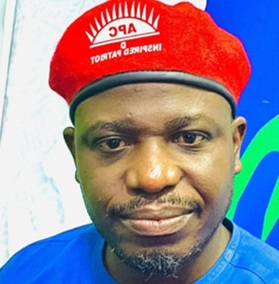
A fresh wave of political debate has been ignited following remarks by minority leader Hon. Abdul Kargbo, in the Sixth Parliament who described Sierra Leone’s Parliament and the Electoral Commission for Sierra Leone (ECSL) as “state-captured institutions” during a talk show on one of the local online TV stations.
Hon. Kargbo, a senior member of the opposition All People’s Congress (APC) and Member of Parliament representing Port Loko District, made the assertion while discussing governance, electoral integrity, and public trust in democratic institutions.
His comments have since drawn mixed reactions from political stakeholders, civil society groups, and members of the public.
The phrase “state capture” is commonly used in political discourse to describe a situation in which powerful individuals, political elites, or interest groups exert undue influence over state institutions, shaping decisions and policies to serve partisan or private interests rather than the broader public good. By applying this term to Parliament and the ECSL, Hon. Kargbo suggested that these institutions are no longer operating independently or impartially.
During the interview, Hon. Kargbo reportedly argued that Parliament, which constitutionally serves as a check on the Executive, has failed in its oversight responsibilities. According to him, the legislative body has, in recent years, acted in ways that appear to align more closely with the interests of the ruling establishment than with its constitutional mandate to provide scrutiny, debate, and accountability.
He also raised concerns about the credibility and independence of the ECSL, the institution constitutionally mandated to conduct and supervise public elections in Sierra Leone. While he did not provide specific legal findings to substantiate his claim during the broadcast, his remarks appear to reflect broader opposition concerns about the management and transparency of recent electoral processes.
The Electoral Commission for Sierra Leone has consistently maintained that it operates within the confines of the Constitution and electoral laws of the country. The Commission has, on several occasions, defended its procedures and decisions, emphasizing its commitment to free, fair, and credible elections.
Similarly, leaders within Parliament have repeatedly rejected claims that the institution is compromised, arguing that legislative proceedings are conducted in accordance with established rules and democratic norms.
Hon. Kargbo’s comments come at a time when political tensions remain high in Sierra Leone, with public discourse increasingly focused on governance, accountability, and the strength of democratic institutions. For supporters of the opposition, his remarks echo long-standing grievances about what they perceive as shrinking democratic space and the marginalization of dissenting voices.
Critics, however, view the statement as inflammatory and potentially damaging to public confidence in state institutions. Some political observers warn that branding key democratic bodies as “state-captured” without presenting concrete evidence risks undermining trust in systems that are essential to national stability.
The debate also raises broader questions about the health of Sierra Leone’s democracy. Since the end of the civil war and the establishment of multi-party democratic governance, the country has made notable progress in institutional development. Parliament, the judiciary, and electoral bodies have been central pillars of that democratic architecture.
However, like many young democracies, Sierra Leone continues to grapple with challenges related to political polarization, institutional independence, and public perception.
Civil society organizations have often emphasized the need for constructive engagement rather than confrontational rhetoric. Some governance advocates argue that if there are genuine concerns about institutional bias or irregularities, these should be addressed through established legal and constitutional mechanisms, including parliamentary debate, judicial review, and electoral petitions.
At the same time, political analysts note that strong criticism of institutions is not uncommon in competitive democracies.
Opposition figures frequently use robust language to draw attention to issues they believe require urgent reform. In this context, Hon. Kargbo’s statement can be seen as part of a broader strategy to galvanize public scrutiny and political accountability.
What remains clear is that the remarks have intensified public conversation about institutional independence and democratic governance. Whether his claims will prompt formal responses from Parliament or the ECSL remains to be seen.
As Sierra Leone continues its democratic journey, the resilience and credibility of its institutions will remain central to national cohesion and development. The current debate underscores the importance of transparency, accountability, and open dialogue in maintaining public trust. Ultimately, safeguarding democracy requires not only strong institutions but also responsible leadership and informed civic engagement.