
By Musa Paul Feika
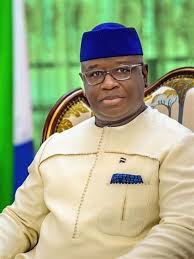
President Julius Maada Bio has sparked fresh debate over his administration’s handling of Sierra Leone’s electricity sector after making what many critics describe as an unfortunate public admission during the Presidential Town Hall Meeting in Makeni on Tuesday, 30th 2026.
Reflecting on his experience in the energy sector, the President stated, “When we talk about electricity, I myself served in that ministry. What I saw there prompted me to leave. Mr. Yumkella helped me a great deal, and sometimes he almost goes crazy every day, even though he understands the electricity sector, because the challenges are many and the issues are complex. At times, people blame EDSA or the Ministry of Energy, but the responsibility belongs to all of us. Let us pay our electricity bills and protect our transformers.”
For many observers, such remarks are unfortunate, particularly coming from a sitting President. Rather than inspiring confidence in his government’s ability to confront one of the country’s most pressing challenges, the statement may be interpreted as an acknowledgment of the administration’s inability to effectively resolve the electricity crisis after years in office.
A President is widely expected to project confidence, offer practical solutions, and reassure citizens that difficult national problems can be overcome. By admitting that the complexity of the sector prompted him to leave the ministry and suggesting that even experienced professionals such as Dr. Kandeh Yumkella struggle under its weight, President Bio appeared, in the eyes of his critics, to highlight the limitations of his own administration rather than its achievements.
While the President urged citizens to pay their electricity bills and protect public infrastructure, many Sierra Leoneans argue that such civic responsibilities must be accompanied by efficient service delivery, consistent electricity supply, and effective government leadership. Consumers who regularly endure prolonged power outages and rising electricity costs may reasonable expect stronger assurances and concrete policy measures rather than explanations of the sector’s difficulties.
The President’s comments have also renewed concerns about the government’s overall management of the energy sector. Critics contend that after years of promising reforms, the administration should be presenting measurable progress instead of publicly emphasizing the complexity of the challenges it faces.
Leadership, particularly during periods of national difficulty, is often measured not only by recognizing problems but by demonstrating the resolve, competence, and vision to overcome them. For critics, President Bio’s remarks risk conveying frustration and resignation at a time when the public is looking for decisive action and tangible improvements in electricity generation and distribution.
As Sierra Leone continues to confront persistent power shortages, many citizens will likely judge the government’s performance not by its acknowledgment of the problem but by its ability to deliver reliable electricity and restore public confidence in the country’s energy sector.