

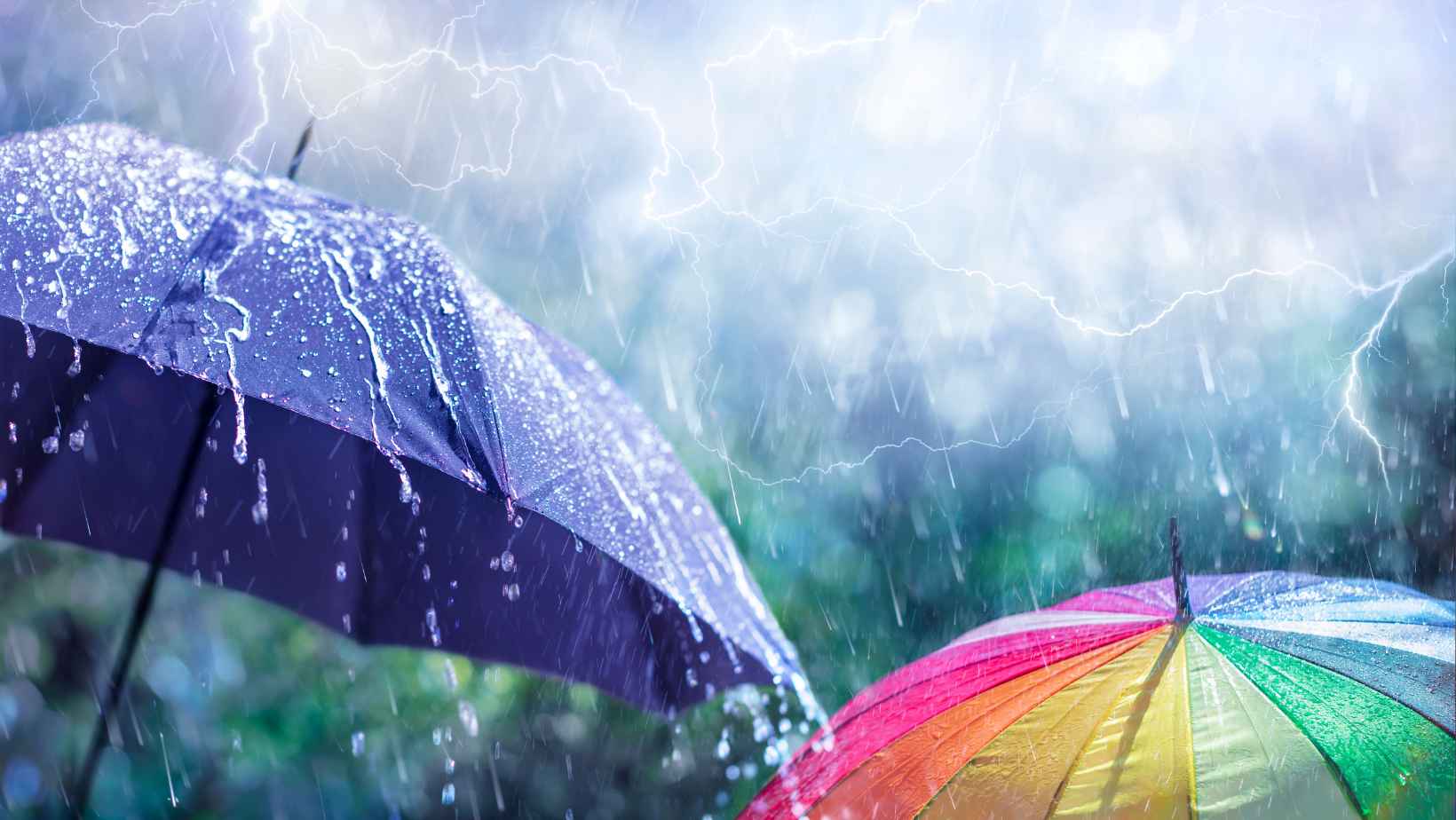
As the heavens open over Sierra Leone in yet another torrential rainy season, the streets of Freetown and the remote hills of Koinadugu tell a tale soaked in both water and worry. What should be a season of agricultural promise has again become a metaphor for the nation’s chronic economic frailty and political turbulence. When it rains in Sierra Leone, it does not simply pour—it exposes every crack in the country’s social and political foundation.
Now, more than ever, Sierra Leone is at a crossroads. The rainfall is heavy, but the burden of hardship is heavier. Economic instability, political uncertainty, and environmental vulnerability have collided—turning what should be a natural cycle into a national crisis.
A Perfect Storm: Nature Meets Neglect:
The rainy season in Sierra Leone, which typically spans May to October, is a lifeline for farmers and a source of freshwater. Yet, every year, it also becomes a trigger for chaos, from mudslides and floods to displacement, rising food prices, and cholera outbreaks.
“The rain doesn’t choose who gets wet,” says an elderly market woman in Waterloo. “But it exposes who has a roof—and who has been left in the cold.” That roof, both literal and symbolic, is what millions of Sierra Leoneans are lacking. Public infrastructure continues to collapse with every downpour. Roads are washed away. Bridges become death traps. Drainage systems, clogged and neglected, turn streets into rivers of filth.
What’s worse, disasters don’t wait for political stability. And unfortunately, that’s a luxury Sierra Leone is yet to enjoy.
The Economy on a Slippery Slope:
Inflation continues to batter the already weakened Leone. As of mid-2025, food prices have surged more than 35% since January. The cost of a bag of rice—the staple of Sierra Leonean homes—has skyrocketed beyond the means of the average household.
During the rainy season, transport costs double. Trucks carrying food and goods are delayed or rerouted due to impassable roads, causing shortages even in urban centers. Power outages, which are already chronic, increase in frequency. Businesses struggle. Students miss classes. Hospitals ration supplies.
“The economy is leaking like a basket in the rain,” a local economist told AYV News. “You can pour in all the development funds, but without plugging the holes of corruption and inefficiency, nothing will ever fill.”
Indeed, the rainy season’s economic toll is not simply a natural consequence—it is a human-made disaster rooted in weak planning, poor governance, and perennial neglect.
Political Instability: A Nation Divided, Even in Crisis:
The storm outside mirrors the political storm brewing within. The country remains deeply polarized with tensions still high following last year’s disputed elections and the failed coup attempt in 2023. Accusations fly between the ruling Sierra Leone People’s Party (SLPP) and the main opposition, the All People’s Congress (APC). While citizens cry out for solutions, leaders are often too busy defending political turf to respond.
“You can’t row a boat while fighting over control of the paddle,” says one civil society activist in Kenema. And yet, this is what Sierra Leone’s political elite continues to do.
District councils complain of underfunding. Civil servants wait months for salaries. Essential services are politicized. The rainy season worsens it all. When disaster strikes, aid is too often distributed not by need but by political affiliation as the idiom goes, “When two elephants fight, it is the grass that suffers.” And in Sierra Leone, the people have been trampled for far too long.
Environmental Fragility Meets Human Insecurity:
Climate change has only magnified the rainy season’s destructive power. Rising sea levels and deforestation have made Freetown particularly vulnerable. The scars of the 2017 mudslide that killed over 1,000 people still haunt the city’s steep hillsides.
Yet informal settlements continue to spring up in disaster-prone areas with reckless abandon. This is all because of poor enforcement, lack of urban planning, and poverty trap families in danger zones. The question looms: Must Sierra Leone always wait for the next disaster to act?
What Must Be Done? The Recommendations:
Establish a National Rainy Season Emergency Preparedness Fund
This fund should be activated annually and managed transparently, with input from civil society. No region should face disaster response delays because of red tape.
Fix the Drainage and Road Infrastructure—Permanently
Stop the cycle of patchwork repairs. Invest in durable, climate-resilient infrastructure that lasts beyond one administration.
Depoliticize Disaster Relief and Local Governance
Allocate disaster response based on community need—not political affiliation. Empower local councils to act swiftly.
Boost Agricultural Resilience and Local Food Production
Support farmers with early inputs and flood-resistant seeds. Build accessible rural storage facilities to prevent post-harvest loss during storms.
Create a Multi-party Crisis Committee during the Rainy Season:
Let representatives from all major parties, experts, and civil society sit on a unified platform to tackle seasonal crises together.
Educate the Public on Environmental Hazards:
Use community radio, schools, and town halls to spread awareness about flood risk, sanitation, and disaster readiness.
The Rain Will Come Again — But Must Suffering Always Follow?
As July wears on and rain continues to fall, the question is not whether Sierra Leone will endure more hardship. It will. The question is whether those with power will finally act with foresight and unity.
As the old Krio saying goes, “If you know say rain go fall, you nor go dry your cloth outside.” Sierra Leone knows the rain will fall—year after year. But the country continues to behave as though it is surprised each time. That must change.
If leaders do not act boldly now, then they must admit: it is not the rain that fails Sierra Leone—it is they who fail the people.