

The recent revelations coming out of the Sierra Leone Police (SLP) are not merely alarming; they are damning. They confirm what many citizens have long suspected: the SLP is in a state of systematic collapse, crippled by corruption, mismanagement, and leadership inertia. Unless urgent corrective action are taken, the Sierra Leone risks presiding over what would look like a police security architecture that is predatory and dysfunctional.
A Force Starved and Exploited From Within:
Available internal briefings, corroborated by junior and senior officers who spoke under anonymity, indicate that the Government of Sierra Leone owes police personnel four months of rice supply, affecting over 13,000 police officers nationwide. This is not a welfare delay; it is institutional sabotage. Rice supply has historically been the one stabilizing factor that prevents severe disaffection within the junior ranks. Removing it undermines morale and exposes officers to bribery and extortion pressures in the field.
Even worse according to anonymous sources, since Fayia Sellu assumed office as Inspector General, the Police Supply Unit has reportedly not provided a single new set of uniforms to rank-and-file officers. Instead, officers are being forced to buy uniforms at an outrageous cost of Le 1,300 per set, and boots at Le 750; a cost far beyond the reach of a junior officer whose monthly take-home pay hovers between Le 1,600 and Le 2,000.
How Does A Law Enforcer Survive This? From talking to some of the anonymous affected junior officers, it was deduced that the following measures self-adduced measures have instead been surreptitiously adopted by the very affected officers as a to mitigate their worrying situation and condition of service; namely: by cutting corners, taking bribes, extorting citizens and compromising justice.
This is the direct pipeline from welfare deprivation to corruption. It is not theoretical; it is measurable, predictable and now fully visible across the country.
A Leadership Vacuum That Is Breeding Rot:
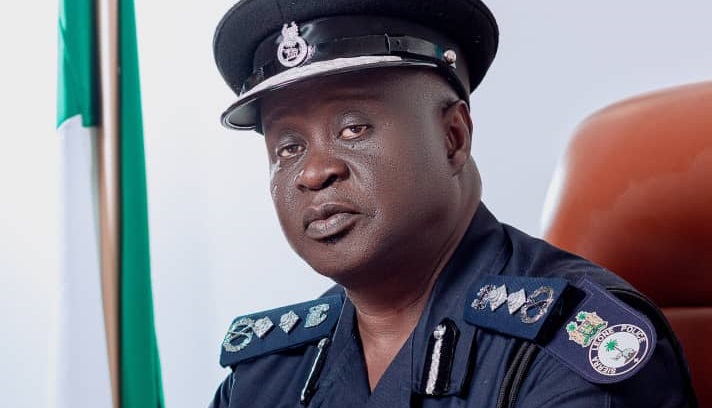
The current Inspector General’s official tenure expired in September 2025. Yet he has reportedly written to the Sierra Leone Police Council requesting a six-month extension—a move that raises serious governance and accountability concerns. Many see this as an attempt to cling to office despite presiding over some of the worst internal breakdowns in recent policing history.
Under his supervision, public trust in the SLP has plummeted. Independent monitoring groups estimate that: 70% of citizens no longer believe the police act impartially and over 60% of officers admit they “cannot meet basic needs” from their salaries.
Reports of rights violations, arbitrary detentions, and selective enforcement have doubled since 2022. This is not coincidence. It is the direct outcome of failed leadership.
A Force That Has Fallen Below Minimum Policing Standards:
When a national police force cannot provide its officers with uniforms, boots, fuel, stationery, or food rations, it loses its operational authority. But when it cannot uphold justice, fairness, and professionalism, it loses its moral authority.
The SLP today faces both crises simultaneously. Ask citizens in Lumley, Calaba Town, Waterloo, Kenema, Makeni and Koidu, they will tell you the same story: That the police are now seen not as protectors, but as predators.
Ask junior officers privately; they will tell you:
“We are suffering. There is no support from above.”
Where Then Is The Accountability and Who Benefits From This Decline?
Uniforms are being commercialized. Welfare is being withheld. Promotions are allegedly being sold. Operational discipline has eroded. And yet no one is held responsible. If this is not collapse, what is it?
The Status quo Is A Threat To National Security:
When the police become impoverished, demoralized, and corruptible, the entire nation becomes vulnerable. Criminal networks thrive. Drug trafficking expands. Political militants exploit security gaps. Citizens lose trust in state institutions.
No country can progress when its police force is decaying from the inside out.
The Path Forward Must Be Non-negotiable:
As way of fixing of such egregious institutional mishap, it will be good that the Sierra Leone Police Council chaired by the Vice President, Ministry of Internal Affairs undertake the following quick-fix measures to avoid the Sierra Leone Police from total collapse and decay. They include:
- Immediate clearance of all welfare arrears owed to officers.
- Independent auditing of the police logistics and supply chain—especially the uniform procurement system.
- Public disclosure of the IGP’s tenure status and the basis of any extension request.
- Restructuring of the top command to restore discipline and integrity.
- Strict enforcement of accountability across all ranks.
- Resetting community-police trust through public reforms and transparent action.
Until these measures are taken, the Sierra Leone Police will remain a dangerously weakened institution, unfit to secure the peace, the laws and the people it is constitutionally mandated to protect.
This decline is real. It is measurable and certainly, it must be confronted and that time is now.