
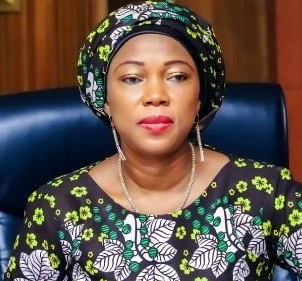
The Constitution of Sierra Leone and the First Lady’s road to State House faces obstacles that may be insurmountable.
The Law Is Clear: Sierra Leone’s 1991 Constitution, as amended, establishes the requirements for the presidency under Section 41. They are straightforward: one must be a citizen of Sierra Leone, at least forty years old, nominated by a political party, and—most crucially—qualified to be elected as a Member of Parliament.
That final clause imports the full weight of Section 76, which specifies who may not be an MP. In 2021, Parliament amended Section 76(1)(a) to make it explicit: anyone who is a naturalized citizen of Sierra Leone is disqualified from becoming a Member of Parliament. By extension, such a person is equally disqualified from contesting the presidency.
Dual nationality is no longer a barrier, but naturalization remains an iron wall.
Fatima Bio’s Origins: A Bag of Complications:
Contrary to popular claims of a Koidu Town birth, evidence suggest that Fatima Bio (née Jabbie) was born in The Gambia, not Sierra Leone. She reportedly came to Koidu at the age of three with her Gambian father. While her mother is believed to be of Sierra Leonean heritage, questions linger about whether she was formally registered as a Sierra Leonean citizen by birth or whether she later obtained citizenship through naturalization. If the latter is true, the law is uncompromising: she cannot serve as President of Sierra Leone, full stop!
Beyond the Law: Other Disqualifying Factors: Even if Fatima Bio were to establish birthright citizenship through maternal descent, the obstacles do not end there.
Temperament and Public Perception: Fatima Bio is widely perceived as bold, unguarded, and often combative in her approach to public life. Her confrontations with journalists, outspoken criticisms of opponents, and unconventional use of the Office of the First Lady have created an image of impulsiveness rather than measured leadership. In a political environment already strained by distrust, this perception is a major liability.
Institutional and Party Resistance: The SLPP is already riddled with succession battles between seasoned politicians, technocrats, and emerging younger figures. The idea of a First Lady leapfrogging these established players would ignite internal rebellion. Party stalwarts—who have spent decades in the trenches—are unlikely to cede the stage to someone seen as an outsider to the party’s struggle.
Questions of Loyalty and Identity: In a country where national identity is jealously guarded, Fatima Bio’s Gambian origins remain a political Achilles’ heel. The whisper that she is “not truly Sierra Leonean” may be unfair, but it resonates deeply with an electorate wary of foreign influence. This perception alone could make her candidacy politically toxic.
Conflict of Interest and Nepotism: A First Lady seeking to succeed her husband as President would invite accusations of dynastic politics and political nepotism. Sierra Leoneans, weary from years of hardship and corruption, are unlikely to embrace what looks like an attempt to turn State House into a family throne.
Constitutional Good Governance Principles: The Constitution, while not explicitly forbidding the succession of spouses, is grounded in principles of democratic renewal and public trust. Fatima Bio’s bid could be seen as violating the spirit of those principles—especially as her political profile derives largely from her husband’s presidency.
The Path to “No”: If Fatima Bio’s Sierra Leonean identity rests on naturalization; her political journey ends at the Constitution. Section 76(1)(a) is merciless: no naturalized citizen can be an MP, and by extension, no naturalized citizen can be President.
Even without the legal disqualification, the political hurdles—questions of legitimacy, party resistance, and public mistrust—make her chances vanishingly small.
The Path to “Yes”: Her only hope would be to prove Sierra Leonean citizenship by descent through her mother, not by naturalization. If she can establish this and meets the other conditions of age, party nomination, and absence of disqualifying convictions or bankruptcy, she might clear the legal hurdle. But legality does not equal electability.
The Bottom Line: The Constitution does not bar Fatima Bio because of her Gambian father. It does not bar her for holding dual nationality. But it does bar her if she is a Sierra Leonean only by naturalization. That is the hard law.
Even if she somehow overcame the legal barrier, the politics would remain unforgiving. Questions of origin, legitimacy, and temperament, compounded by accusations of nepotism, make her path to the presidency exceedingly narrow.
In truth, Fatima Bio’s presidential ambition—if indeed it exists—may already be aborted by the twin weights of law and politics. The Sierra Leonean people, fiercely protective of their identity and weary of dynastic politics, are unlikely to allow her to sit in the seat her husband now occupies.