

PRESS STATEMENT
SUBJECT: “THE FISHERY DEAL” — AN OPEN STATEMENT TO THE BIO ADMINISTRATION AND PEOPLE OF SIERRA LEONE
We, Sierra Leone Advocacy Movement (SLAM-GLOBAL), write on behalf of millions of Sierra Leoneans – from coastal fishing communities to inland families who depend on fish for food – to demand accountability, transparency and fairness in the proposed Russia–Sierra Leone fisheries deal.
This statement is a people’s voice: we speak for fishermen mending nets at dawn, for mothers feeding their children on bonga and sardinella, and for all citizens who have a stake in our oceans. We commend the Bio administration’s effort to diversify the economy through the fisheries sector, but we have grave concerns about how this deal has been negotiated and about its hidden costs.
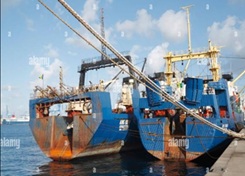

Our analysis of the available information shows that, far from being a straightforward boon, the agreement as currently conceived risks becoming a “back-door travel subsidy” for the State House, rather than a sustainable boon for the people of Sierra Leone. We see a pattern that must change. Our laws even guarantee citizen participation – for example, the Fisheries Act reserves seats for artisanal fisher associations on key committees and requires quota decisions to be made “in consultation with relevant stakeholders” – yet, in reality, the Russia deal was negotiated in camera, with no public hearings or environmental-social impact assessments announced. Sierra Leoneans have only seen the headlines (an announced 40,000‐tonne quota and “up to twenty” Russian trawlers); the fine print on licence fees, revenue-sharing, observer rules and landing obligations remains hidden. This secrecy is unacceptable. As the law envisions, the people must be involved – the fishery belongs to all of us, not just distant fleets or a few officials.
Fish are our lifeblood: They supply roughly 64–80% of all animal protein eaten in Sierra Leone and are irreplaceable for low-income diets. Almost 850,000 schoolchildren now rely on school-meals programs that feature fish. If 40,000 tonnes a year are exported unchecked, we risk hunger and malnutrition on our shores. Has any impact study been done on how this export flow would affect the retail price of bonga, sardinella or horse-mackerel in Freetown markets, or the feeding of our children? We have seen no transparency on this, and yet it is critically important. Before shipping boatloads of fish abroad, the Bio administration must ensure that enough fish remain at home to feed our people.
Meanwhile, there is the question of who benefits. Right now, Sierra Leone’s fisheries contribute about 10% of GDP, yet over 90% of that revenue goes to industrial operators. Without strict ring-fencing, any extra licence fees from Russia will simply pour into the Consolidated Fund and disappear into general expenditures – with only “tiny crumbs” trickling back to the fisheries development fund or coastal communities. In other words, our natural wealth will continue to be captured by distant-water fleets and a handful of Freetown elites, as has happened with past resource deals.
To make matters worse, the Bio administration already spends lavishly on official travel. Sierra Leoneans are funding the most expensive presidency to move around in the sub-region. The current annual travel budget for the President and entourage is over US$12 million – more than the entire first-year payment from Russia’s licence fees (estimated at only US$8–10 million). In effect, the promised fishery windfall could be swallowed by existing travel costs. As one analyst put it, our governments are risking that this deal becomes nothing more than “another episode in the long-running pattern of resource-for-entourage politics”. Every dollar our leaders spend on chartered jets, five-star hotels and per diems is a dollar not spent on hospitals, schools, fishery patrol boats, or nets for our youth. Sierra Leoneans see this clearly: jet- setting is seen as a direct trade-off with basic services. We cannot allow our fish – our children’s food – to be used to underwrite endless VIP travel.
We therefore call on the Bio administration to take immediate action:
- Publish all documents. Release the full Russia–Sierra Leone fishing protocol, licence fee schedule and implementing regulations in full, in the Sierra Leone Gazette and online, so citizens can scrutinize the deal. This includes the quota- impact study and any Environmental and Social Impact Assessment (ESIA) of the proposed 40,000 t No more leaks or partial communiqués – we demand the actual agreements.
- Hold public hearings. Before Parliament ratifies the deal, convene open sittings where artisanal fisher unions, women fish-processors, district councils and community leaders are invited to testify. Give legal weight to their voices. Our Constitution and Fisheries Act enshrine participation; let these rights become reality, not empty words.
- Ring-fence revenues for the coast. Legislate that at least 30% of all foreign-fishing fees (licence and royalty) go directly to the legally-established Fisheries Development & Management Fund (FDMF) and to coastal district administrations. This will ensure money ends up improving landing sites, cold storage and health clinics for our fishers, not financing flights. Enshrining a statutory floor protects the Fund from being raided by the Presidency.
- Cap and disclose travel. Pass a Travel Ordinance (as Liberia just did) to limit delegation sizes and require economy-class travel by default. Fully audit and publicly disclose every penny spent on official travel. In particular, mandate an annual independent audit of the Presidential Travel Account (as well as the FDMF) to restore oversight. This will prevent licence fees from simply vanishing into unchecked per diems, as often in the past.
- Conduct an audit of the presidential motorcade and fuel consumption. If the convoy is larger than necessary, downsize it. Report the findings to the Auditor General and invite civil society observation. Every slash in wasteful fuel use frees money for ambulances and rural clinics.
- Enforce robust monitoring. Make sure every Russian vessel has a Sierra Leonean observer on board, and that all ships carry AIS tracking and mandatory electronic logbooks, as scientists and NGOs recommend. Create a real-time, public dashboard for vessel positions, landings and royalties. Empower our communities to watch the trawlers – know where they fish and ensure they stay outside the 6–nautical-mile artisanal zone. Any violation must carry serious penalties. We will hold those responsible to account for any illegal catches or gear
- Invest in local industry. We urge the Bio administration to explore home- grown alternatives. Recall that Sierra Leone has an idle National Industrial Fishing Company fleet capable of 20,000 t/year, and regional examples (like Ghana’s 51% local-ownership rule) that build domestic capacity. Why not refurbish and lease our own trawlers, creating thousands of jobs and keeping 40–60% of the catch value at home, instead of giving it all away? At the very least, ensure that the promised processing hub and cold stores give priority to local cooperatives (especially women’s groups) with duty waivers and power guarantees. Women smoke about 80% of our catch and run half of the small-scale fish trade, yet so far they have no guaranteed voice in this deal. Will they have stalls and cold space?
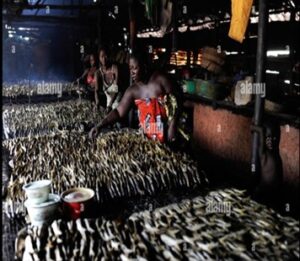

Will revenue-sharing support micro-credit and childcare so women can earn more? As it stands, the briefings are silent on these points – a silence we cannot accept.
- Protect our environment and climate. We are alarmed that nothing in the leaked deal bans bottom-trawling or mandates turtle-excluders – gear known to destroy seabeds and juvenile fish. Meanwhile, these 20–30 medium trawlers will burn ≈49 million litres of diesel per year, emitting ~128,000 tonnes of CO₂ – more than all our country’s road traffic combined. Our future depends on healthy oceans. An independent scientific review of the biomass surveys (the so-called Great African Expedition) must be done before final quotas are set. We demand open data and peer review. Sierra Leoneans will not let flawed or opaque science justify plundering our seas.
- Review and Reduce Lucrative Fees: Abolish or restructure regressive charges. For example, immediately phase out the cash-only $25 airport security tax. If security needs funding, do so progressively (e.g. on income, not desperate travelers) and allow credit/mobile payments. All such fees should be debated publicly, not imposed without consultation.
- Prioritize Essential Services: Commit to spending increases in health, education, agriculture, and social safety nets. For example, invest in fixing potholes to help farmers get goods to market, or in new pumps to bring clean water to villages. Any new bureaucracy (including extra government offices) must be justified by published impact assessments showing clear benefits to citizens, not just job creation for cronies.
- Engage the People: Hold town-hall forums and livestreamed parliamentary sessions on budget Involve community representatives and youth groups in advisory councils. When citizens see their input reflected in policy (and see the government listening), trust will slowly be rebuilt. We also urge the Parliament to react swiftly to any credible whistleblower reports of misuse of funds. Opinion polls already show widespread dissatisfaction with the government’s handling of the economy.

We urge you to consider that when Sierra Leone goes to the ballot box, citizens will not forget whose expenses they paid for and whose needs were ignored.
We believe in Sierra Leone’s potential. If done right, this deal could help diversify our economy and modernize our ports – generating $90–$110 million/year in new exports if 40,000 t are landed and processed locally. We could see 300–400 new jobs in a Freetown hub, plus a 10% domestic-landing requirement boosting local supply by~4,000t of fish. Young graduates could find work as observers and lab technicians. But as things stand, the most likely outcome is that the new fish ships crowd our coasts, overfish our stocks, and the big catch ends up on foreign plates – while ordinary households see no benefit. In the worst case, weak monitoring leads to overfishing and food shortages (with 63% of our people depending on fish protein), leaving our nation poorer and our trust in government shattered.
Sierra Leone has a proud history of resilience and stewardship of its resources. Our Constitution empowers citizens to claw back oversight. We remind our leaders that this deal can only be a true success if Sierra Leoneans see that it is fair, sustainable and shared. In the spirit of our national motto “Salone for All”, we call on Mr. Bio, Hon. MPs, the Fisheries Ministry and all responsible officials to heed this plea. The world is watching how we balance immediate revenues against our future – let us choose wisely.
Calls to Action: In solidarity, SLAM-Global stands with the people of Sierra Leone. We pledge to keep shining light on the facts and championing reforms. We will work with honest officials, community leaders, and youth activists to move from protest to progress. The challenges of climate change, health, and education are immense—but together we can overcome them if resources are managed fairly. Our message to any leader is this: Serve Sierra Leone, not your own comfort. We call on all stakeholders—government branches, media, religious and civil society organizations—to join us in insisting that every Leone of public money be spent with integrity, transparency, and equity.
It is our duty to the generation suffering now, and to those yet to come, to demand better. SLAM-Global will continue to track budgets, advocate publicly, and support any move toward more just governance. The path forward must be built by all of us. We are the voice of citizens demanding solutions, and we will not be silenced.
SLAM-Global urges all stakeholders to immediately implement the reforms above. Let this be a turning point where citizens no longer feel the state is “trading away the future”.
We end with a pledge: We will continue to speak up for our seas, our people and our children. We will celebrate this deal if it delivers real jobs, food security and clean oceans – and we will fiercely oppose it if it becomes just a spectacle for wealthy elites. The choice is in your hands.
- Photo credits: Rust-flecked Russian industrial trawlers berthed in West Africa
— Photo © Alamy Stock Photo (Image ID 2C59N8F). Rights-managed, editorial use.
- Women smoke-drying bonga in Sulima village, Southern Province — Photo
© Christopher Herwig / Aurora Photos (2007). Editorial-use only.
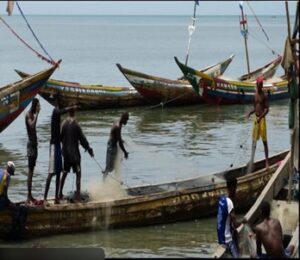
- Artisanal fishers hauling nets at Tombo landing site — Photo
© Uzman Unis Bah / Mongabay (2019). Editorial-use only.
P.S. We invite you to explore our recently published analysis in a book, “Building a Nation: Good Governance and Democratic Principles in Sierra Leone.” As we unite for change in 2025, this resource provides valuable insights for activists, policymakers, and concerned citizens committed to Sierra Leone’s transformation. Find it here: link.
Yours faithfully,

Dr. Alfred A. Veenod Fullah
DIRECTOR-GENERAL
CC:
- Office of the Chairman of ECOWAS
- Office of the President of Sierra Leone
- Office of the Vice President of Sierra Leone
- Speaker of the Sierra Leone House of Parliament
- Office of the Chief Minister of the Government of Sierra Leone
- Electoral Commission for Sierra Leone (ECSL)
- Inspector General of Sierra Leone Police
- Chief of Defence Staff, Republic of Sierra Leone Armed Forces (RSLAF)
- Office of National Security, Sierra Leone
- Independent Commission for Peace and National Cohesion
- Leonardo Santos Simao, Representative of the Secretary-General & Head of UN Office for West Africa and the Sahel (UNOWAS)
- African Union (AU)
- Amnesty International
- Marco Rubio, United States Secretary of State
- Vice President, Congressional and Public Affairs
- The Commonwealth Secretary-General
- Karim Ahmad Khan, Chief Prosecutor, International Criminal Court (ICC)
- Richard YOUNG, Chief de Division, Afrique de l’Ouest
- Ursula Von Der Lyen, European Commissioner
- The United Nations Representative in Sierra Leone
- E. Oumar Touray, President of ECOWAS Commission
- Madam Fatoumata Jallow-Tambajang, former VP of The Gambia
- E Bola Ahmed Tinubu, President of the Republic of Nigeria
- E John Dramani Mahama, President of Ghana
- E. Bassiru Faye, President of Senegal
- E. Mamadi Doumbouya, President of Guinea
- E. Joseph Boakai, President of Liberia
- David Lammy, Secretary of State for Foreign, Commonwealth & Dev Affairs, UK
- Neil Alan John Coyle, MP for Bermondsey & Old Southwark, UK
- Ambassador Aly Diallo, Ambassador of the Republic of Guinea to the UK&I
- Ambassador Mohammad Maidugu, Acting High Commissioner of Nigeria in the UK&I
- Her Excellency Dr Fatou Bensouda, Head of Mission, The Gambia high Commission, UK&I
- E Fatimata Dia, Ambassador of Senegal to the UK&I
- E Gurly T. Gibson-Schwarz, Ambassador of Liberia to the UK&I
- Her Excellency Josephine Gauld, British High Commissioner to Sierra Leone
- Ambassador of the United States of America to Sierra Leone
- Head of the European Union Delegation in Sierra Leone
- General Consul of Canada in Sierra Leone
- Ambassador of China to Sierra Leone
- Ambassador of Germany to Sierra Leone
- Ambassador of Lebanon to Sierra Leone
- Ambassador of Iran to Sierra Leone
- Ambassador of Brazil to Sierra Leone
- Ambassador of Sweden to Sierra Leone
- Ambassador of Libya to Sierra Leone
- Ambassador of Egypt to Sierra Leone
- Ambassador of Cuba to Sierra Leone
- Ambassador of Guinea to Sierra Leone
- Ambassador of Liberia to Sierra Leone
- High Commissioner of the Federal Republic of Nigeria to Sierra Leone
- High Commissioner of Ghana to Sierra Leone
- High Commissioner of The Gambia to Sierra Leone
- General Consul of Italy in Sierra Leone
- Honorary Consul-General of the Islamic Republic of Pakistan in Sierra Leone
- Honorary Consul-General of Ireland in Sierra Leone
- Honorary Consul-General of Japan in Sierra Leone
- Honorary Consul-General of India to Sierra Leone
- Honorary Consul of Senegal in Sierra Leone
- Honorary Consul of Switzerland in Sierra Leone
- Honorary Consul of Syria in Sierra Leone
- Honorary Consul of Turkey in Sierra Leone
- Honorary Consul of Mali in Sierra Leone
- Honorary Consul of Ukraine in Sierra Leone
- Honorary Consul of Romania in Sierra Leone
- Honorary Consul of Norway in Sierra Leone
- Honorary Consul of Hungary in Sierra Leone
- Honorary Consul of France in Sierra Leone
- Honorary Consul of Belgium in Sierra Leone
- Honorary Consul of The Netherlands in Sierra Leone
- Honorary Consul of Spain in Sierra Leone
- Honorary Consul of Serbia in Sierra Leone
- Honorary Consul of Austria in Sierra Leone
- Honorary Consul of Denmark in Sierra Leone
- Honorary Consul of Russia in Sierra Leone
- Honorary Consul of Malaysia in Sierra Leone
- Honorary Consul of South Africa in Sierra Leone
- Civil Society Movement – Sierra Leone (CSM – SL)
- Media Reform Coordinating Group of Sierra Leone (MRCG)
- Sierra Leone Association of Non-Governmental Organizations (SLANGO)
- Civil rights Defenders – Sierra Leone
- National Elections Watch (NEW) – Sierra Leone
- Campaign for Good Governance (CGG) – Sierra Leone
- Women’s Forum – Sierra Leone
- Network Movement for Justice and Development (NMJD)
- Sierra Leone Legal Aid Board
- Faith-Based and Interfaith Organizations – (Interreligious Council of Sierra Leone)
- Council of Churches in Sierra Leone (CCSL)
- Fourah Bay College – University of Sierra Leone
- Institute of Governance Reform (IGR)
- Youth Partnership for Peace and Development (YPPD)
- Children’s Forum Network
- Anti-Corruption Commission (ACC) – Sierra Leone
- Awoko Newspaper – Sierra Leone
- Liberty TV Online – Sierra Leone
- Radio Democracy 1 FM Station – Sierra Leone
- The New York Times
- The Washington Post
- The USA Today
- The Cable News Network (CNN)
- The MicroSoft National Broadcast Corporation (MSNBC)
- The Fox News
- The Associated Press
- Thomson Reuters
- The National Public Radio (NPR)
- The Brookings Institution
- The Heritage Foundation
- The Center For American Progress
- The National Association For The Advancement Of Colored People (NAACP)
- The American Civil Liberties Union (ACLU)
- The MoveOn
- The Democratic National Committee
- The Republican National Committee
- The EMILY’s List
- The British Broadcasting Corporation (BBC)
- The Sky News
- Al Jazeera
- The Independent Television (ITV)
- The Times
- The Financial Times
- The Guardian
- The Daily Telegraph