
Concerned Sierra Leoneans – from Villages to Cities and Diaspora – are speaking out today in a unified voice. For two years, citizens have seen no transparent answer to “Who won the 2023 elections?”. Instead, we see expanded state power (a new Intelligence Act, Apr 2026) rushed through Parliament with no broad consultation or opposition input. This leaves ordinary people fearful that a law meant for security will be used to control dissent. We demand facts and democracy first: immediate publication of full, audited poll results; release of all political detainees; and real safeguards before enforcing any new security provisions. We summarise here verified facts vs. gaps, our clear demands, and a roadmap of next steps. This is a people’s statement – evidence-based, solution-oriented, and urgently needed for our country’s future.
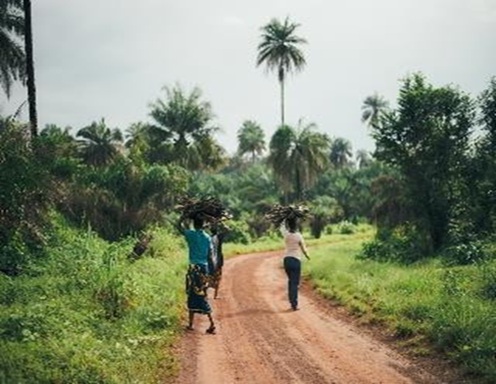
Figure: Rural Sierra Leonean women carrying firewood. Citizens across the country – farmers, youth, and women – have been left wondering about 2023?s outcome and alarmed at new security powers.
Background & Context
Amid the political fragility, Parliament on April 28-29, 2026 passed the National Security and Central Intelligence Act, 2026. This Act overhauls Sierra Leone?s intelligence and security structure. Critically, it was approved while opposition lawmakers were disengaged, just as the All People’s Congress (APC) Party announced its return to governance (April 29) under pressure from International “Moral Guarantors”. Many view this timing as highly suspect – effectively expanding security powers before trust in electoral outcomes has been rebuilt.
Key Provisions vs. Missing Safeguards
What the law does: According to reporting and expert analysis, the 2026 Act:
” Creates a centralised intelligence structure. It institutes a new directorate under the President, with a coordinating body akin to a “Parallel Cabinet”.
” Establishes a State Protection Service (SPS). This armed unit (like a presidential guard) will protect the President, Vice-President, and other officials. It operates outside the normal military chain of command.
” Broader data access powers. The Director-General can demand personal information from any agency without prior judicial approval. (In other words, warrantless surveillance is implied).
” Official immunity clauses. Operatives acting in ?approved operations? are granted blanket immunity from criminal prosecution, and officials acting in good faith? cannot be sued.
” Stringent penalties. Violations of the Act carry long prison terms (up to 10 years) for vaguely defined ?contraventions?.
What is missing or unclear (safeguards not in evidence):
” No public warrant requirement. Nowhere in the public analysis is there mention of judicial warrants for surveillance or searches. (Legal experts emphasize that intercepting communications without a court order ?violates… the constitutional right to privacy?).
” No clear limits on detention or data use. The law’s text is not public, but critiques warn it provides no explicit checks on detaining suspects or handling collected data. There is no guarantee of timely judicial review for anyone detained or spied on.
” Oversight committee power uncertain. While a Parliamentary Oversight Committee and an Inspector-General post are ?included?, their actual independence and authority are unclear. For example, the Inspector-General is appointed by (and reports to) the executive, potentially compromising impartiality.
” No exclusion of political figures. The Act does not explicitly prohibit surveillance of politicians or meddling in elections. In a context where every political protest has been seen as a ?threat?, this raises fears of partisan use.
” Emergency powers. The bill reportedly allows broad powers during undefined national security? emergencies, without clear end-dates or criteria.
” Judicial oversight absent. Unlike many democracies, the Act seems to lack any special ?intelligence court? or high-court review for security actions. This runs counter to Sierra Leone’s Constitution and norms.
These gaps mean that, if left unchecked, the new law could be used not just against genuine security threats, but also to target dissent or opposition figures with impunity.
Verified Facts vs. Reasonable Inferences
” Fact: Sierra Leone’s 2023 election results were contested. The Sierra Leone people’s Party (SLPP) declared victory, the APC immediately rejected this as fraudulent. (EU observers noted the refusal to publish polling-station data “reduced confidence” in the outcome).
” Fact: Protests erupted over electoral irregularities; security forces responded with deadly force (two people killed by live ammo near APC HQ). Over 60 people were arrested in political protests.
” Fact: A Tripartite Committee, with international backing, was set up to review the 2023 process and recommend reforms. It reported in July 2024 with 80+ recommendations, including a call to audit the 2023 vote, but it did not declare a winner or resolve the dispute.
” Fact: In October 2023, the SLPP and APC signed the Agreement for National Unity (ANU) agreement to address the crisis. The ANU explicitly committed to verifying ?collation, verification and publishing of electoral data? for 2023. To date, no such public audit or result publication has occurred.
” Fact: On April 28-29, 2026, Parliament debated and passed the National Security and Central Intelligence Act (2026). This was the first legislative session after the APC had boycotted Parliament for ~2 months. Opposition MPs were preparing to return (as announced Apr 29) under pressure from international guarantors.
” Inference: The sequencing-security law passed during an opposition boycott and before election issues were resolved-is unlikely to be coincidental. Critics (lawyers, activists) argue this timing gave the ruling party an uncontested window to expand power. We present this as a reasonable inference: laws shifting the balance of power are often passed when checks are weak, a known pattern worldwide.
” Fact: The Lawyers’ Society of Sierra Leone publicly expressed “deep concern”
about the law’s passage “in the absence of opposition participation”. They specifically called out the SPS immunity clauses as “inconsistent with the Constitution”. They urged Mr. Julius Maada Bio to withhold assent until “broader bipartisan consultation” occurs.
” Inference: Given that comparable laws in other democracies explicitly require judicial warrants for surveillance, the lack of such a clause here strongly suggests intended use without such limits. Legal scholars writing on the draft called for exactly this change (require all interception to have a judge’s warrant), implying the Act’s current form lacks it.
Key Demands of Concerned Citizens
1. Electoral Audit & Data Transparency: Conduct a fully independent forensic audit of the June 2023 elections and publish all disaggregated data (polling- station results and final tallies) immediately. The country has waited two years; we need to know who actually won. The 2023 result must not be ?reformed over? without first answering this core question.
2. Publish Tripartite/ANU Reports: Make public all reports and recommendations from the Agreement for National Unity and Tripartite process, including any annexes of data. (For example, the APC explicitly asked for these reports to be tabled in Parliament to build national ownership).
3. Release Political Detainees: Immediately free all persons detained or charged for exercising their political rights (protesting, calling for transparency, etc.). This was a promised ANU commitment that remains unfulfilled.
4. Halt or Suspend New Law Enforcement: Institute a moratorium on enforcement of the April 2026 Act until after the electoral audit is complete and public. In effect: “Security reform can wait until election justice is done.” Mr. Bio and Parliament must ensure this law cannot be used until full transparency is achieved.
5. Judicial Safeguards: Amend the Act (or issue an executive directive) to require court warrants for any surveillance, searches, or data demands by intelligence agencies. Any exceptions must be narrow and time-limited. This aligns with Section 22 of our Constitution and international norms.
6. Robust Oversight: Strengthen the independence and powers of oversight bodies. For example, the Intelligence Inspector-General and Parliamentary Committee must be authorized to subpoena documents and personnel, have secure funding, and report publicly at least annually on national security activities. Their appointment should be bipartisan or by an independent panel. Civil society must have a voice in selecting these watchdogs.
7. No Impunity: Repeal or narrow any blanket immunity clauses. No one – not even the President or intelligence chiefs – should be above the law for criminal acts (murder, torture, kidnapping, etc.). This was explicitly promised in earlier drafts and must be honored.
8. Inclusive National Dialogue: Launch a broad dialogue now – not just elite meetings – involving grassroots voices, youth, women’s groups, and diaspora organizations. The future of Sierra Leone depends on unity. All sides must recommit to the ANU roadmap: drop political cases, enact its agreed reforms, and prepare for any credible future elections.
These demands are non-partisan and grounded in our country’s laws and citizens’ rights. They echo calls already made by civil society and observers, now amplified in one statement.
Three Futures Now Stand Before Sierra Leone
Sierra Leone’s trajectory over the next two years will not be shaped by promises or pronouncements, but by choices-how power is exercised, how institutions behave, and whether the people are included or deliberately sidelined.
1. The Path of Responsibility and Renewal. In this future, the law is applied with discipline and restraint-targeted strictly at legitimate security threats, not political convenience. Oversight institutions act independently and in good faith, ensuring that power remains accountable. Reforms are pursued transparently, inviting public trust rather than demanding it.
Under this path, national security coordination strengthens, organized crime is confronted effectively, and confidence in state institutions begins-slowly but meaningfully-to return. Trust, though fragile, is rebuilt step by step. This is the path of responsibility. The path of credibility. The path that keeps democracy alive.
2. The Path of Selective Control. In this second trajectory, the law exists-but its application becomes uneven and politically charged. Surveillance drifts toward opposition voices, activists, and citizens who question authority. Oversight bodies remain in place, but their independence weakens, functioning more as form than substance.
Arrests become unpredictable. Detentions lack transparency. Civic space narrows. Over time, a quiet but corrosive shift occurs: fear begins to replace freedom.
Unrest does not emerge because citizens seek instability-but because they are denied fairness, dignity, and justice. In this path, legitimacy erodes, and tension accumulates beneath the surface, waiting for a spark.
3. The Path of Power Capture and Breakdown. The most dangerous future is one where restraint disappears entirely. Power consolidates itself without checks. Intelligence and security structures are used to silence dissent rather than protect the nation. The media space contracts. Elections continue in form-but lose all meaning in substance, because truth is neither verified nor trusted.
In this environment, citizens lose faith not only in leadership, but in the system itself. Resistance becomes inevitable-not as a choice, but as a reaction to suffocation. Stability fractures. Economic and political systems begin to unravel.
A country that once fought its way out of conflict risks drifting back toward it-not through sudden collapse, but through sustained injustice.
Each arrow above represents a branch depending on how the law is implemented and how leaders respond to citizens’ demands. We must strive to keep Sierra Leone on the leftmost branch.
Next Steps & Call to Action
Civil Society and Media: Mobilize. Hold forums in your communities. Publish investigative pieces on the Act’s provisions and electoral irregularities. Encourage citizens to keep asking: “Who Won 2023?” Prepare petitions or legal reviews to challenge any unconstitutional parts of the new law. Use every avenue – radio talk shows, social media, church gatherings – to keep pressure for transparency.
Legal and Religious Leaders: Write to the President and Parliament demanding they honor constitutional guarantees. File a petition (e.g., in High Court or Supreme Court) to clarify or block any provisions that violate fundamental rights. Engage ECOWAS’s good offices and the UN Resident Coordinator to monitor human rights.
Opposition Parties: Re-engage fully. Publicly join calls for the audit and for checks on the Act. Political boycotts will not solve problems alone; constructive insistence on implementing agreed reforms (ANU/Tripartite) is crucial.
International Partners (ECOWAS, AU, UN, EU): Continue to press all parties to implement the ANU commitments. Tie future assistance or security cooperation to verifiable progress: publication of 2023 results, release of detainees, genuine oversight of security agencies. Send observers to parliamentary debates on these issues. Demand an official reply about the transparency measures in the new Act.
Signatories and Distribution: We urge Sierra Leonean civic organizations, diaspora coalitions, trade unions, faith-based groups, and independent experts to add their names. Distribute this release via:
” Local news outlets (Awoko News, Sierra Express Media, Awareness Times, The Organiser, Sierra Leone Radio Democracy, local TV/radio).
” International press networks (Reuters Africa, BBC Focus on Africa, UN News).
” Social media campaigns (#WhoWon2023, #SierraLeoneDemocracy).
” Official channels at the UN (OHCHR, UNOWAS), ECOWAS, African Union, EU.
Together we can turn this crisis into a democratic opportunity. By demanding truth and accountability now, we build a foundation for real security and sustainable peace.
To the Moral Guarantors (ECOWAS, UNOWAS, Commonwealth): You have already invested in Sierra Leone’s peace. Your mandate is to guarantee moral and political legitimacy. Now prove it: publicly support an independent electoral verification, monitor the process, and hold parties accountable if they obstruct. Your early focus on dialogue was welcome; your next role must be ensuring truth and accountability, in keeping with international electoral standards.
To Civil Society, Media, and Citizens: Organize, monitor, and speak out. The people’s voice is strongest when united. Demand updates, share information, document compliance or violations. Encourage peaceful expression of opinion and bear witness. We are each stakeholders in this democracy.
To International Partners: Sierra Leone’s democracy cannot be taken for granted. Continue to pressure for transparency. Tie future electoral assistance to compliance with these demands. Impartial observation missions, if invited, should verify the audit process.
Above all, let us emphasize: We are committed to peace, not chaos. But true peace comes not from silence, but from justice. Every constructive action we have taken – the ANU, the Tripartite recommendations, international dialogues – has been to move forward. We now must insist that the next step is truth, not further postponement.
P.S. We invite you to explore our recently published analysis in a book, “Building a Nation: Good Governance and Democratic Principles in Sierra Leone.” As we unite for change in 2026, this resource provides valuable insights for activists, policymakers, and concerned citizens committed to Sierra Leone’s transformation. Find it here: link.
Signed,
Dr. Alfred A. Veenod Fullah
DIRECTOR-GENERAL

CC: Office of the President of Sierra Leone
” Office of the Vice President of Sierra Leone
” Speaker of the Sierra Leone House of Parliament
” Office of the Chief Minister of the Government of Sierra Leone
” Electoral Commission for Sierra Leone (ECSL)
” Inspector General of Sierra Leone Police
” Chief of Defence Staff, Republic of Sierra Leone Armed Forces (RSLAF)
” Office of National Security, Sierra Leone
” Independent Commission for Peace and National Cohesion
” Leonardo Santos Simao, Representative of the Secretary-General & Head of UN Office for West Africa and the Sahel (UNOWAS)
” African Union (AU)
” Economic Community of West African States (ECOWAS)
” Amnesty International
” Marco Rubio, United States Secretary of State
” Vice President, Congressional and Public Affairs
” The Commonwealth Secretary-General
” Karim Ahmad Khan, Chief Prosecutor, International Criminal Court (ICC)
” Richard YOUNG, Chief de Division, Afrique de l’Ouest
” Ms. Ursula Von Der Lyen, European Commissioner
” The United Nations Representative in Sierra Leone
” H. E. Oumar Touray, President of ECOWAS Commission
” Madam Fatoumata Jallow-Tambajang, former VP of The Gambia
” H.E John Dramani Mahama, President of Ghana
” H. E. Bassiru Faye, President of Senegal
” H.E. Mamadi Doumbouya, President of Guinea
” H.E. Joseph Boakai, President of Liberia
” David Lammy, Secretary of State for Foreign, Commonwealth & Dev Affairs, UK
” Neil Alan John Coyle, MP for Bermondsey & Old Southwark, UK
” Ambassador Aly Diallo, Ambassador of the Republic of Guinea to the UK&I
” Ambassador Mohammad Maidugu, Acting High Commissioner of Nigeria in the UK&I
” Her Excellency Dr Fatou Bensouda, Head of Mission, The Gambia high Commission, UK&I
” H.E Fatimata Dia, Ambassador of Senegal to the UK&I
” H.E Gurly T. Gibson-Schwarz, Ambassador of Liberia to the UK&I
” Her Excellency Josephine Gauld, British High Commissioner to Sierra Leone
” Ambassador of the United States of America to Sierra Leone
” Head of the European Union Delegation in Sierra Leone
” General Consul of Canada in Sierra Leone
” Ambassador of China to Sierra Leone
” Ambassador of Germany to Sierra Leone
” Ambassador of Lebanon to Sierra Leone
” Ambassador of Iran to Sierra Leone
” Ambassador of Brazil to Sierra Leone
” Ambassador of Sweden to Sierra Leone
” Ambassador of Libya to Sierra Leone
” Ambassador of Egypt to Sierra Leone
” Ambassador of Cuba to Sierra Leone
” Ambassador of Guinea to Sierra Leone
” Ambassador of Liberia to Sierra Leone
” High Commissioner of the Federal Republic of Nigeria to Sierra Leone
” High Commissioner of Ghana to Sierra Leone
” High Commissioner of The Gambia to Sierra Leone
” General Consul of Italy in Sierra Leone
” Honorary Consul-General of the Islamic Republic of Pakistan in Sierra Leone
” Honorary Consul-General of Ireland in Sierra Leone
” Honorary Consul-General of Japan in Sierra Leone
” Honorary Consul-General of India to Sierra Leone
” Honorary Consul of Senegal in Sierra Leone
” Honorary Consul of Switzerland in Sierra Leone
” Honorary Consul of Syria in Sierra Leone
” Honorary Consul of Turkey in Sierra Leone
” Honorary Consul of Mali in Sierra Leone
” Honorary Consul of Ukraine in Sierra Leone
” Honorary Consul of Romania in Sierra Leone
” Honorary Consul of Norway in Sierra Leone
” Honorary Consul of Hungary in Sierra Leone
” Honorary Consul of France in Sierra Leone
” Honorary Consul of Belgium in Sierra Leone
” Honorary Consul of The Netherlands in Sierra Leone
” Honorary Consul of Spain in Sierra Leone
” Honorary Consul of Serbia in Sierra Leone
” Honorary Consul of Austria in Sierra Leone
” Honorary Consul of Denmark in Sierra Leone
” Honorary Consul of Russia in Sierra Leone
” Honorary Consul of Malaysia in Sierra Leone
” Honorary Consul of South Africa in Sierra Leone
” Civil Society Movement – Sierra Leone (CSM – SL)
” Media Reform Coordinating Group of Sierra Leone (MRCG)
” Sierra Leone Association of Non-Governmental Organizations (SLANGO)
” Civil rights Defenders – Sierra Leone
” National Elections Watch (NEW) – Sierra Leone
” Campaign for Good Governance (CGG) – Sierra Leone
” Women’s Forum – Sierra Leone
” Network Movement for Justice and Development (NMJD)
” Sierra Leone Legal Aid Board
” Faith-Based and Interfaith Organizations – (Interreligious Council of Sierra Leone)
” Council of Churches in Sierra Leone (CCSL)
” Fourah Bay College – University of Sierra Leone
” Institute of Governance Reform (IGR)
” Youth Partnership for Peace and Development (YPPD)
” Children’s Forum Network
” Anti-Corruption Commission (ACC) – Sierra Leone
” Awoko Newspaper – Sierra Leone
” Liberty TV Online – Sierra Leone
” Radio Democracy 98.1 FM Station – Sierra Leone
” The New York Times
” The Washington Post
” The USA Today
” The Cable News Network (CNN)
” The MicroSoft National Broadcast Corporation (MSNBC)
” The Fox News
” The Associated Press
” Thomson Reuters
” The National Public Radio (NPR)
” The Brookings Institution
” The Heritage Foundation
” The Center For American Progress
” The National Association For The Advancement Of Colored People (NAACP)
” The American Civil Liberties Union (ACLU)
” The MoveOn
” The Democratic National Committee
” The Republican National Committee
” The EMILY’s List
” The British Broadcasting Corporation (BBC)
” The Sky News
” Al Jazeera
” The Independent Television (ITV)
” The Times
” The Financial Times
” The Guardian
” The Daily Telegraph