
The Sierra Leone Advocacy Movement (SLAM-Global) has called on the international community to strengthen cooperation with Sierra Leone in the fight against transnational drug networks, arguing that the country’s growing drug crisis should be treated not only as a public health emergency but also as an international organised crime challenge.
In a press statement dated September 30, 2026, SLAM-Global appealed to United States President Donald J. Trump and international partners to apply the same level of determination against transnational narcotics networks operating across borders.
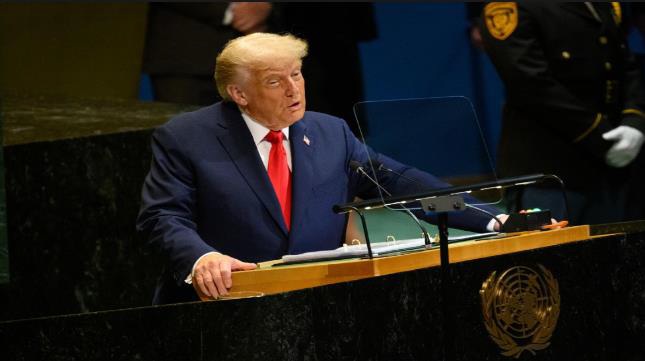
The organisation referenced President Trump’s September 22 address to the United Nations General Assembly, in which he described international drug cartels as “enemies at war with civilization.” SLAM-Global acknowledged that Trump’s remarks were principally directed at the Western Hemisphere, but argued that the underlying principle that criminal networks should not be allowed to profit from the destruction of human lives should also apply to Sierra Leone.
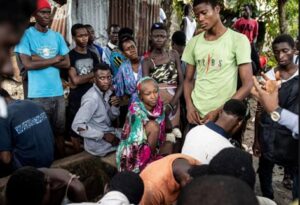
The organisation said Sierra Leonean families have experienced serious consequences from drug abuse, particularly the emergence of kush and other synthetic substances.
Sierra Leone declared drug and substance abuse a national emergency in April 2024, with President Julius Maada Bio describing kush as an existential threat to young people. SLAM-Global noted that the crisis has since raised questions about the country’s capacity to monitor deaths, treatment needs and the wider supply chains behind synthetic drugs.
According to the statement, the United Nations Office on Drugs and Crime (UNODC) reported in its 2025 World Drug Report that kush emerged in Sierra Leone before spreading to other West African countries and had become the substance associated with the largest number of people entering drug use disorder treatment and care in Sierra Leone.

SLAM-Global also cited research identifying synthetic opioids and synthetic cannabinoids in kush samples, arguing that some substances connected to the crisis originate outside Sierra Leone and move through international supply channels.
The organisation therefore urged authorities and international partners to look beyond street-level users and low-level dealers and investigate the wider networks responsible for financing, manufacturing, transporting and distributing drugs.
“Treat the addicted; investigate the trafficker,” is the principle advanced by SLAM-Global.
The group argues that law-enforcement efforts should “follow the drugs” and “follow the money”, stressing that credible evidence should be pursued regardless of whether suspects are poor street dealers, wealthy businessmen, foreign nationals, public officials, diplomatic employees or politically connected individuals.
SLAM-Global also raised concerns about the possible misuse of diplomatic institutions in drug trafficking. It referred to a January 2025 incident in which Guinean authorities intercepted a vehicle associated with Sierra Leone’s embassy in Conakry and detained its occupants in connection with substances suspected to be cocaine.
The organisation was careful to state that the available evidence did not establish that Sierra Leone’s ambassador personally participated in trafficking. It nevertheless argued that diplomatic vehicles, credentials and privileges should not prevent transparent investigation where credible evidence exists.
The statement further referenced the case of Dutch convicted cocaine trafficker Jos “Bolle Jos” Leijdekkers. Dutch authorities have said that Leijdekkers was sentenced in Rotterdam to 24 years’ imprisonment in a case involving multiple cocaine shipments and that they believe he has resided in Sierra Leone.
SLAM-Global said such matters should be addressed through evidence, law, due process and international cooperation rather than through rumours, partisan accusations or social-media trials.
The organisation also linked the drug crisis to Sierra Leone’s wider campaign to protect children and young people, particularly the campaign against violence and exploitation of girls.
SLAM-Global argued that protecting children from child marriage and other forms of abuse must also include protecting them from drugs, addiction and the criminal networks that profit from drug trafficking.
The organisation emphasised that drug addiction affects families regardless of political affiliation, ethnicity, religion, gender or social status.
It called for a response that combines law enforcement with treatment, rehabilitation and reintegration, arguing that vulnerable drug users should not bear the entire burden of criminal justice while powerful actors higher up the supply chain escape scrutiny.
SLAM-Global has therefore appealed to the United States and other international partners to strengthen intelligence-sharing, customs cooperation, financial investigations, forensic and toxicological capacity, monitoring of precursor chemicals, anti money-laundering efforts, drug treatment and overdose prevention.
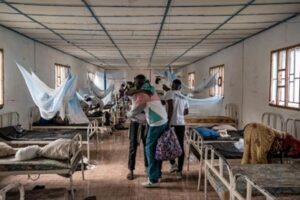

The organisation also urged greater access to naloxone and stronger cooperation among health workers, law-enforcement agencies, customs authorities, forensic laboratories, civil society organisations and affected communities.
At the same time, SLAM-Global said Sierra Leone must accept the same standards it expects from its international partners.
The organisation pointed to President Bio’s statement at the United Nations that “Sierra Leone does not ask of the world what it does not demand of itself”, saying the principle should apply to the country’s response to drug trafficking.
For SLAM-Global, the central measure of success should not simply be the number of arrests, meetings, conferences or public declarations.
Instead, it says the ultimate question is how many lives are saved.
The organisation’s Director-General, Dr. Alfred A. Veenod Fullah, signed the statement, which was copied to several Sierra Leonean institutions and international organisations, including the Office of the President, Parliament, Sierra Leone Police, Office of National Security, ECOWAS, African Union and United Nations representatives.
As Sierra Leone continues to confront the consequences of drug abuse, SLAM-Global’s statement places renewed emphasis on the international dimension of the problem.
Its message is that the fight cannot stop with the person found using drugs on the street. It must extend to the networks, money, supply chains and international connections that sustain the illicit trade.
The organisation maintains that the response should be based on investigation, evidence, lawful prosecution, treatment and international cooperation not vengeance or political persecution.
For Sierra Leonean families affected by addiction, the measure of the campaign, SLAM-Global argues, will ultimately be whether fewer children are lost to drugs and whether more young people are given an opportunity to recover and rebuild their lives.