
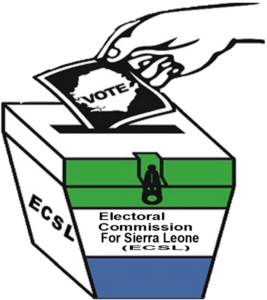
For over two years, Sierra Leoneans have been left in the dark regarding the true outcome of the June 24, 2023 elections.
Official results declared Mr. Julius Maada Bio re-elected and the ruling Sierra Leone People’s Party (SLPP) winning a two-thirds majority, but the main opposition All People’s Congress (APC) rejected these results as fraudulent. Subsequent dialogue (the Agreement for National Unity, ANU) and the Tripartite process yielded 80+ reforms, yet the central question – “Who really won in 2023?” – remains unanswered. Sierra Leoneans demand an independent, time-bound determination of the 2023 vote as the non-negotiable first step in any lasting peace or reform effort.
Existing processes have focused on institutions and future reforms, but have not resolved the core legitimacy crisis. The recent April 2026 mission by ECOWAS/UNOWAS/Commonwealth (the “Moral Guarantors”) in Freetown reviewed ANU implementation, but conspicuously omitted any verification of the disputed electoral data or declaration of the true winner. Even as they praised dialogue and reform, the Moral Guarantors deferred the truth and moved on to future elections. This omission leaves Sierra Leone on shaky ground: reforming for 2028 without resolving 2023 is like building a house on an uncharted foundation.
We, the people of Sierra Leone – including those imprisoned for exercising their civic rights, rural farmers and youth yearning for opportunity, women ensuring their children eat, and diaspora communities pressing for democracy – call on all stakeholders to make electoral truth the first order of business. We present clear demands with deadlines, legal remedies and consequences for inaction, and a plan for implementation and monitoring. The peaceful future we seek depends on finally answering “Who won the 2023 election?” with transparent evidence.
Contested 2023 Elections and Public Uncertainty:
On June 24, 2023 Sierra Leone held multi-tier elections. The Electoral Commission announced that Mr. Julius Maada Bio (SLPP) won re-election and the SLPP won 60% of parliamentary seats. However, the APC immediately rejected the results as fraudulent – pointing to irregularities, undisclosed polling data, and alleged manipulation. The APC boycotted parliament and vowed “not to participate in any form of governance” until electoral justice is done. Nationwide protests erupted: citizens demanded the release of voter registration data and transparency in collating results. Police violently dispersed these demonstrations; at least 66 people were arrested and one protester died under unclear circumstances.
In short, the legitimacy of the 2023 vote remains in question. Despite committed observers and media reports, no comprehensive audit of ballots or independent review has been conducted. As one analyst noted, the government declined to publish disaggregated results and ?the APC claimed… evidence of over-voting and other discrepancies exposed the announced election results as a fabrication?. Without a transparent answer, distrust persists across Sierra Leone’s regions and communities.
Agreement for National Unity (ANU) – Promise vs. Delivery
To address this crisis, Sierra Leone’s leadership – with international help – signed the Agreement for National Unity (ANU) on October 18, 2023. The ANU (a product of mediated talks between the SLPP government and APC) included several key provisions to heal divisions:
” Electoral Review Committee (Resolution 3): The President and APC agreed to establish a cross-party committee (with development partners’ involvement) to review electoral systems and processes, including “collation, verification, authentication and publishing of electoral data consistent with international best practices”. Its terms of reference were to be set in 30 days, with a six-month mandate.
” Release of Detainees: The government agreed to release all persons arrested or detained over the June 2023 elections or related protests, based on lists submitted by the APC and other parties.
” End of Politically Motivated Cases: All ?politically motivated? charges against opposition members and supporters were to be discontinued.
” Resettlement of Displaced: Support was pledged for anyone internally or externally displaced by political intimidation or attacks.
” APC Participation: The APC would end its boycott of governance, and elected APC officials would have their entitlements addressed fairly.
” Institutional Dialogue: An ongoing inter-party dialogue framework was to be institutionalized, facilitated by the government.
” Independent Moral Guarantors: The parties agreed to establish an independent body of ?moral guarantors to support and monitor implementation.
These were bold commitments – explicitly making electoral transparency and political reconciliation non-negotiable. But implementation has stalled. Critics point out that key promises remain unfulfilled. For example, Resolution 3’s committee has not publicly verified the 2023 results, and no timeline was enforced for delivering its findings. Many detained protesters remain locked up months after being promised release. Political cases continue in the courts despite ANU’s pledge to drop them. As one APC leader warned, ?if urgent corrective measures [are] not taken? the entire process risks collapse.
The Tripartite Committee and Civil Society Engagement: The ANU led to the formation of a Tripartite Committee (government, APC, international guarantors) to examine the 2023 elections and recommend reforms. After months of work, that Committee delivered an 80-recommendation report on July 1, 2024. President Bio committed to implementing the full report. The report covered wide-ranging reforms (voter registration, transparency policies, fixed election dates, etc.), but stopped short of declaring the 2023 winner.
Civil society emphasized that implementation is key. Nationwide forums in mid-2024 saw citizens calling for ?inclusive, timely, and accountable? enactment of the recommendations. Sierra Leoneans expressed fear that electoral systems remain ?porous? and susceptible to manipulation. They urged continued independent oversight and transparency – because without it, ?the integrity of elections? cannot be guaranteed.
Moral Guarantors’ April 2026 Freetown Mission: From April 13-20, 2026, ECOWAS, UNOWAS, and the Commonwealth (the ?International Moral Guarantors?) sent a joint mission to Sierra Leone. Led by former Gambian VP Fatoumata Tambajang, UNOWAS’s Barrie Freeman, and Commonwealth’s Tanmaya Lal, they met with government, APC, civil society, Parliament, and security agencies. The Moral Guarantors issued a communiqué reviewing ?progress in the implementation of the ANU and Tripartite recommendations. They emphasized the need for dialogue, building trust, and moving forward to strengthen future elections. For example, they commended ?the tabling of a constitutional reform bill and urged constitutional consultative processes. They facilitated a meeting to expand the Tripartite Steering Committee, and encouraged the urgent constitution of a parliamentary electoral committee. By their own account, the mission supported structural reforms and urged all parties to exercise restraint and refrain from hate speech.
Crucially, the Moral Guarantors stopped short of addressing the 2023 controversy itself. Their press release does not mention conducting any independent audit or declaring the winner of 2023. Instead, it focuses on procedural steps – like oversight committees and future reforms. As a Gambian guarantor, F J Tambajang, put it, the ANU/Tripartite framework is a “moral and political instrument” whose success depends on “trust, cooperation and sustained commitment”. Yet, as the APC noted, “implementation gaps” and a lack of transparency are eroding that trust.
In short, the guarantors have facilitated dialogue – but not delivered truth. After their April mission, Sierra Leoneans are still asking: If not here and now, then when and how will we ever know who won the 2023 election?
Non-Negotiable Demands with Timelines
We present the following demands, which must be met before any further formal peace or reform process is considered complete. Each demand is concrete, with a clear deadline and deliverables. Failure to meet these demands will force a reconsideration of the entire dialogue framework.
1. Independent Determination of Election Outcome: An independent Verification Panel must be constituted within 14 days of this release (by May 8, 2026). The Panel’s composition should be agreed by Government, APC, and civil society (with agreed observers from international partners). Its mandate: to scrutinize all electoral materials and data from the June 24, 2023 elections and issue a public report within 90 days (by July 23, 2026) on the true results. This includes:
2. Submission of all ballots, result forms, electronic records, and tally sheets to the Panel, under strict chain-of-custody procedures.
3. Full release of polling-station results and aggregated data (every voter’s tally) by the Electoral Commission (ECSL) within 7 days. The Panel and authorized observers must have direct access to the data and systems used in vote counting.
4. Publication of Panel methodology and terms of reference immediately upon formation, including statistical and forensic audit methods to be used.
5. Public hearings and transparent review: The Panel’s proceedings (or summaries) should be broadcast or live-streamed, and its report should be fully public (with evidence annexed), to ensure accountability.
This demand is rooted in the ANU’s promise to review electoral processes and the Tripartite’s goal of a credible election system. There is broad support for such an audit;
even previous government commitments stress transparency in vote tabulation. Without this, no party can legitimately claim electoral victory.
1. Release of Political Detainees: In accordance with ANU commitments and basic rights, all individuals arrested or imprisoned for political activities related to the 2023 elections or subsequent protests must be released immediately. The government shall cease any politically motivated prosecutions. Specifically:
2. By May 5, 2026, the Ministry of Internal Affairs must publish the list of all persons currently detained on election-related charges (as demanded by APC lists). All such persons shall be freed and unconditionally pardoned by May 12, 2026.
3. Police and security forces shall withdraw any ongoing charges or cases against opposition supporters, protestors, or others that were initiated without substantive evidence, as required by the ANU.
4. Victims of unlawful detention may seek compensation and legal redress.
These detainees have already endured protracted incarceration for exercising their democratic rights – they cannot wait longer. Their release will be a crucial confidence-building gesture. ANU explicitly calls for this, and it is also demanded by human rights standards.
1. Full Electoral Data Transparency: All electoral data must be made public immediately. This includes the complete voters’ register, polling station results, and procedural documents.
2. By May 1, 2026, ECSL shall publish the full disaggregated results of the 2023 elections, including votes by polling station for every candidate and referendum question.
3. ECSL must also provide any audit logs or digital records, and grant the Verification Panel full access.
4. The new Review Panel must have the authority to subpoena any individuals or institutions (including the ECSL Chair) to provide testimony or records.
The Tripartite and citizens alike have emphasized that electoral commissions must
?proactively share? information and accounts. APC has pointed out that lack of data undermines trust. Only with full transparency can the Panel work, and democracy be assured.
1. Investigation of Election Violence: A judicial or credible independent inquiry must be launched within 30 days to investigate the killings and excessive force used during election-related unrest. Deliverables:
2. By May 20, 2026, appoint a Commission of Inquiry (with local and international legal experts) to examine the deaths of protesters and use of lethal force (June-Sept 2023).
3. The Commission’s findings (identifying any individuals responsible for unlawful shootings or brutality) must be reported publicly within 90 days of its establishment (by August 18, 2026).
4. Any officers or officials found culpable shall face appropriate prosecution.
The State’s use of force in June 2023 resulted in deaths and dozens of arrests. Accountability is essential for trust. No peace or unity can hold if citizens fear impunity for violence. The ANU dialogue condemned incitement and called for justice, and international law demands investigation of possible rights violations.
1. APC Participation and Rights Restored: In line with the ANU’s spirit, the APC must be fully reinstated in governance:
2. Within 7 days, all APC parliamentarians and local officials who were sworn in must be recognized with full voting rights and permitted to serve. Any refusal by other parties or parliamentary leadership to seat duly elected APC members (in defiance of election results) is unacceptable.
3. All APC officeholders must receive the official entitlements and resources owed to them (as per ANU commitments).
4. Parliament shall adjust any committee or delegation compositions (domestic and international) to reflect the APC’s share of seats, as promised.
These actions fulfill agreements already made. The APC entered the ANU in good faith; it must now end its boycott and participate, as the ANU envisioned. A sustainable peace requires inclusion, not exclusion.
Each of the above demands is non-negotiable and urgent. Deadlines are tight by design: further delay only prolongs instability. All parties – Government, APC, the Electoral Commission, Parliament, and the Moral Guarantors – are required to cooperate fully. We will hold each actor accountable to their commitments, as outlined below.
Legal and Political Remedies
If these demands are not met, we will escalate through a graded set of actions:
” Level 1: Public Accountability: We will publish “Justice Scorecards” tracking compliance with each demand. We will brief national media, foreign diplomats (ECOWAS, UN, Commonwealth, EU, US), and development partners on unmet obligations. Civil society will petition Parliament to debate this crisis. APC and allies may introduce motions to enforce ANU provisions.
” Level 2: Civic Action: With continued inaction, coordinated peaceful demonstrations will be organised nationwide (rallies, vigils, community meetings), focusing on vulnerable areas (rural districts, youth centers, women’s groups). We will expand our outreach to diaspora communities to hold solidarity rallies at Sierra Leone embassies and with international organizations. We will engage the National Electoral Commission and other authorities directly but stand ready to boycott any future process (e.g. constitutional reform) that proceeds without first delivering electoral truth.
” Level 3: Political and International Engagement: If by 3 months no independent determination has been delivered, we will call on international partners to suspend any involvement in Sierra Leone’s electoral processes until accountability is secured. We will seek formal backing from ECOWAS, the African Union, and the Commonwealth to mandate an electoral audit. Civil society will coordinate with global democracy and human rights actors to demand an emergency UN Security Council session or ECOWAS Heads of State meeting on Sierra Leone, if necessary. In concert, we will support diplomatic démarches and targeted statements (e.g. from the US, EU, UN) urging compliance.
Tiered consequences will be proportional but firm. They include legal recourse, sustained advocacy, and ultimately international mediation if domestic mechanisms fail. Importantly, these steps are not meant to destabilize Sierra Leone – but to apply the only pressure that can break a deadlock: making the cost of evasion higher than the cost of resolution.
Voices from the Margins
I marched for transparency and was shot in the leg. I’m still in jail, accused of ?disturbing the peace.’ All I did was demand our votes be counted.
– Anonymous, detained protester in Freetown (June 2023)
?I live on one meal a day, caring for my children. Government talks about peace and reform, but no one has answered if our votes were lost or stolen. Meanwhile, our hunger grows.
Pa Nabilah, farmer and mother from Makeni (Rural voter)
As a nurse, I stood for office hoping to change things for women. Now I cannot tell my patients whether our leaders were truly elected. That uncertainty makes me lose faith in democracy
– Aisha, community health worker and aspiring MP, Port Loko (Women’s voice)
Abroad, we send money back to help our families. We also call our kin to demand fair elections. If those abroad speak, we are told to ?mind our business.’ Yet silence means acceptance of fraud.
– James, Sierra Leonean student activist in London (Diaspora youth)
Every day in prison feels endless. I believe in Sierra Leone, but who will believe in us if our votes didn’t count? People here talk of unity and dialogue, but those are just words to us behind bars.
– Unnamed young man, detained in Waterloo (Political prisoner)
These voices represent thousands – from prisoners who risked everything for justice, to women and rural communities who vote and hope, to youth and diaspora who believe Sierra Leone can be better. They are our people, demanding dignity and truth. Their inclusion is not an afterthought; it is why this exercise matters.
Call to Action
To the Government of Sierra Leone: You have repeatedly affirmed commitment to peace and democracy. Show that commitment now by implementing these demands fully and on time. Release detainees, open the data, and let the truth come out. Leadership requires courage – the world is watching, and history will judge if you prioritize legitimacy over denial.
To the APC Opposition: Stand firm on justice but engage constructively. Support the independent audit; provide data and witnesses. You helped create the ANU in good faith. Do not let grassroots calls for truth be deflected into uncertainty again. Your participation and cooperation with the Verification Panel is crucial.
To National Institutions (ECSL, PPRC, Parliament, Judiciary): Uphold your constitutional duties. ECSL, release all data and facilitate the audit. Parliament, ensure the electoral standing committee is formed immediately and oversees this process. Judiciary, treat political cases with impartiality and grant any injunctions needed to enforce the ANU.
To the Moral Guarantors (ECOWAS, UNOWAS, Commonwealth): You have already invested in Sierra Leone’s peace. Your mandate is to guarantee moral and political legitimacy. Now prove it: publicly support an independent electoral verification, monitor the process, and hold parties accountable if they obstruct. Your early focus on dialogue was welcome; your next role must be ensuring truth and accountability, in keeping with international electoral standards.
To Civil Society, Media, and Citizens: Organize, monitor, and speak out. The people’s voice is strongest when united. Demand updates, share information, document compliance or violations. Encourage peaceful expression of opinion and bear witness. We are each stakeholders in this democracy.
To International Partners: Sierra Leone’s democracy cannot be taken for granted. Continue to pressure for transparency. Tie future electoral assistance to compliance with these demands. Impartial observation missions, if invited, should verify the audit process.
Above all, let us emphasize: We are committed to peace, not chaos. But true peace comes not from silence, but from justice. Every constructive action we have taken – the ANU, the Tripartite recommendations, international dialogues – has been to move forward. We now must insist that the next step is truth, not further postponement.
P.S. We invite you to explore our recently published analysis in a book, “Building a Nation: Good Governance and Democratic Principles in Sierra Leone.” As we unite for change in 2026, this resource provides valuable insights for activists, policymakers, and concerned citizens committed to Sierra Leone’s transformation. Find it here: link.
Signed,

Dr. Alfred A. Veenod Fullah
DIRECTOR-GENERAL
CC:
” Office of the President of Sierra Leone
” Office of the Vice President of Sierra Leone
” Speaker of the Sierra Leone House of Parliament
” Office of the Chief Minister of the Government of Sierra Leone
” Electoral Commission for Sierra Leone (ECSL)
” Inspector General of Sierra Leone Police
” Chief of Defence Staff, Republic of Sierra Leone Armed Forces (RSLAF)
” Office of National Security, Sierra Leone
” Independent Commission for Peace and National Cohesion
” Leonardo Santos Simao, Representative of the Secretary-General & Head of UN Office for West Africa and the Sahel (UNOWAS)
” African Union (AU)
” Econmic Community of West African States (ECOWAS)
” Amnesty International
” Marco Rubio, United States Secretary of State
” Vice President, Congressional and Public Affair
The Commonwealth Secretary-General
” Karim Ahmad Khan, Chief Prosecutor, International Criminal Court (ICC)
” Richard YOUNG, Chief de Division, Afrique de l’Ouest
” Ms. Ursula Von Der Lyen, European Commissioner
” The United Nations Representative in Sierra Leone
” H. E. Oumar Touray, President of ECOWAS Commission
” Madam Fatoumata Jallow-Tambajang, former VP of The Gambia
” H.E John Dramani Mahama, President of Ghana
” H. E. Bassiru Faye, President of Senegal
” H.E. Mamadi Doumbouya, President of Guinea
” H.E. Joseph Boakai, President of Liberia
” David Lammy, Secretary of State for Foreign, Commonwealth & Dev Affairs, UK
” Neil Alan John Coyle, MP for Bermondsey & Old Southwark, UK
” Ambassador Aly Diallo, Ambassador of the Republic of Guinea to the UK&I
” Ambassador Mohammad Maidugu, Acting High Commissioner of Nigeria in the UK&I
” Her Excellency Dr Fatou Bensouda, Head of Mission, The Gambia high Commission, UK&I
” H.E Fatimata Dia, Ambassador of Senegal to the UK&I
” H.E Gurly T. Gibson-Schwarz, Ambassador of Liberia to the UK&I
” Her Excellency Josephine Gauld, British High Commissioner to Sierra Leone
” Ambassador of the United States of America to Sierra Leone
” Head of the European Union Delegation in Sierra Leone
” General Consul of Canada in Sierra Leone
” Ambassador of China to Sierra Leone
” Ambassador of Germany to Sierra Leone
” Ambassador of Lebanon to Sierra Leone
” Ambassador of Iran to Sierra Leone
” Ambassador of Brazil to Sierra Leone
” Ambassador of Sweden to Sierra Leone
” Ambassador of Libya to Sierra Leone
” Ambassador of Egypt to Sierra Leone
” Ambassador of Cuba to Sierra Leone
” Ambassador of Guinea to Sierra Leone
” Ambassador of Liberia to Sierra Leone
” High Commissioner of the Federal Republic of Nigeria to Sierra Leone
” High Commissioner of Ghana to Sierra Leone
” High Commissioner of The Gambia to Sierra Leone
” General Consul of Italy in Sierra Leone
” Honorary Consul-General of the Islamic Republic of Pakistan in Sierra Leone
” Honorary Consul-General of Ireland in Sierra Leone
” Honorary Consul-General of Japan in Sierra Leone
” Honorary Consul-General of India to Sierra Leone
” Honorary Consul of Senegal in Sierra Leone
” Honorary Consul of Switzerland in Sierra Leone
” Honorary Consul of Syria in Sierra Leone
” Honorary Consul of Turkey in Sierra Leone
” Honorary Consul of Mali in Sierra Leone
” Honorary Consul of Ukraine in Sierra Leone
” Honorary Consul of Romania in Sierra Leone
” Honorary Consul of Norway in Sierra Leone
” Honorary Consul of Hungary in Sierra Leone
” Honorary Consul of France in Sierra Leone
” Honorary Consul of Belgium in Sierra Leone
” Honorary Consul of The Netherlands in Sierra Leone
” Honorary Consul of Spain in Sierra Leone
” Honorary Consul of Serbia in Sierra Leone
” Honorary Consul of Austria in Sierra Leone
” Honorary Consul of Denmark in Sierra Leone
” Honorary Consul of Russia in Sierra Leone
” Honorary Consul of Malaysia in Sierra Leone
” Honorary Consul of South Africa in Sierra Leone
” Civil Society Movement – Sierra Leone (CSM – SL)
” Media Reform Coordinating Group of Sierra Leone (MRCG)
” Sierra Leone Association of Non-Governmental Organizations (SLANGO)
” Civil rights Defenders – Sierra Leone
” National Elections Watch (NEW) – Sierra Leone
” Campaign for Good Governance (CGG) – Sierra Leone
” Women’s Forum – Sierra Leone
” Network Movement for Justice and Development (NMJD)
” Sierra Leone Legal Aid Board
” Faith-Based and Interfaith Organizations – (Interreligious Council of Sierra Leone)
” Council of Churches in Sierra Leone (CCSL)
” Fourah Bay College – University of Sierra Leone
” Institute of Governance Reform (IGR)
” Youth Partnership for Peace and Development (YPPD)
” Children’s Forum Network
” Anti-Corruption Commission (ACC) – Sierra Leone
” Awoko Newspaper – Sierra Leone
” Liberty TV Online – Sierra Leone
” Radio Democracy 98.1 FM Station – Sierra Leone
” The New York Times
” The Washington Post
” The USA Today
” The Cable News Network (CNN)
” The MicroSoft National Broadcast Corporation (MSNBC)
” The Fox News
” The Associated Press
” Thomson Reuters
” The National Public Radio (NPR)
” The Brookings Institution
” The Heritage Foundation
” The Center For American Progress
” The National Association For The Advancement Of Colored People (NAACP)
” The American Civil Liberties Union (ACLU)
” The MoveOn
” The Democratic National Committee
” The Republican National Committee
” The EMILY’s List
” The British Broadcasting Corporation (BBC)
” The Sky News
” Al Jazeera
” The Independent Television (ITV)
” The Times
” The Financial Times
” The Guardian
” The Daily Telegraph