


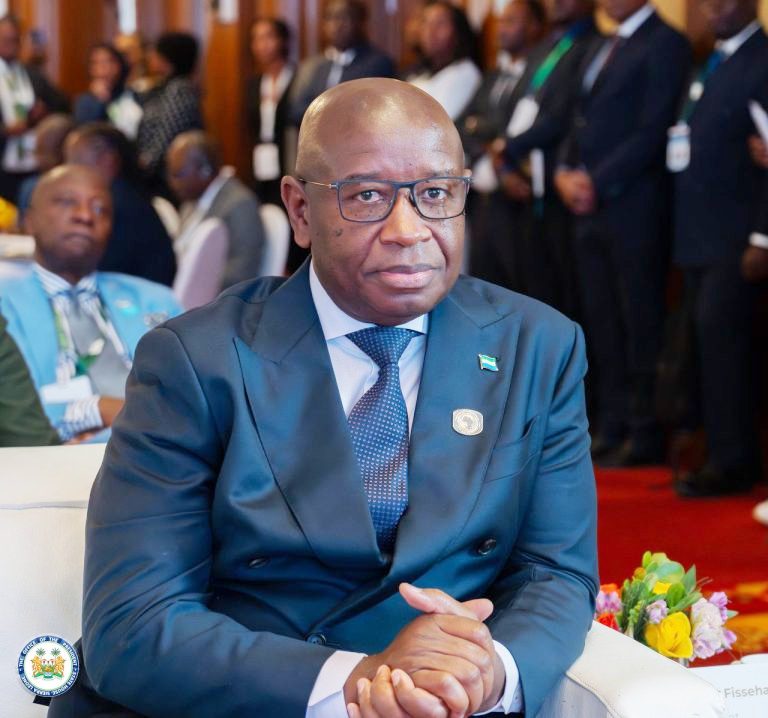
In Sierra Leone, the presidency of Julius Maada Bio continues to provoke intense national debate. To some, his administration represents bold reform, renewed international relevance, and investment in human development. To others, it symbolizes economic hardship, political division, and missed opportunities. The central question therefore remains unavoidable: Has Bio’s tenure become a proud legacy of national development, or has it evolved into an impediment to the country’s progress?
This question deserves serious reflection because the future of a nation is too important to be reduced to party slogans or emotional loyalty. The truth about leadership often lies between achievement and failure, ambition and reality, promise and implementation. Bio’s presidency stands precisely within this complex space.
When President Bio assumed office in 2018, Sierra Leoneans were filled with expectations. After years of political dissatisfaction and economic struggle, many citizens believed a new era of governance had arrived. Bio campaigned on the principles of discipline, accountability, human capital development, and national transformation. His message resonated strongly among young people, educators, and citizens who desired institutional reform.
At the heart of his administration emerged the Free Quality Education Programme, perhaps the most celebrated policy initiative of his presidency. Education became the government’s flagship priority, reflecting the belief that no nation can achieve sustainable development while neglecting its human resources. Under this programme, school fees for government-supported schools were removed, significantly increasing enrollment across the country.
The impact was immediate and visible. Thousands of children who once stayed at home because their parents could not afford school fees entered classrooms. Girls in rural communities gained greater educational opportunities, while vulnerable families experienced relief from financial pressure. In many ways, the policy projected a government attempting to invest in the future rather than merely seeking political survival.
Indeed, education remains one of the strongest foundations of national development. A literate and skilled population contributes to economic productivity, democratic awareness, innovation, and social stability. Bio therefore deserves recognition for placing education at the center of national conversation. His administration understood that roads and buildings alone cannot transform a country if the people themselves remain underdeveloped.
Yet the success of any educational reform depends not only on access but also on quality. Here, serious concerns have emerged. Overcrowded classrooms, inadequate teaching materials, poor school infrastructure, and shortages of trained teachers continue to challenge the effectiveness of the programme. Many schools struggle to accommodate the rising number of students, while teachers frequently complain about delayed salaries and difficult working conditions.
Critics argue that the government expanded enrollment faster than it strengthened educational capacity. As a result, some fear that quantity is being prioritized over quality. While the vision behind the programme remains admirable, implementation weaknesses threaten its long-term success. Nevertheless, even critics admit that the initiative has changed the educational landscape of Sierra Leone in ways future governments may find impossible to reverse.
Beyond education, Bio’s administration promised a determined fight against corruption. Corruption has historically been one of Sierra Leone’s greatest obstacles to development. Public funds intended for hospitals, roads, schools, and agriculture have too often disappeared through mismanagement and abuse of office. Bio entered office promising accountability and institutional reform.
The Anti-Corruption Commission became more active under his leadership, investigating public officials and pursuing cases involving alleged misuse of state resources. To supporters, this represented a courageous attempt to restore integrity within public institutions. Some recovered assets and prosecutions strengthened public perception that corruption was finally being confronted seriously.
However, the anti-corruption campaign has not escaped criticism. Opposition parties and some civil society groups argue that investigations have often appeared politically selective. They accuse the government of aggressively targeting opponents while allegedly overlooking misconduct among allies. Whether these accusations are entirely fair or politically motivated, they have contributed to increasing mistrust within the political environment.
A genuine anti-corruption legacy must be transparent, balanced, and independent. Once accountability appears influenced by political considerations, public confidence weakens. Sierra Leone’s democratic growth requires institutions that serve the nation rather than political interests.
Economically, Bio’s tenure has perhaps generated the greatest public frustration. Across markets, communities, and households, many Sierra Leoneans continue to struggle with inflation, unemployment, and the rising cost of living. Food prices have increased dramatically, transportation costs remain high, and the depreciation of the national currency has deepened hardship for ordinary citizens.
Certainly, some of these economic challenges are global rather than local. The COVID-19 pandemic disrupted economies worldwide, while international conflicts and rising fuel prices affected developing nations severely. However, leadership is most critically tested during difficult periods. Citizens expect governments not merely to explain hardship but to reduce it.
Bio’s administration introduced agricultural initiatives such as Feed Salone, aimed at boosting local food production and reducing dependence on imported goods. The strategy carried significant developmental potential because agriculture remains central to Sierra Leone’s economy. If successfully implemented, agricultural transformation could create employment, strengthen food security, and stimulate rural development.
Yet implementation challenges continue to undermine progress. Farmers frequently complain about limited access to modern equipment, financing, fertilizers, and transportation infrastructure. Despite government promises, many rural communities still experience severe poverty and low productivity. Consequently, critics argue that the administration’s agricultural ambitions have not yet translated into meaningful national economic relief.
Infrastructure development under Bio presents a similarly mixed picture. Some roads and public projects have been completed, while efforts have been made to improve energy access and digital governance. Nonetheless, electricity shortages, weak healthcare facilities, inadequate water supply, and poor sanitation continue to expose the limitations of state capacity.
Healthcare remains particularly concerning. Although the government invested resources during the COVID-19 pandemic and received praise for aspects of its public health response, many hospitals and clinics across the country still suffer from shortages of medicines, equipment, and qualified personnel. National development cannot be fully achieved while healthcare remains inaccessible or ineffective for many citizens.
Politically, Bio’s presidency has also faced criticism regarding democratic tolerance and national cohesion. Sierra Leone’s political environment remains highly polarized, with strong regional and party loyalties influencing public discourse. Tensions surrounding protests, elections, and opposition activities have at times raised fears about democratic stability.
The government insists that its actions are necessary to preserve law and order, while critics accuse it of suppressing dissent and limiting political freedom. In any democracy, balancing national security with civil liberties remains difficult. However, sustainable development requires unity, dialogue, and inclusive governance. A divided nation struggles to move forward collectively.
Youth unemployment remains another major concern. Sierra Leone possesses a youthful population filled with energy and ambition, yet many young people continue to face limited opportunities. Without meaningful employment and economic empowerment, frustration among youths may threaten both social stability and national progress.
Despite these criticisms, Bio has undeniably raised Sierra Leone’s international profile. His participation in global discussions on education, climate change, and African development has increased the nation’s visibility abroad. Sierra Leone has become more active diplomatically, attracting partnerships and development cooperation.
Still, international recognition means little if domestic conditions fail to improve substantially. The true measure of governance is not applause from international conferences but the lived experiences of ordinary citizens.
So, is Bio’s tenure a legacy or an impediment to national development?
The answer lies in contradiction. His presidency has introduced reforms with the potential to shape Sierra Leone positively for generations, particularly in education and governance. Yet economic hardship, political polarization, implementation failures, and persistent institutional weaknesses continue to undermine public confidence.
History may eventually remember Bio as a leader who attempted bold structural transformation under extremely difficult conditions. Alternatively, history may conclude that his administration possessed vision but lacked the practical execution necessary to transform national realities fully.
What cannot be denied, however, is that Julius Maada Bio’s tenure has become one of the most significant and controversial periods in Sierra Leone’s modern history. Whether it ultimately stands as a lasting legacy or a painful impediment to national development remains a judgment that time and the people of Sierra Leone will ultimately decide.