
By Musa Paul Feika
Leader of the Opposition in Parliament, Hon. Abdul Kargbo of the All People’s Congress (APC), has launched a strong critique of the Government’s Supplementary Appropriation Bill, 2026, arguing that while billions of Leones are being allocated to electricity subsidies, commercial borrowing and what he described as politically driven expenditures, critical sectors such as healthcare and education are being deprived of much-needed funding.
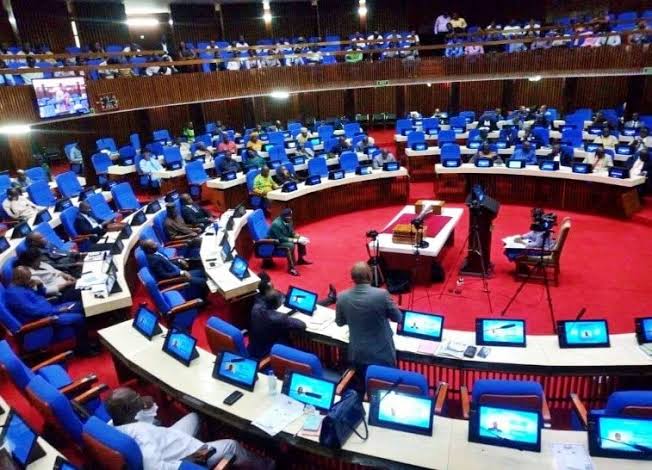
Contributing to the parliamentary debate on the Supplementary Appropriation Bill on Friday, 31st July, 2026 in the House of Parliament, Hon. Kargbo described the sharp increase in electricity and fuel subsidies as a matter of serious national concern. He noted that the allocation for electricity subsidies had risen dramatically from NLe480 million in the original 2026 Budget to approximately NLe1.6 billion in the supplementary estimates, questioning the sustainability of such an expenditure.
“If those managing our electricity sector cannot perform, then let us think about privatizing it,” he declared, adding that despite changes in leadership, including the dismissal of boards and ministerial interventions, the country’s electricity challenges remain unresolved.
He also questioned the allocation of NLe1.43 billion for electricity and Independent Power Producers (IPPs), together with NLe243 million in fuel subsidies for oil marketing companies, urging Parliament to demand greater transparency and accountability regarding the beneficiaries of those payments.
Hon. Kargbo further expressed concern over the Government’s growing reliance on commercial bank borrowing. He observed that financing through commercial banks had increased from approximately NLe567 million to more than NLe4.17 billion, despite repeated assurances by Government that it would reduce domestic borrowing.
According to him, the increasing dependence on commercial borrowing contradicts the positive macroeconomic indicators highlighted by the Minister of Finance, including the reported decline in the country’s debt-to-GDP ratio.
The Opposition Leader also pointed to what he described as inconsistencies between the Minister’s budget speech and the detailed annexes accompanying the Supplementary Budget.
While the Minister assured Parliament that the Free Quality School Education Programme, including school feeding, would continue uninterrupted, Hon. Kargbo argued that the budget annexes reflected significant reductions in allocations for several education-related goods and services, including school feeding and other educational programmes.
Turning to the health sector, he questioned how hospitals and health facilities would continue providing adequate medicines and essential medical supplies if budgetary allocations continued to decline.
“We should be investing more in medical supplies so that when ordinary citizens fall sick, they can receive proper treatment. Too many people are dying because they cannot access adequate healthcare,” he said.
Despite his criticism of the Supplementary Budget, Hon. Kargbo commended the Minister of Finance and the Ministry’s technical staff, describing them as hardworking professionals operating under difficult fiscal conditions. However, he argued that political considerations frequently override technical advice during the budget preparation process.
“The budget is influenced by two forces—the technical and the political. The technical people may have the expertise, but when the political actors come in, they often impose decisions without regard for technical recommendations,” he observed.
He called on Government to prioritize expenditures that directly improve the lives of ordinary Sierra Leoneans by creating jobs, strengthening healthcare services and safeguarding education, rather than increasing spending on what he characterized as politically motivated priorities.
Hon. Kargbo concluded by urging Government to present a genuinely people-centered budget that addresses the everyday needs of citizens instead of expanding recurrent expenditure at the expense of essential public services.
Responding during the debate, the Leader of Government Business, Hon. Mathew Sahr Nyuma, defended the Supplementary Appropriation Bill, arguing that the proposed adjustments are necessary to preserve Sierra Leone’s fiscal credibility, maintain macroeconomic stability and cushion the economy against global economic shocks.
Hon. Nyuma explained that the Executive has a constitutional and legal obligation to return to Parliament whenever changes in the assumptions underpinning the national budget require amendments to approved appropriations.
He stressed that supplementary budgets should not be viewed as evidence of policy failure but rather as an essential instrument for ensuring transparency, accountability and fiscal credibility.
“The obligation of the Minister of Finance and the entire Executive is to ensure that we fulfill the constitutional mandate. When circumstances change, it is only proper that Government returns to Parliament, explains those changes frankly, and justifies the necessary adjustments,” he said.
According to Hon. Nyuma, Sierra Leone’s economic performance in 2025 was strong, enabling the country to achieve greater macroeconomic stability and build financial buffers that are now helping Government absorb external economic shocks.
He argued that those reserves have provided Government with the flexibility to introduce necessary fiscal adjustments while maintaining relative economic stability despite growing global uncertainty.
The Leader of Government Business warned that the international economy continues to experience what economists describe as a “permanent shock,” driven largely by geopolitical tensions, particularly conflicts in the Middle East, which have disrupted global commodity markets.
He cautioned that these global challenges could persist until 2027 or even 2028 if international conditions fail to improve.
Hon. Nyuma further observed that many traditional development partners are increasingly redirecting resources towards domestic priorities, defence and security, reducing the volume of external assistance available to developing countries. He said this makes domestic revenue mobilization more critical than ever.
He therefore welcomed the Government’s renewed emphasis on strengthening tax administration and improving revenue collection, particularly through goods and services taxation, describing domestic revenue as the foundation of sustainable economic development.
Hon. Nyuma assured Parliament that the National Revenue Authority (NRA) has been assigned clear performance targets and that Government remains committed to holding the institution accountable for meeting its revenue obligations.
He acknowledged that domestic revenue projections for the first half of 2026 had fallen below expectations because economic activity slowed significantly as a result of external factors rather than weaknesses in Government policy.
One of the principal reasons for the Supplementary Budget, he explained, was the sharp rise in international petroleum prices.
He disclosed that while the 2026 Budget had been prepared using an estimated international oil price of approximately US$70 per barrel, global prices later surged to more than US$120 per barrel following heightened geopolitical tensions.
Because Sierra Leone relies heavily on imported petroleum products, he explained, the increase significantly affected transportation, electricity generation, industrial production and the overall cost of living.
Despite these pressures, Hon. Nyuma said Government deliberately refrained from increasing fuel taxes in order to shield citizens from even higher pump prices.
Instead, he revealed that Government secured authority to maintain a petroleum subsidy mechanism, supported by a minimum allocation of NLe10 million, to stabilise domestic fuel prices through a transparent petroleum pricing formula.
He maintained that the Supplementary Appropriation Bill reflects Government’s commitment to responsible fiscal management, transparency and protecting the economy from external shocks while preserving the macroeconomic gains already achieved.
The Bill was unanimously enacted into law by both the ruling SLPP and APC MPs.