

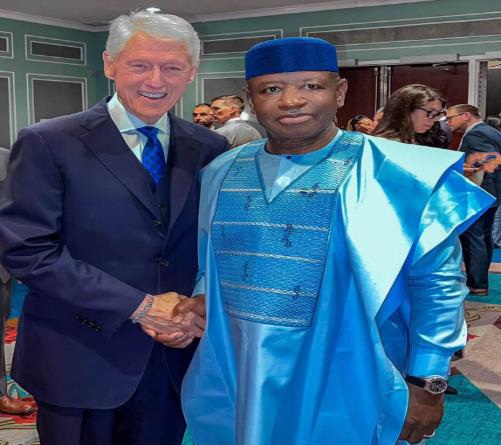
The Sierra Leone Advocacy Movement-Global (SLAM-Global) has written an open letter to the Clinton Foundation demanding greater transparency over participation of President Julius Maada Bio and First Lady Fatima Maada Bio at the September 2026 Clinton Global Initiative (CGI) Annual Meeting in New York.
In the letter dated October 3, 2026, SLAM-Global said its concerns were not aimed at discouraging international cooperation, but at seeking clarity on how prominent international engagements are assessed when serious public concerns surrounding drug trafficking, institutional accountability and public health remain unresolved.
First Lady Fatima Bio spoke at the CGI Annual Meeting on September 23, where, according to the letter, she addressed children’s online safety and Africa’s role in shaping the digital future.
Furthermore, SLAM-Global acknowledged the importance of those issues but said many Sierra Leoneans are also deeply concerned about the country’s drug crisis, particularly the impact of kush on young people and broader questions surrounding international drug trafficking.
The organisation said Sierra Leone is facing two related but distinct challenges: a domestic public health emergency involving kush and concerns over international cocaine trafficking networks operating across West Africa.
In addition, it cited an April 2026 report by the United Nations Office on Drugs and Crime (UNODC), which reportedly found synthetic opioids in plant material sold as kush in Sierra Leone. SLAM-Global argued that the country’s response should go beyond arrests and include treatment, rehabilitation, mental-health services, prevention, family support and long-term recovery programmes.
The advocacy group also referred to the international controversy surrounding Dutch national Jos Leijdekkers, who was convicted in absentia of trafficking more than seven tonnes of cocaine.
According to the open letter, Reuters reported in January 2025 that Leijdekkers appeared in footage from a church service attended by President Bio. The organisation stressed, however, that allegations of high level protection require investigation and that the footage itself does not establish criminal involvement by President Bio or members of his family.
The group further highlighted the controversy surrounding €18 million in European Union budget support to Sierra Leone. It said Dutch and EU officials gave explanations concerning the suspension or postponement of the funds, while the Sierra Leonean Government disputed the explanation and attributed the issue to technical and procedural matters.
SLAM-Global said the conflicting explanations make transparency particularly important and called for the documentary record to clarify whether the funding issue was connected to technical considerations, the Leijdekkers dispute, or both.
The organisation also referred to a major cocaine seizure involving the vessel Arconian in May 2026. However, it carefully acknowledged that the seizure occurred at sea and that the shipment should not automatically be described as cocaine seized inside Sierra Leone or attributed to Sierra Leonean officials without supporting evidence.
At the centre of the open letter are six questions directed at the Clinton Foundation and CGI.
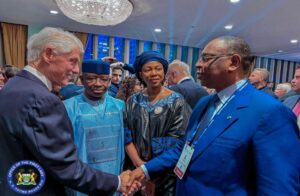
SLAM-Global wants to know what criteria were used in inviting President Bio and selecting First Lady Fatima Bio as a CGI speaker and what due-diligence procedures were applied to assess reputational risks surrounding prominent participants.
The group also asks whether CGI was aware of the publicly documented dispute between Dutch and Sierra Leonean authorities concerning Leijdekkers at the time the invitations were made.
It further wants clarification on whether the Bios’ participation was connected to a specific development initiative, partnership or Commitment to Action.
The organisation is also asking whether the September meeting produced any Sierra Leone-specific commitments and, if so, for details concerning the project, partners, budget, funding status, implementation timetable and reporting arrangements.
Another question concerns whether CGI consulted Sierra Leonean civil society organisations, healthcare professionals, rehabilitation specialists, young people in recovery and families affected by drug-related harm.
Finally, SLAM-Global is asking how CGI ensures that participation in its humanitarian events is not interpreted as a blanket endorsement of the wider governance record of an invited official.
The organisation has also called on Sierra Leonean authorities to publish, within the limits of lawful investigative confidentiality, information concerning the country’s cooperation with international investigations into major trafficking cases.
It wants relevant institutions to explain the status of requests for international assistance, measures taken to protect diplomatic and border-control systems, and mechanisms available for independent oversight.
SLAM-Global stressed that where credible evidence implicates a public official, an independent investigation should follow with due process. Conversely, where allegations are unsupported, it said transparent findings could help prevent rumours from replacing evidence.
Despite its criticism, SLAM-Global said the letter should also be viewed as an invitation to collaboration.
The group proposed that CGI could help bring together Sierra Leonean healthcare institutions, civil society organisations, development partners and relevant government agencies to develop a measurable response to drug-related harm.
Among the proposed areas are laboratory capacity, emergency healthcare training, addiction treatment, community prevention, family support and economic reintegration for people recovering from drug addiction.
SLAM-Global said any such programme should have clearly identified funders, independent oversight, publicly available milestones and safeguards to ensure resources reach intended beneficiaries.
The advocacy organisation has framed what it calls the “People’s Test” around a simple question: whether ordinary Sierra Leoneans will ultimately bear the cost of failures in transparency, international cooperation or institutional accountability.
It argues that meaningful progress should be measured by whether parents can access treatment for children struggling with addiction, whether healthcare workers can identify dangerous substances, whether people completing rehabilitation can access education and employment, and whether citizens can obtain credible information about major trafficking investigations.
SLAM-Global proposed five indicators for measuring the impact of any Sierra Leone-related CGI initiative: the number and geographical distribution of people receiving treatment; sustained recovery and follow-up care; access to emergency medicines and trained personnel; education and employment support; and independently verified expenditure and project results.
SLAM-Global has requested a written response from the Clinton Foundation within 30 days of receiving the letter, or an indication of when a substantive response can be expected.
The organisation also encouraged the Foundation to publish information about any Sierra Leone-specific commitments arising from the September 2026 CGI meeting and to engage independent Sierra Leonean healthcare professionals, civil society representatives and communities affected by drug-related harm.
The letter concludes by saying that its purpose is not to discourage international engagement with Sierra Leone, but to ensure that such engagement is transparent, accountable and capable of producing measurable results for ordinary citizens.
The document was signed by Dr. Alfred A. Veenod Fullah, Director-General of SLAM-Global.
 October 3rd, 2026
OPEN LETTER TO THE CLINTON FOUNDATION
INTERNATIONAL RECOGNITION MUST BE MATCHED BY PUBLIC ACCOUNTABILITY: AN OPEN LETTER TO THE CLINTON FOUNDATION ON SIERRA LEONE’S DRUG CRISIS AND THE SEPTEMBER 2026 CGI MEETING
To: President Bill Clinton, Secretary Hillary Rodham Clinton, Chelsea Clinton, and the Leadership of the Clinton Foundation and Clinton Global Initiative
Copied to: The Office of the President of Sierra Leone; the Office of the First Lady; the Ministry of Foreign Affairs and International Cooperation; the Ministry of Justice; the Ministry of Social Welfare; the Sierra Leone Police; the Transnational Organized Crime Unit; the Anti-Corruption Commission; the Parliament of Sierra Leone; the Embassy of the Kingdom of the Netherlands; and relevant ECOWAS, European Union and United Nations institutions.
Subject: A request for transparency concerning the invitation of Sierra Leone’s President and First Lady, amid international drug-trafficking investigations and an ongoing public-health emergency
Dear President Clinton and Distinguished Members of the Clinton Foundation,
The Sierra Leone Advocacy Movement – Global (SLAM-Global) writes to you with respect for the Clinton Foundation’s humanitarian work and with serious questions concerning the public recognition extended to President Julius Maada Bio and First Lady Fatima Maada Bio during the September 2026 Clinton Global Initiative Annual Meeting.
Our letter is not an objection to international cooperation. It is an invitation to demonstrate what responsible international cooperation requires when a country’s people are confronting a drug crisis, while significant questions about transnational trafficking and institutional accountability remain unresolved.
On September 23, 2026, First Lady Fatima Bio spoke at the CGI Annual Meeting in New York. Reuters independently documented her appearance. Her reported remarks addressed children’s online safety and Africa’s participation in shaping the digital future. These are legitimate subjects of international concern.
Yet many Sierra Leoneans have another urgent concern: the safety of young people confronting addiction, the integrity of institutions responsible for combating drug trafficking, and the status of investigations involving individuals with reported access to the country’s highest political circles.
We recognize the importance of engaging government leaders in solving development problems. We also believe international organizations should be prepared to explain how they assess reputational risks, respond to serious publicly documented concerns and ensure that high-profile engagements serve affected communities.
This is why we write.
The Clinton Foundation’s humanitarian record
The Clinton Global Initiative describes itself as a platform that convenes leaders from government, business, philanthropy and civil society to develop measurable projects known as Commitments to Action. The Foundation reports that more than 4,100 commitments across 190 countries have benefited approximately 500 million people. These are Foundation-reported aggregate figures and should not be interpreted as proof that CGI independently funded or delivered every result.
We acknowledge the significance of that work. We also recognize that CGI does not directly fund or implement the commitments developed through its platform. Instead, it facilitates partnerships, provides technical support and tracks progress reported by commitment-makers.
That distinction is central to our letter.
When an organization has built its international reputation around measurable humanitarian outcomes, its decisions about public platforms, prominent speakers and development partnerships naturally attract scrutiny. We therefore seek to understand the purpose of the Bios’ participation, the safeguards applied and the benefits expected for Sierra Leone.
Sierra Leone’s drug crisis: Two distinct but urgent problems
Sierra Leone faces a devastating domestic public-health challenge involving kush and a separate, internationally documented concern about cocaine trafficking through West Africa. These issues should not be conflated, but both require capable institutions, effective international cooperation and transparent accountability.
In April 2026, the United Nations Office on
Drugs and Crime reported that synthetic opioids had been detected in plant material sold as kush in Sierra Leone. UNODC warned that potent synthetic opioids in unexpected drug products create serious risks because their presence and dosage may be unknown to users and healthcare professionals.
This is not simply a law-enforcement issue. It is also a question of treatment capacity, emergency healthcare, mental-health services, family support and the long-term prospects of young people. A country cannot address such a crisis through arrests alone. It needs reliable toxicology data, evidence-based treatment, prevention, sustained recovery services and opportunities for those rebuilding their lives.
At the same time, international investigations have raised questions about Sierra Leone’s exposure to major cocaine-trafficking networks.
The international trafficking cases that warrant answers In January 2025, Reuters reported that Jos Leijdekkers, a Dutch national convicted in absentia of trafficking more than seven tonnes of cocaine, appeared in footage filmed at a church service attended by President Bio. Reuters reported allegations that Leijdekkers was receiving high-level protection in Sierra Leone. Those allegations require investigation; the footage itself does not establish criminal involvement by the president or his family.
The dispute has since escalated. On October 1, 2026, Dutch Justice Minister David van Weel said the European Commission had suspended €18 million in 2026 budget support to Sierra Leone as pressure over the Government’s alleged failure to cooperate in securing Leijdekkers’ surrender, with additional support potentially affected. Sierra Leone disputes that explanation, saying the postponement resulted from technical and procedural issues concerning its EU Financing Agreement. On October 2, EU Commissioner Magnus Brunner likewise described the immediate suspension as being for “technical reasons,” while acknowledging broader EU concerns about drug trafficking and organized crime in Sierra Leone.
These conflicting explanations demand clarification. Was the money postponed for technical reasons, withheld because of the Leijdekkers dispute, or did both considerations play a role? The public deserves the documentary record.
A separate international operation in May 2026 led Spanish authorities to seize a record cocaine shipment aboard the Arconian. Spanish judicial reporting put its gross weight at 30,215.84 kilograms, packed in 1,279 bales, with a reported value exceeding €812 million. Twenty-three people aboard the vessel were remanded in custody, and the operation involved cooperation from Dutch police and the United States Drug Enforcement Administration.
The Arconian seizure was made at sea, with Spain identified as the intended destination. Its full cargo must not be described as cocaine seized inside Sierra Leone, nor should the entire shipment be attributed to Sierra Leonean officials without supporting evidence.
Nevertheless, these developments demonstrate the scale of the international trafficking problem and the importance of transparent cross-border investigations.
We recognize that an investigation, an allegation, a conviction and a photograph are different forms of evidence. We make no allegation that President Bio or First Lady Fatima Bio personally organized, financed or profited from these shipments. Our concern is whether all relevant allegations are being examined through independent, credible processes and whether international partners are receiving the cooperation they require.
International engagement and the responsibility of public recognition
The Clinton Foundation is entitled to engage elected governments and public officials in pursuit of humanitarian objectives. Indeed, many development projects require government cooperation.
However, a prominent international platform can carry meanings beyond the intentions of its organizers. Photographs, speaking engagements and appearances alongside globally recognized leaders may be interpreted by domestic audiences as expressions of approval.
That possibility creates an important responsibility for international institutions: to distinguish clearly between engaging a government to achieve humanitarian objectives and endorsing its broader record.
We therefore ask the Clinton Foundation to clarify the circumstances surrounding the Bios’ participation.
We have not established that CGI failed to conduct appropriate vetting. We have not seen its internal assessment, and we do not presume to know the private reasoning behind its invitation. Our request is for transparency about the standards applied.
We also acknowledge First Lady Fatima Bio’s advocacy on child marriage and the importance of children’s digital safety, the subject of her reported CGI remarks. The Sierra Leonean presidency announced three additional national commitments against child marriage at a separate New York event on September 23. These initiatives can be examined on their own terms, including their implementation and measurable results.
Recognition of work in one area need not prevent legitimate scrutiny in another.
Our formal questions to the Clinton Foundation
We respectfully request written clarification on six matters.
First: Selection and due diligence. What criteria governed the invitation of President Bio and the selection of First Lady Fatima Bio as a CGI speaker? What procedures does CGI use to assess reputational risks and publicly documented concerns involving prominent participants?
Second: Awareness of the trafficking controversy. When the Bios were invited, was CGI aware of the publicly documented dispute between Dutch and Sierra Leonean authorities concerning Leijdekkers, including reported efforts to secure his surrender? In light of the subsequent €18 million EU funding controversy, will CGI review whether these developments affect any continuing partnership or engagement with Sierra Leone’s leadership?
Third: The purpose of the invitation. Was the Bios’ participation connected to a particular development initiative, existing partnership or proposed Commitment to Action? If so, what was its scope?
Fourth: Measurable benefits. Did their participation generate any new, Sierra Leone-specific commitment? If it did, we request the project’s title, partners, proposed budget, funding status, implementation timetable and publicly accessible reporting arrangements.
Fifth: Participation by affected communities. Did CGI consult or include independent Sierra Leonean civil society organizations, healthcare professionals, rehabilitation specialists, young people in recovery or families affected by drug-related harm? If not, would the Foundation consider including them in future engagements?
Sixth: Institutional safeguards. How does CGI prevent participation in its humanitarian events from being misrepresented as a comprehensive endorsement of an invited official’s conduct or governance record?
These questions are consistent with CGI’s stated emphasis on new, specific and measurable commitments. Its published guidance also explains that commitments are implemented by partners and that participation does not guarantee funding.
Our requests to the Government of Sierra Leone
We separately call upon the relevant Sierra Leonean authorities to publish, within the limits of lawful investigative confidentiality, an account of the country’s cooperation with international investigations concerning major trafficking cases.
That account should identify the responsible institutions, the status of relevant requests for international assistance, the measures taken to protect the integrity of diplomatic and border-control systems, and the mechanisms available for independent oversight.
Where credible evidence implicates any public official, an independent investigation should follow, with due process and equal application of the law. Where allegations are unsupported, transparent findings can help prevent rumor from taking the place of evidence.
We further request publicly accessible reporting on Sierra Leone’s response to the kush emergency, including treatment availability by district, access to essential medicines, long-term recovery outcomes and the resources allocated to prevention and rehabilitation.
Accountability should protect both the public interest and the rights of individuals under investigation.
An opportunity for international collaboration
This letter is also an invitation to collaborate.
The Clinton Global Initiative’s partnership model could provide an avenue for Sierra Leonean healthcare institutions, independent civil society organizations, development partners and relevant government agencies to design a measurable response to drug-related harm.
Such an initiative could address laboratory capacity to identify dangerous substances, training for emergency healthcare workers, access to evidence-based addiction treatment, community prevention, family support and the economic reintegration of people in recovery.
It should be led by demonstrated needs, informed by medical evidence and developed with meaningful participation from affected communities.
Any resulting project should have clearly identified funders, independent oversight, published milestones and safeguards to ensure that resources reach their intended beneficiaries.
We are not asking CGI to replace law-enforcement institutions or assume responsibility for prosecuting alleged traffickers. We are asking whether its established convening capabilities could help address a serious humanitarian problem while maintaining transparent standards for engagement.
The People’s Test: What would meaningful progress look like?
But €18 million is not an abstraction. Whether it was technically postponed or politically withheld, Sierra Leoneans deserve to know why expected development support did not proceed as planned and whether additional resources could be placed at risk. The People’s Test is simple: Will ordinary citizens ultimately pay the price for failures of transparency, cooperation or institutional accountability?
The ordinary Sierra Leonean needs a different measure of progress. Can a parent find timely treatment for a child struggling with addiction? Can a healthcare worker identify a dangerous synthetic opioid and provide appropriate emergency care? Can a person completing rehabilitation access continuing support, education or employment? Can citizens obtain credible information about major trafficking investigations and the conduct of public institutions?
These questions translate international engagement into outcomes that can be measured. For any Sierra Leone-related initiative emerging from CGI, we propose public reporting against five indicators: the number and geographic distribution of people receiving treatment; sustained recovery and follow-up care; access to relevant emergency medicines and trained personnel; education and employment support for people in recovery; and independently verified expenditure and project results.
These indicators would not resolve every aspect of Sierra Leone’s drug crisis. They would, however, provide a practical basis for evaluating whether an international partnership is improving lives.
A request for a substantive response
We respectfully invite the Clinton Foundation to provide a written response to the questions in this letter within 30 days of receipt, or to indicate when a substantive response can reasonably be expected. We encourage the Foundation to publish relevant information about any Sierra Leone-specific commitments arising from the September 2026 meeting and to consider a structured dialogue with independent Sierra Leonean healthcare professionals, civil society representatives and affected communities.
We likewise encourage Sierra Leone’s public institutions to make verifiable information available concerning the trafficking investigations and the country’s response to drug-related harm. Our purpose is not to discourage international engagement. It is to ensure that engagement is transparent, accountable and capable of producing meaningful outcomes. The Clinton Foundation has helped establish an international model centered on measurable commitments. We invite it to apply that same principle to the questions raised by its engagement with Sierra Leone’s leadership.
The families confronting addiction, the healthcare workers delivering treatment and the communities seeking credible public institutions deserve answers grounded in evidence-and partnerships whose results they can see.
P.S. We invite you to explore our recently published analysis in a book, “Building a Nation: Good Governance and Democratic Principles in Sierra Leone.” As we unite for change in 2026, this resource provides valuable insights for activists, policymakers, and concerned citizens committed to Sierra Leone’s transformation. Find it here: link.
Signed,
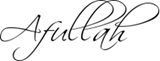
Dr. Alfred A. Veenod Fullah
DIRECTOR-GENERAL
CC: Office of the President of Sierra Leone
” Office of the Vice President of Sierra Leone
” Speaker of the Sierra Leone House of Parliament
” Office of the First Lady of Sierra Leone
” Office of the Chief Minister of the Government of Sierra Leone
” Electoral Commission for Sierra Leone (ECSL)
” Inspector General of Sierra Leone Police
” Chief of Defence Staff, Republic of Sierra Leone Armed Forces (RSLAF)
” Office of National Security, Sierra Leone
” Independent Commission for Peace and National Cohesion
” Leonardo Santos Simao, Representative of the Secretary-General & Head of UN Office for West Africa and the Sahel (UNOWAS)
” African Union (AU)
” Economic Community of West African States (ECOWAS)
” Amnesty International
” Marco Rubio, United States Secretary of State
” Vice President, Congressional and Public Affairs
” The Commonwealth Secretary-General
” Karim Ahmad Khan, Chief Prosecutor, International Criminal Court (ICC)
” Richard YOUNG, Chief de Division, Afrique de l’Ouest
” Ms. Ursula Von Der Lyen, European Commissioner
” The United Nations Representative in Sierra Leone
” H. E. Oumar Touray, President of ECOWAS Commission
” Madam Fatoumata Jallow-Tambajang, former VP of The Gambia
” H.E John Dramani Mahama, President of Ghana
” H. E. Bassiru Faye, President of Senegal
” H.E. Mamadi Doumbouya, President of Guinea
” H.E. Joseph Boakai, President of Liberia
” David Lammy, Secretary of State for Foreign, Commonwealth & Dev Affairs, UK
” Neil Alan John Coyle, MP for Bermondsey & Old Southwark, UK
” Ambassador Aly Diallo, Ambassador of the Republic of Guinea to the UK&I
” Ambassador Mohammad Maidugu, Acting High Commissioner of Nigeria in the UK&I
” Her Excellency Dr Fatou Bensouda, Head of Mission, The Gambia high Commission, UK&I
” H.E Fatimata Dia, Ambassador of Senegal to the UK&I
” H.E Gurly T. Gibson-Schwarz, Ambassador of Liberia to the UK&I
” Her Excellency Josephine Gauld, British High Commissioner to Sierra Leone
” Ambassador of the United States of America to Sierra Leone
” Head of the European Union Delegation in Sierra Leone
” General Consul of Canada in Sierra Leone
” Ambassador of China to Sierra Leone
” Ambassador of Germany to Sierra Leone
” Ambassador of Lebanon to Sierra Leone
” Ambassador of Iran to Sierra Leone
” Ambassador of Brazil to Sierra Leone
” Ambassador of Sweden to Sierra Leone
” Ambassador of Libya to Sierra Leone
” Ambassador of Egypt to Sierra Leone
” Ambassador of Cuba to Sierra Leone
” Ambassador of Guinea to Sierra Leone
” Ambassador of Liberia to Sierra Leone
” High Commissioner of the Federal Republic of Nigeria to Sierra Leone
” High Commissioner of Ghana to Sierra Leone
” High Commissioner of The Gambia to Sierra Leone
” General Consul of Italy in Sierra Leone
” Honorary Consul-General of the Islamic Republic of Pakistan in Sierra Leone
” Honorary Consul-General of Ireland in Sierra Leone
” Honorary Consul-General of Japan in Sierra Leone
” Honorary Consul-General of India to Sierra Leone
” Honorary Consul of Senegal in Sierra Leone
” Honorary Consul of Switzerland in Sierra Leone
” Honorary Consul of Syria in Sierra Leone
” Honorary Consul of Turkey in Sierra Leone
” Honorary Consul of Mali in Sierra Leone
” Honorary Consul of Ukraine in Sierra Leone
” Honorary Consul of Romania in Sierra Leone
” Honorary Consul of Norway in Sierra Leone
” Honorary Consul of Hungary in Sierra Leone
” Honorary Consul of France in Sierra Leone
” Honorary Consul of Belgium in Sierra Leone
” Honorary Consul of The Netherlands in Sierra Leone
” Honorary Consul of Spain in Sierra Leone
” Honorary Consul of Serbia in Sierra Leone
” Honorary Consul of Austria in Sierra Leone
” Honorary Consul of Denmark in Sierra Leone
” Honorary Consul of Russia in Sierra Leone
” Honorary Consul of Malaysia in Sierra Leone
” Honorary Consul of South Africa in Sierra Leone
” Civil Society Movement – Sierra Leone (CSM – SL)
” Media Reform Coordinating Group of Sierra Leone (MRCG)
” Sierra Leone Association of Non-Governmental Organizations (SLANGO)
” Civil rights Defenders – Sierra Leone
” National Elections Watch (NEW) – Sierra Leone
” Campaign for Good Governance (CGG) – Sierra Leone
” Women’s Forum – Sierra Leone
” Network Movement for Justice and Development (NMJD)
” Sierra Leone Legal Aid Board
” Faith-Based and Interfaith Organizations – (Interreligious Council of Sierra Leone)
” Council of Churches in Sierra Leone (CCSL)
” Fourah Bay College – University of Sierra Leone
” Institute of Governance Reform (IGR)
” Youth Partnership for Peace and Development (YPPD)
” Children’s Forum Network
” Anti-Corruption Commission (ACC) – Sierra Leone
” Awoko Newspaper – Sierra Leone
” Liberty TV Online – Sierra Leone
” Radio Democracy 98.1 FM Station – Sierra Leone
” The New York Times
” The Washington Post
” The USA Today
” The Cable News Network (CNN)
” The MicroSoft National Broadcast Corporation (MSNBC)
” The Fox News
” The Associated Press
” Thomson Reuters
” The National Public Radio (NPR)
” The Brookings Institution
” The Heritage Foundation
” The Center For American Progress
” The National Association For The Advancement Of Colored People (NAACP)
” The American Civil Liberties Union (ACLU)
” The MoveOn
” The Democratic National Committee
” The Republican National Committee
” The EMILY’s List
” The British Broadcasting Corporation (BBC)
” The Sky News
” Al Jazeera
” The Independent Television (ITV)
” The Times
” The Financial Times
” The Guardian
” The Daily Telegraph