


By Musa Paul Feika
Former President of Sierra Leone, Dr. Ernest Bai Koroma, has raised concerns over the urgency of implementing the recommendations of the Tripartite Committee, warning that time is running out for the country to adequately prepare for credible, inclusive and peaceful elections in 2028.
Dr. Koroma stressed that political leaders and other stakeholders must demonstrate greater commitment to addressing outstanding electoral issues, particularly those relating to the census and electoral arrangements, to ensure that no political party, community or group is disadvantaged in the next electoral process.
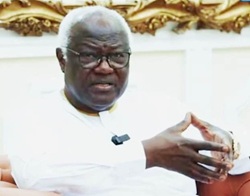
Speaking during a press conference at his Femi Turner residence in Freetown, the former President cautioned that the country could not afford to delay critical preparations while expecting the next general elections to meet the aspirations of all Sierra Leoneans.
He emphasised that implementing the necessary electoral reforms would require collective responsibility, honesty and sustained commitment from all stakeholders.
“The unfortunate thing is that time is not on our side. We have to be honest about it. If we expect the next elections to be conducted in a way we will all be happy, time is not on our side,” Koroma warned.
His remarks come at a critical period when the Government of Sierra Leone and the opposition All People’s Congress (APC) are expected to make progress on the recommendations of the Tripartite Committee, established to address disagreements surrounding the 2023 general elections and strengthen the country’s democratic institutions.
The Tripartite process, which forms an important part of the implementation of the Agreement for National Unity (ANU), provides a framework for addressing electoral concerns, strengthening public confidence in electoral institutions and promoting inclusive political governance ahead of the 2028 elections.
Koroma’s concerns particularly highlight the need for timely action on the 2026 Population and Housing Census and its implications for electoral administration and national development.
According to him, the census should not be viewed merely as a political exercise involving the demarcation of constituencies or the distribution of parliamentary representation. Rather, it should provide reliable population information that enables the government to plan effectively and deliver essential services to communities according to their actual needs.
He explained that census data has broader implications for national development, including determining how public services and resources are distributed across the country.
“The census is not just about politics, but about how do we adequately provide the services to the people in the various communities, given the numbers that they have,” he stated.
The former President further cautioned against reducing the census exercise to questions of constituency demarcation and the allocation of political responsibilities, arguing that its developmental importance must also be recognised.
His position comes as international moral guarantors, including ECOWAS, the United Nations Office for West Africa and the Sahel (UNOWAS) and the Commonwealth, have continued to encourage the Government and the APC to accelerate the implementation of outstanding Tripartite recommendations.
Following their April 2026 assessment mission, the international guarantors called for an inclusive approach to the use of the 2026 census data, particularly in relation to electoral governance and national development.
They also highlighted the need to strengthen the Electoral Commission for Sierra Leone (ECSL), improve electoral preparedness, undertake relevant constitutional and legislative reforms and ensure that all political stakeholders participate meaningfully in the process.
The guarantors further called for the restructuring of the ECSL within the framework of the Agreement for National Unity, with an agreed timeline of 31 December 2026.
Against this background, Koroma urged stakeholders to commit themselves to ensuring that the next electoral process is conducted in a manner that reflects the genuine wishes of the electorate.
He maintained that the objective should be to create a process in which no individual or political group feels deliberately disadvantaged, stressing that the outcome of the elections must represent the actual choice of the people.
“We all have to commit ourselves this time round that it will be such that nobody will be disadvantaged and what comes out will be a true reflection of the people,” he said.
His warning reinforces growing concerns about the limited time available to address outstanding electoral reforms before the 2028 general elections. With census preparations and other electoral processes approaching, delays in implementing agreed recommendations could create further mistrust among political stakeholders.
For Koroma, the responsibility of ensuring credible elections should not rest solely on the Government or the opposition. It requires cooperation among political parties, electoral institutions, civil society organisations and other national stakeholders.
The former President’s intervention also places renewed attention on the need to move beyond agreements and political declarations towards practical implementation of the Tripartite Committee’s recommendations.
In end, the credibility of the 2028 elections will depend not only on the legal and institutional reforms undertaken but also on whether all stakeholders have confidence in the process and believe that their participation and votes will be respected.
Koroma’s message is therefore a warning that the opportunity to address existing electoral concerns should not be wasted, as the country moves closer to another important democratic test.