


By Musa Paul Feika
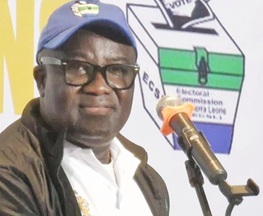
The Sierra Leoneans Lives Matter Global (SLAM-Global) has issued a blistering rebuke of the Electoral Commission for Sierra Leone (ECSL), accusing the commission of withholding critical election data and warning that the secrecy threatens the foundations of the country’s democracy.
In a statement, SLAM described the ECSL’s refusal to publish polling station and constituency level results as “a dangerous betrayal of public or people’s trust,” saying that the practice erodes transparency, fuels suspicions of fraud and denies citizens their democratic right to independent verification.
SLAM’s warning follows the contested 24th June 2023 general elections, which left Sierra Leone deeply divided.
Local and international observers raised concerns about the tallying and aggregation process, saying the lack of granular results made independent checks impossible. While the ECSL declared President Julius Maada Bio the winner, opposition parties, civil society groups and development partners demanded access to the raw polling-station returns the would allow forensic analysis of the tabulation.
SLAM and other election monitoring bodies argue that disaggregated results polling station returns, voter-roll batch results and intermediate tabulation logs are essential because they allow journalists, political parties and analysts to cross check announced tallies against polling station returns.
It also reveals mathematical inconsistencies, unusual vote patterns or localized anomalies; and most importantly helps building public confidence by showing how local returns roll up into constituency and national totals.
International observers warned during and after the June 24, 2023 polls that failing to publish polling-station level data would undermine confidence in the process and prevent independent verification.
The European Union Election Observation Mission (EU EOM), the European External Action Service and the Carter Center all publicly called for greater transparency and the prompt release of line-by-line results so irregularities could be examined.
SLAM is demanding and requesting for ECSL to publish the full disaggregated results dataset (polling-station/ward/constituency level) in machine readable formats.
“Transparency is not optional in a democracy,” SLAM said, adding that withholding the data is “an affront to the sacrifices of Sierra Leoneans who fought for multiparty democracy.”
To add, ECSL has defended its approach, arguing that some categories of information cannot be released for legal, privacy or procedural reasons and pointing to press statements on timelines for completing the voter register and related resources.
Critics noted that those explanations fail to address calls for polling station returns and intermediate tabulation data that enable independent auditing.
They further argued that summary tables alone made meaningful scrutiny effectively impossible.
Domestic watchdogs and research groups have published analyses, pointing out anomalies and mathematical inconsistencies in the publicly available summaries discrepancies that they say cannot be resolved without access to the underlying data.
Many analysts warned that continued prolong political polarization, deepen grievance narratives and reduce the credibility of future electoral outcomes.
The increased cost of dispute resolution as stakeholders with limited trust in official results resort to parallel claims and alternative analyses could further destabilize an already fragile political environment.
A number of local opinion pieces and civil society briefings have admonished that the ECSL’s policy is “a recipe for trouble” unless remedial transparency measures are adopted.
As a test for institutional accountability, SLAM framed the demand for data not as a partisan request, but rather as a test of institutional accountability. “In a functioning democracy, institutions that manage the franchise must be accountable to the people, who give them legitimacy,” the group said.
SLAM added a that prompt, full disclosure by the ECSL could have reduced the tensions and restore an important measure of trust, but failure to do so or the needful it will allow governance and political costs to mount in future elections.