


Despite its impact on the economy and livelihoods, government is reportedly downplaying EU sanctions imposed on Sierra Leone few days ago.
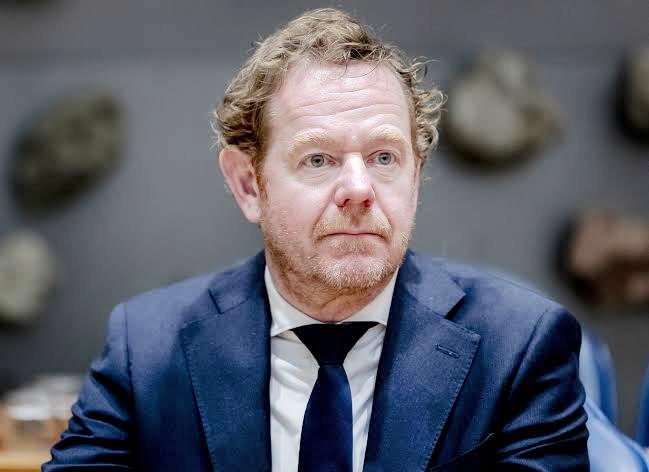
The sanctions involve aid cut and a blanket travel ban on all government officials as stated by Dutch Justice Minister, David Van Weel.
As a result of the sanctions, Sierra Leone stands to lose 18 million dollars in aid this year and worse next year as the country is projected to lose about 20.5 million dollars.
But, government says the sanctions is not a “new punitive measure,” a claim that has raised questions about the effectiveness of the EU action. The claim by government is however refuted by socio-economic analysts coming from the perspective that the drug situation triggers the sanctions.
The analysts argue that EU has never stopped its usual budgetary support to Sierra Leone not until when the drug dispute erupted.
Although the people fear the impact of the sanctions, government officials are however not worried as they know that the such actions will bite men in the streets while those in government positions will make a way through.
Locally generated revenue is enough to take care of salaries, wages, impress, fuel, ward robe and annual leave allowances for public sector workers just to keep government running.
But, the people are on the wrong end as no major development project has been initiated and implemented by government since the inception of the drug trade in Sierra Leone.
President Bio, after the 2023 general elections, has never carried out any capital intensive project owing to aid cut enforced by the development partners. Government could not construct the much-trumpeted Freetown-Lungi bridge which would have endeared the Bio regime to the people of Sierra Leone.
To minimise its failure in the eyes of the people, government has defended its action by stating that the construction of the bridge is not a manifesto promise. However, Sierra Leone budget deficits were being financed by the European Union as confirmed by the records and several media reports.
European Union, before this time, has been providing budgetary support to government’s cash-trapped budget, but the new sanctions regime will see the end of such financial support to a government that is desperately in need of funds to run the state. Every year, Sierra Leone’s annual estimated revenue could not meet its expected expenditure, and development partners particularly European Union comes in to cushion the financial burden, but the sanctions means that the inter-state body has taken a new path.
EU sanctions are announced for the alleged harbouring of Europe’s most wanted drug trafficker, Jos Leijdekkers, also known as Bolle Jos, in Sierra Leone.
Locally, the wanted man is being called Umar Sheriff. Reports show that he has been convicted of drug-related offences in several courts in different European countries and could run a cumulative jail term of close to 100 years. But, he is currently in hiding to escape justice.
Leijdekkers phenomenon is a complex one on the global stage as Sierra Leone has been branded a narco-state owing to his presence.
The drug baron had gained a notoriety for manufacturing and shipping huge tons of Cocaine from Sierra Leone to several countries in the world, turning the country into a drug hub.
Videos first posted on media platforms by Sierra Leone’s First Lady, Fatima Bio, portrayed Leijdekkers attending a church service in a small town in Southern Sierra Leone.
The drug manufacturer and trafficker is allegedly to share close ties with Sierra Leone’s first family as he is said to be a son-in-law to President Julius Maada Bio.
Leijdekkers reportedly marries the President’s daughter who is born by another woman other than Madam Fatima.
The drug lord’s continued presence in Sierra Leone has recently caused a diplomatic row between Netherlands and Sierra Leone.
The conflict began when Dutch authorities’ requested the extradition of Leijdekkers to serve his jail term for drug-related crimes.
Sierra Leone government, on the other hand, has repeatedly turned down the request saying they have no drug fugitive in Sierra Leone.
Europe, United States and other countries are yet be convinced with such stories which they say are made-up.
An undercover investigation recently embarked on by a Dutch journalist confirms the presence of Leijdekkers on Sierra Leonean soil. The allegation of shielding Leijdekkers from justice by the Sierra Leonean authorities was confirmed by the arrest, detention and subsequent expulsion from Sierra Leone of the Dutch journalist who was here to gather the facts about the wanted drug trafficker.
At the time of the search about the whereabouts of the drug lord, credible sources informed Nightwatch Press that the undercover journalist had closed in on Leijdekkers when she was allegedly intercepted by the Sierra Leone police, helping to sweep the issue under the carpet.
The arrest of a local journalist and publisher of Public Review Newspaper, Joseph Koroma who was the fixer (the helper) to the Dutch journalist meant that government had a skeleton in the cupboard about the drug menace.
Despite the emergence of facts about
The drug trade in Sierra Leone, government, according to media reports, is still hesitant and adamant to transfer Leijdekkers to Netherlands to face the law owing to financial support to the economy.
Analysts say, the narco trade is a multi-million Dollar investment, making it difficult to stop.
Although government continues to deny involvement into the cocaine trade, recent waves of reported arrests of some senior government officials for cocaine-related crimes and strong allegations against those who are close to power have lent credence to the allegations.
Sierra Leone’s former Ambassador to neighbouring Guinea, Alimamy Bangura was arrested and held in house arrest before given a non-persona grata that saw him back to Sierra Leone.
Bangura has been replaced by a top SLPP politician, the party’s former leader of the Women’s wing. The premises of Admire Bio, a close relative of President Bio, was searched by local security forces, but alleged dabbling in schemes of protectionism and selective justice, the police said nothing of police interest was discovered on Admire Bio’s home, a move for which the police have come under intense public scrutiny and criticism.
The police have been constantly bashed at for arresting and prosecuting poor and low-minded drug users and peddlers while the big wigs have their way out.
Debates abound on the mode of entry of drugs in Sierra Leone, but a popular account was provided by ex-Deputy Minister of Internal Affairs, Lahai Lawrence Leema who indicated in a report that Sierra Leone had over a 100 illegal crossing points which drug peddlers had successfully used those points to their advantage.
Apart from the damage the drug trade has caused to the outside world, drugs have also devastated the local economy.
Cocaine and Kush have taken a huge death toll among Sierra Leonean youths. Although no exact statistics on Kush-related deaths is available, the death rate number in their hundreds.
Hardly a week passes by without a drug-related corpse found on major streets of Freetown, Sierra Leone’s capital, a situation that has caused a row between central government and Freetown City Council (FCC).
Freetown’s Mayor, Yvonne Aki Sawyer said, during a media interview, that FCC personnel were overstretched in terms of personnel and resources to bury the drug corpses.
As the drug menace continues to threaten the country, socio-political analysts too have posed questions about what triggers the spread and wide use of drugs in Sierra Leone.
Answers coming from the public show that the aid cut by the international community led to a short cut by the government through the drug trade.
A study recently presented to the EU parliament confirms that drug money weakens international order and security.
Instead of developing nations looking up to the developed nations for development or ask development partners for clean money, they look up to drug lords for funds. Sanctions may not work since funds from drugs fill state coffers to the brim.
SLPP government’s style of downplaying EU sanctions is a manifestation of the ineffectiveness of sanctions, but continued quietness may indicate complicity on the part of the international community.