

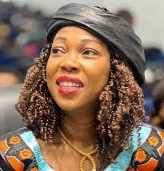
In a democratic society, the presidency is not a family heirloom to be passed from husband to wife, nor is it a throne to be inherited through spousal privilege. And yet, there are growing whispers — some no longer just whispers — that Sierra Leone’s current First Lady, Fatima Bio, harbors ambitions to succeed her husband, President Julius Maada Bio, as the next head of state. If this is true, then Sierra Leoneans must raise the alarm; loudly and forcefully, as the case may be before our democracy is surreptitiously metamorphosed in a dynasty.
This is not just about one individual’s political aspirations. It is about the systemic erosion of democratic norms, the creeping consolidation of power within families, and the dangerous precedent it would set in a nation still struggling to recover from decades of bad governance, civil war, and fragile institutions. No matter how it is dressed — in fancy speeches, philanthropic branding, or media campaigns — a First Lady’s ambition to directly succeed her husband as president should be seen for what it is: an attempted power grab that undermines the very principles of republicanism and fair competition.
The idea that the First Lady — who has enjoyed unfiltered access to the presidency, state apparatus, and massive public visibility — can leverage her proximity to power to inherit the presidency is an insult to democratic fairness. It creates a gross conflict of interest where one family’s control of state resources becomes a political advantage over the rest of the country.
The First Lady is not a neutral figure. Fatima Bio has occupied a prominent public role, often wielding influence on public policy, national discourse, and even security matters. Through her flagship “Hands Off Our Girls” campaign and other initiatives, she has strategically positioned herself as more than just a ceremonial spouse — she is already functioning as a political actor. While that in itself is not illegal, the transition from supportive First Lady to aspiring president raises serious ethical and constitutional questions.
Is this about service, or is it about extending control? If it were truly about serving Sierra Leone, why not empower other capable citizens — men and women alike — instead of consolidating power within the same household?
History has shown that when family members succeed each other in positions of power, democratic institutions suffer. We have seen this in places like Togo, Gabon, Equatorial Guinea, and Syria. What starts as a democratic system slowly turns into a de facto monarchy, where elections are nothing more than ceremonial endorsements of an entrenched ruling class.
Sierra Leone is already dealing with the consequences of fragile democratic systems: weak checks and balances, politicized institutions, a subdued civil service, and mistrust in electoral processes. The ambition of a First Lady to become president does not strengthen democracy — it destroys public confidence in electoral fairness and deepens political apathy among citizens who already feel excluded from real decision-making.
If Fatima Bio is allowed to run and uses the state machinery, media exposure, and influence gained through her husband’s presidency to campaign, how can any other candidate — especially an ordinary Sierra Leonean — compete fairly?
This pattern — where spouses of sitting presidents prepare to take the reins — is a red flag for state capture. It signals that public office is not being used to serve citizens but to preserve power within a giving narrow circle. It also closes the door for impunity not to be checked. In this circumstance, who therefore will hold the former president and his cronies to account for their stewardship? Who will investigate mismanagement, corruption and other egregious acts in the previous administration?
Democracy depends on alternation of power, institutional independence, and accountability. When one family dominates the political space for too long, checks and balances break down, and national interest takes a back seat to personal survival and privilege.
Fatima Bio has carefully cultivated a strong media presence, both nationally and internationally. While her advocacy on gender and education is commendable on the surface, it is impossible to ignore the celebrity-style branding and political positioning behind it. This is not public service; it is personal image management with political intent.
Sierra Leoneans must not fall for charisma over competence. We must not allow politics to become a beauty pageant or a reality show. Governance is about vision, competence, discipline, and service — not photo-ops and expensive PR campaigns. A First Lady running for president in this context is not empowerment; it is entitlement.
Sierra Leoneans must ask: Where does this end? If a First Lady becomes president, what prevents the daughter, the son, or the cousin from being “next in line”? Today it’s about Fatima Bio. Tomorrow it could be a son-in-law, and before we know it, we are no longer a republic but a family-controlled state.
This is a critical moment for national consciousness. Citizens must rise above emotional loyalty and begin to see the dangerous game being played. If this ambition is not checked, Sierra Leone will enter an era of dynastic rule, where elections are rigged not by fraud, but by design — through political dominance, financial power, and media control.
We must defend the principle that no one family should dominate the political future of a nation. Leadership must come from the people — through merit, credibility, and broad-based legitimacy, not from bedroom conversations and name recognition.
Sierra Leone is a democracy, not a monarchy. The presidency is not a family enterprise. Any attempt by a sitting president’s spouse to succeed him must be rejected by every citizen who believes in fairness, justice, and the rule of law.
Let us not repeat the mistakes of other nations where democracy was sacrificed at the altar of dynastic ambition. Let us not trade our future for the illusion of continuity. Let us remember that power belongs to the people — not to families.
Sierra Leone deserves better. Our children deserve better. The legacy we must build is one of strong institutions, not strong families in power. We can, and we must, say no to this dangerous ambition.