


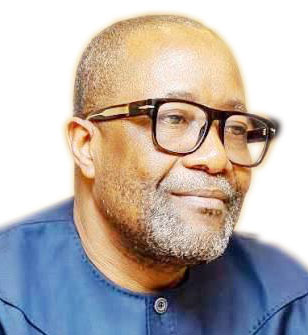
There are moments in public service when leadership is tested not by how loudly a minister speaks, but by how courageously he confronts difficult problems.
For Sierra Leone’s new Minister of Foreign Affairs and International Cooperation, Mohamed Rahman Swarray, his first engagement with the diplomatic community has offered an encouraging indication of the kind of leadership he intends to bring to the Ministry.
The meeting, held at the Ministry in Freetown, brought together ambassadors, high commissioners, representatives of the United Nations, the European Union, the World Bank and other development partners.
But what made the engagement particularly significant was the Minister’s decision to address an issue that has attracted considerable public attention and concern: allegations surrounding irregularities in visa processing.
Rather than avoiding the controversy, Minister Swarray placed it on the table.
In public administration, confronting an uncomfortable issue openly is often the first step towards restoring confidence. The Minister’s willingness to acknowledge the concerns and disclose that an investigation had been conducted sends a message that the new administration at the Ministry is prepared to face challenges rather than hide them.
The allegations became more prominent following a complaint by former ECOWAS Parliament Speaker, Hon. Sidi Mohamed Tunis, concerning an alleged United States visa facilitated for an individual who purportedly presented himself as his Personal Assistant without his knowledge.
Such allegations are serious because the Ministry of Foreign Affairs is not an ordinary government institution. It represents the face of Sierra Leone before the international community.
Its credibility is therefore inseparable from the country’s diplomatic standing.
Against this background, Minister Swarray deserves commendation for moving swiftly to establish an investigation committee and for informing the diplomatic community that the committee has completed its work and submitted its findings.
The Minister also deserves credit for his tone. He did not appear interested in presenting Sierra Leone as a country without problems. Instead, he acknowledged the need for transparency, accountability and professionalism within the Ministry.
That approach can help strengthen confidence among Sierra Leone’s international partners.
For a country seeking greater foreign investment, stronger development partnerships, expanded trade opportunities and deeper diplomatic relations, credibility matters enormously.
Investors and development partners do not only look at policies and economic figures. They also look at institutions, systems and the integrity of public officials.
A Ministry responsible for diplomatic relations, visas, passports, diplomatic clearances and international correspondence must therefore operate with the highest standards of professionalism.
Minister Swarray’s early intervention provides an opportunity to strengthen those standards.
However, the Minister’s good start must now be followed by sustained action.
Sierra Leoneans will naturally want to know what the investigation established and what measures will follow. While sensitive or classified information may not be appropriate for public disclosure, the Ministry can still communicate the broad findings and the corrective measures being implemented.
Where individuals are found culpable, appropriate disciplinary action should follow in accordance with the law and established procedures.
More importantly, the Ministry should use this moment to strengthen the visa processing system.
Technology can reduce unnecessary human discretion, improve tracking and create clear accountability at every stage of the process. Every application should have a transparent trail showing who received it, who processed it and who approved it.
The United States Embassy, ECOWAS and other relevant diplomatic partners should also be reassured that Sierra Leone takes such concerns seriously and is putting measures in place to prevent a recurrence.
His willingness to engage the diplomatic community, confront a sensitive institutional issue and speak openly about accountability deserves recognition.
But leadership is ultimately measured by results.
If Minister Swarray can translate this early openness into institutional reforms, accountability and a more professional foreign service, his tenure could mark an important turning point for Sierra Leone’s diplomacy.
The message from his maiden engagement is therefore encouraging: the Minister has opened the door to a new chapter.
What the country now needs is for him to walk through that door with courage, consistency and action. For now, Minister Swarray deserves to be hailed for confronting the difficult questions early. The expectation is simple: let the good start become lasting reform.