

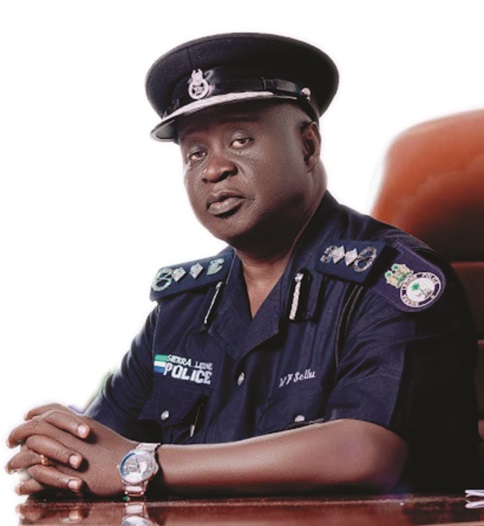
The recently published Biometer Report 2025 by the Institute for Governance Reform (IGR) paints a grim picture of a nation where citizens have almost completely lost trust in the very institutions meant to serve and protect them. The Sierra Leone Police (SLP) emerges as the worst-performing, most corrupt, and least trusted institution—a reflection of a systemic decay in governance and an abject failure of the State.
This year’s IGR survey, which sampled 3,500 citizens across all 16 districts, is not just a mirror reflecting public opinion. It is a national alarm bell, signaling that Sierra Leone’s democracy and governance are on the brink of collapse unless urgent reforms are implemented.
“Institutional trust is the backbone of national stability. When that collapses, everything else begins to fall apart,” remarked Andrew Lavalie, Executive Director of IGR.
SLP: The Most Feared, Not Respected Force:
Among the most shocking revelations in the report is the depth of distrust toward the police force: 76% of respondents said they have no trust at all in the Sierra Leone Police; 62% believe the police are deeply involved in bribery and extortion; 58% say police officers demand money before releasing suspects or filing complaints; 71% believe the SLP is politically controlled, often used as a tool to suppress dissent.
This isn’t merely an issue of perception—it reflects real-life experiences of citizens who encounter the police as extortionists, not protectors.
“Police na business now. If you no gee dem money, you case nor dae move,” said Kadiatu Kamara, a market woman in Freetown, adding: “Dem don turn the force to a money-making machine.”
The IGR report also found out that only 9% of citizens say they have “a lot of trust” in the police, and more than half said they would not report a crime for fear of harassment or extortion by officers.
From Protectors to Predators:
For many Sierra Leoneans, the police no longer symbolize law and order—they represent fear, violence, and corruption. Whether it is at routine traffic stops that they demand illegal fees, police inaction in the face of criminality, or violent crackdowns on peaceful protests, the SLP has become synonymous with abuse of power.
“We are living in a country where the enforcers of the law are the first to break it,” said Ibrahim Conteh, a university student and human rights advocate. “The average Sierra Leonean doesn’t feel protected by the police—they feel hunted.”
The report also documents cases of selective law enforcement, where individuals connected to the ruling party are shielded from prosecution, while opposition supporters face arbitrary arrests, beatings, and intimidation.
A Broader Institutional Crisis:
While the police top the list of public discontent, other institutions of state have not escaped scrutiny.
Parliament is trusted only by 27% of respondents with many believe MPs are more focused on personal gains than national service.
The Judiciary, which should serve as a check on executive overreach, was trusted by only 33%, due to allegations of corruption, bias, and delayed justice.
The Anti-Corruption Commission (ACC) fared slightly better, with 44% expressing trust, though many citizens question its selectivity in prosecutions and lack of independence.
“Citizens believe that corruption is no longer an exception, but the norm in Sierra Leone’s public institutions,” the report reads.
Political Capture and Systemic Impunity:
The IGR report underscores how political interference has corrupted nearly all public institutions, particularly the police. Successive governments, including the current SLPP-led administration, have used the SLP as a political weapon rather than a professional law enforcement body.
In the controversial 2023 general elections, dozens of opposition supporters were arrested and detained without charge, while ruling party operatives reportedly walked free after electoral violence.
“There is a growing perception that the police do not serve the public, but only those who control State House,” said political analyst, Fatmata Gibril.
This partisan control, coupled with a culture of impunity, has allowed corruption and abuse to flourish without consequence. Police reforms, promised by every administration since 2007, have either failed or been quietly abandoned.
IGR’s Stark Warning and Policy Recommendations:
The report issues a clear and urgent warning:
“Without bold reforms and real accountability, Sierra Leone risks institutional collapse, civic disengagement, and potential unrest. Trust cannot be demanded—it must be earned through transparency, justice, and professional conduct.”
The IGR recommends several key measures:
- Comprehensive police reform legislation to ensure professionalism and political neutrality;
- Creation of an Independent Police Oversight Commission, with citizen participation;
- Establishment of a Whistleblower Protection Act to encourage reporting of misconduct;
- Greater autonomy and protection for the judiciary to restore confidence in justice; and
- Enhanced civic education campaigns to empower citizens to demand better governance.
A Nation at a Crossroads:
Sierra Leone’s problem is no longer just corruption—it is the absence of trust in a system that has become alienated from the people. When the social contract between state and citizen breaks, a nation walks the thin line between order and anarchy.
“We are no longer governed by law, but by fear,” said a civil society representative who asked to remain anonymous. “If institutions are not reformed, we will lose the Republic itself—not just its democracy.”
The findings of the IGR Barometer Report 2025 must not be shelved or politicized. They must serve as a national wake-up call to leaders, citizens, and the international community alike. If Sierra Leone is to rebuild itself, it must begin with the restoration of public trust—starting with reforming the police and ensuring institutional accountability.