

A conflict between the international community (US, EU, UK & UN) and the sub-regional bloc, ECOWAS is imminent over the controversial June 24, 2023 election and the restoration of democracy in Sierra Leone.
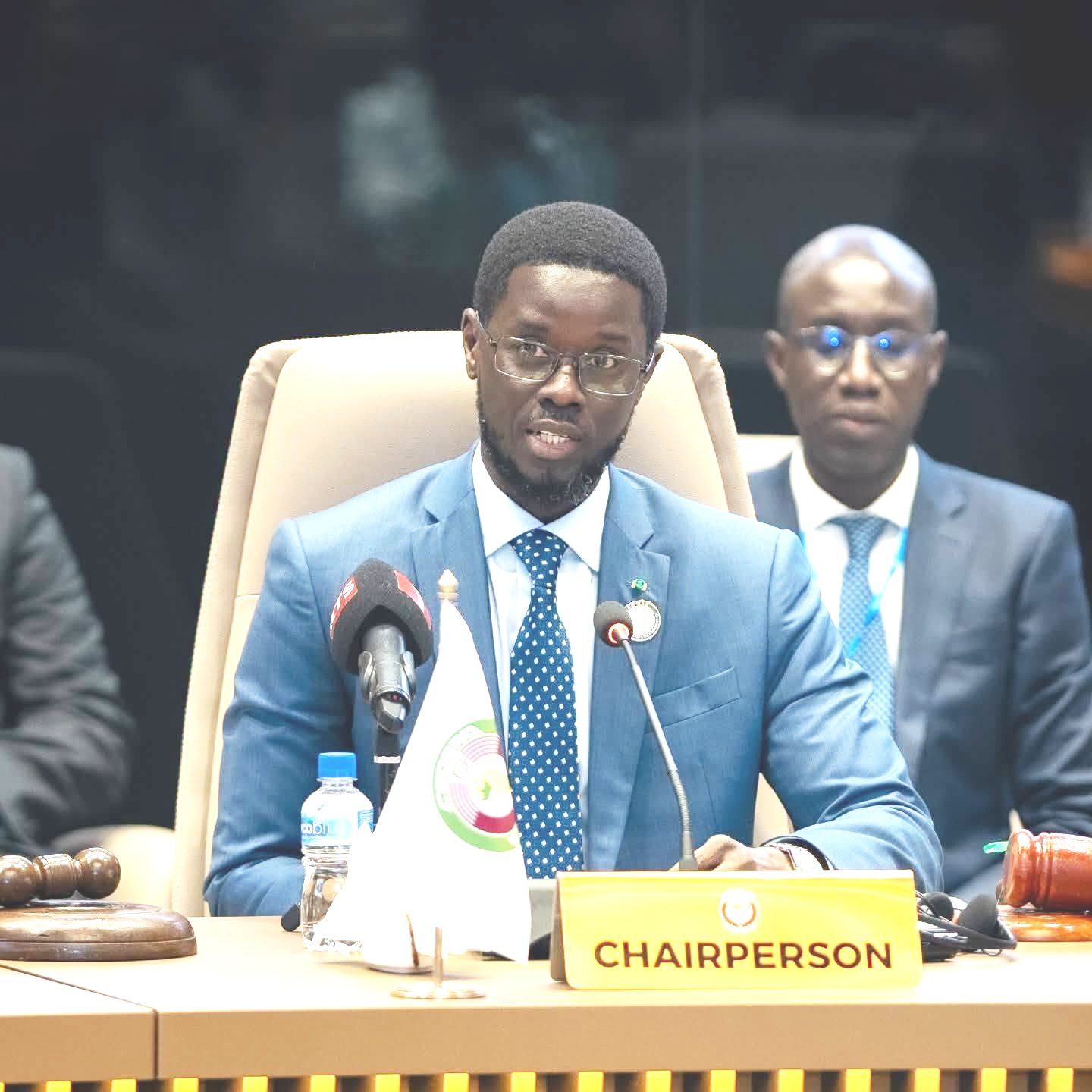
ECOWAS’s endorsement of Sierra Leone’s ill-fated 2028 election during its summit here in Sierra Leone does not represent the wish and aspiration of the international community who have been playing tactics to ensure that the rightful winner of the elections, Samura Kamara is sworn in.
The endorsement of the polls by ECOWAS means a tacit rejection of the opposition leader, Samura Kamara who has appealing to ECOWAS and the international community all along to ensure that democracy prevails in the country.
By ECOWAS stance, it is clear that there will be no transition but election, thus raising doubt about how the election would look like in the two years to come. Many Sierra Leoneans say they would not go to the registration and voting centres until the winner is takes over State House.
However, An ECOWAS press release which came out just a day after the bloc’s three-day summit in Sierra Leone confirms that the next election will be held in 2028.
“…The restoration of a serene environment required for the impending electoral reforms ahead of 2028 general elections,” the ECOWAS Communique reads in part.
ECOWAS’s position on Sierra Leone’s purported election runs contrary to the stance taken by the international community who tag the current government an “illegitimate regime” and does not represent the will of the people of Sierra Leone.
The opposition leader, Samura Kamara is widely seen as the actual winner of the presidential election according to the evidence he tendered at the Tripartite Committee.
Records seen by this press shows that Samura Kamara gets 57.15% out of the 71% of the votes leaving a little over 37% for the incumbent candidate, President Julius Maada Bio. Although it is yet to be made public, credible sources say, the findings of the Tripartite Committee show that President Bio is not the winner of the elections and therefore faces international isolation.
Bio’s government, at the moment, grapples with funding cut and international isolation to make him transfer power to the widely perceived true winner of the elections.
Just days after the election was announced in favour of the Bio regime, the United States was the first to take serious line of action against the government of Sierra Leone by slamming a travel ban on government officials, funding cut and threatening an asset freeze.
The long-awaited and much-needed $480m under the MCC (Millenium Challenge Corporation), a grant that is offered to countries which pass the good governance benchmarks set by the United States never comes.
Sierra Leone, according to former US Ambassador, David Reimer had qualified for the money as it passed almost all benchmarks except the free and fair elections which she failed. By his statement, the US diplomat was fighting to ensure that Sierra Leone took back its rightful position on the world stage through democracy.
Apart from the MCC fund, the United States also stopped financing most of its important projects in Sierra Leone except the Free Healthcare programme launched in 2010 by former President, Ernest Koroma.
Mr. Reimer said his government would continue to fund the health initiative since it was meant to protect life.
Even the fund for the World Monuments Fund project which aims at restoring cultural objects as well as natural and world heritage sites is being passed on to other agencies since it has been approved before the post-election fiasco. The old Fourah Bay College building in Sierra Leone is currently being restored by the West African Heritage Consultants based in the country’s capital, Freetown instead of the Monuments and Relics Commission which is the appropriate agency to execute such project.
It became a recurrent measure for the United States Embassy in Freetown to issue press releases cautioning their citizens to think good about coming to Sierra Leone at the moment.
As a result of the press releases, only few Americans would land in Sierra Leone without venturing in all parts of the country.
Sierra Leone suffers when the Americans cut down their travels into the country owing to security alerts issued by its embassy.
It is true that the United States acted through the report of its Think-Tank election observation body, the Carter Center which was here in Sierra Leone at the height of the election rigging and stealing.
The United States is not alone in the fight to restore democracy in Sierra Leone but EU and other countries as well.
Through the report of the EU Election Observation Mission, EU too never treated the alleged election rigging with a pinch of salt as it instantly cut off cooperation with the Bio regime by stopping its support to government’s development projects in Sierra Leone.
Before this time, EU is known for providing funds for massive infrastructural development and boosting government’s recurrent deficit budget just to keep the country going. Like the US, EU also stopped government’s cementing funding gap and also stopped assisting in the roads project as a way of compelling President Bio to produce the actual election results. In the immediate post-election stalemate, the EU was government’s neck to publish the election results by polling stations and districts to assess who the actual winner is.
Even Sierra Leone’s former colonial master, UK took some stiff measures by stopping its assistance to the country, and also asked out of the Commonwealth parliament as it led one-party parliament.
APC (All People’s Congress) parliamentarians had walked out parliament, at that time, following the announced the allegedly rigged election results. Respite for the PAOPA regime however came only after the Agreement for National Unity was signed by the opposition APC suing for peace and national cohesion.
In such a situation, ECOWAS is expected to complement the role of the United States, the UK, EU and the UN to ensure the restoration of democracy in Sierra Leone by adopting similar measures but an open show for a government isolated by the international community means a different thing.
ECOWAS under General Sani Abacha played a complementary role in the forceful removal of the ARFC (Armed Forces Revolutionary Council) leader, Johnny Paul Koroma, a military officer that toppled the democratically elected government of President Ahmed Tejan Kabba. Those who witnessed history prayed for those days not to come again.
The single military action in March, 1998 in Sierra Leone marked a new dawn for the consolidation of democracy in Africa as various armies fear to illegally remove democratic governments that exists based on the will and consent of the electorates. Coups only started occurring again several years after General Sani Abacha passed away.
But, the people of Sierra Leone still keep their ears to the ground to about the conflict between ECOWAS and the international community and how it will impact on the peace, democracy and electoral justice.