


By Kadiatu Sankoh
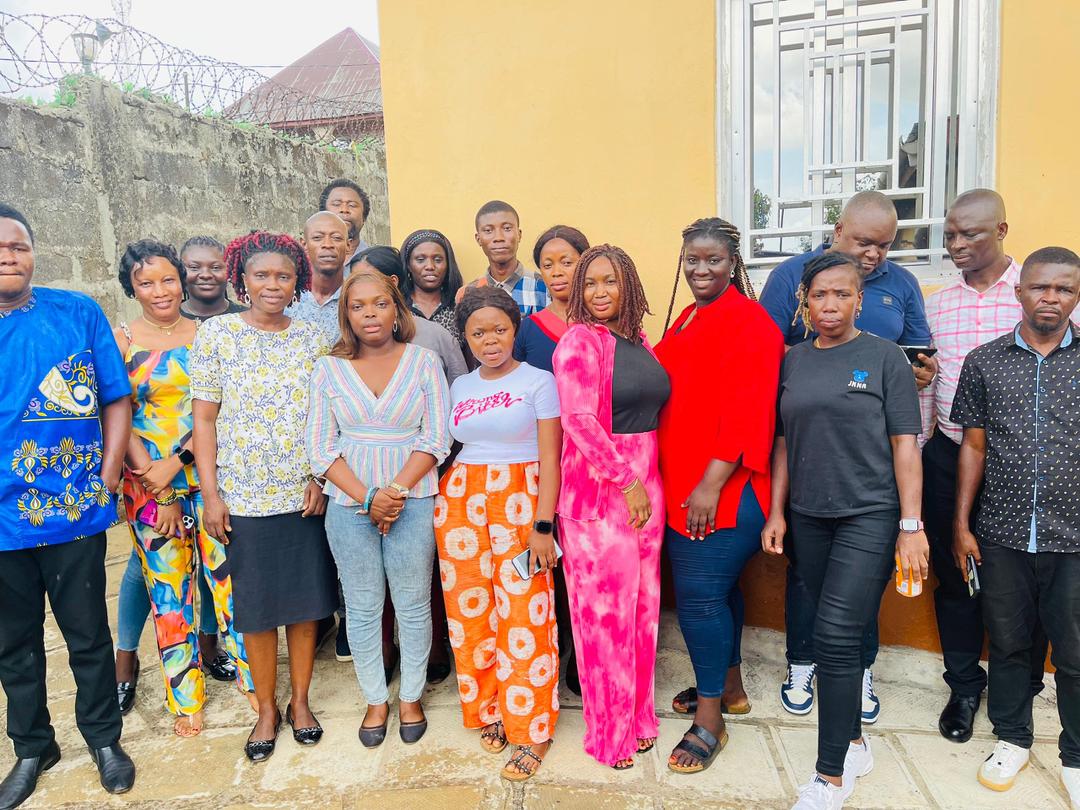
Marie Stopes Sierra Leone, a leading advocate in the fight against child marriage and adolescent pregnancy, advanced its national sensitization and advocacy efforts with a stakeholder engagement at Iyces Hall, Waterloo in Freetown, on Thursday, May 15th, 2025. The event focused on rolling out the National Strategy for the Reduction of Adolescent Pregnancy and Ending Child Marriage.
The strategy aims to foster strong, effective partnerships and integrate multi-sectoral efforts to enhance adolescent health, promote their well-being, and increase their meaningful participation in national development. It directly supports SDG target 3.7—ensuring universal access to family planning—and SDG target 5.3—eliminating child marriage and other harmful practices by 2030.
With a goal of reducing adolescent pregnancy from 21% in 2020 to 10% by 2030, the strategy also targets the complete eradication of child marriage by the same year.
Sandi Massaquoi, Communication and External Relations Manager at Marie Stopes Sierra Leone, highlighted the importance of the engagement, emphasizing the organization’s longstanding role as the country’s leading provider of family planning, ultrasound, laboratory, and sexual and reproductive health (SRH) services.
“We have a long and proud history in Sierra Leone. Since 1986, we have been delivering high-quality, affordable SRH services nationwide,” Massaquoi said. He noted that Marie Stopes Sierra Leone (MSSL), now a registered local NGO, is part of the global MSI Reproductive Choices partnership.
MSSL’s services are tailored to the unique needs of women in various districts, aiming to build sustainable, long-term impacts on national health outcomes. In 2022 alone, MSSL’s interventions saved the Government of Sierra Leone approximately GBP 10.3 million in direct healthcare costs.
The strategy, Massaquoi explained, aligns with national frameworks and ensures efficient procurement and delivery of family planning commodities. MSSL remains an active contributor to national and district-level SRH working groups.
Victor Karimu, Advocacy and Communication Lead at the Teenage Pregnancy Secretariat, presented alarming statistics, noting that adolescents made up 12.4% of Sierra Leone’s population in 2020. He stressed that child marriage and adolescent pregnancy are persistent threats to this demographic’s future.
He recalled previous national strategies launched in 2013 and 2018, acknowledging some progress but underscoring the need for renewed efforts. The recently enacted Prohibition Against Child Marriage Act 2024, signed by President Julius Maada Bio, now legally bans child marriage in Sierra Leone.
Karimu emphasized that tackling adolescent pregnancy and child marriage is not only a human rights imperative but also essential for national socioeconomic development.
“The root causes of these issues remain stubbornly unchanged. We need sustained, coordinated action across government ministries, civil society, and development partners,” he said.
He noted that globally, adolescent pregnancy—defined as occurring between ages 10-19—remains a public health challenge, especially in sub-Saharan Africa, where rates are more than double the global average. Meanwhile, an estimated 640 million women and girls today were married before the age of 18.
The new national strategy is built on 11 pillars: Public Health Policy, Legal Environment, Education, Community Engagement and Ownership, Social Assistance and Livelihoods, Leadership, Coordination and Research, a Coordination Framework, a Monitoring and Evaluation Framework, and Costing and Financing.
“This strategy is not just a roadmap—it’s a call to action,” Karimu concluded.