
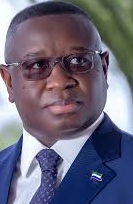
For President Julius Maada Bio, the contrast between his first and second terms in office could not be starker. What began as a presidency of direction, discipline, and democratic intent has unraveled into what many now call the worst democratic regime Sierra Leone has experienced since independence. Where once there was hope, there is now fear. Where once there was reform, there is now repression, and where once leadership inspired confidence, it now invites crisis.
Sierra Leoneans are left asking: What happened to President Bio?
The First Term: A Promise of the “New Direction”:
In 2018, President Bio swept into office with the “New Direction” mantra, promising a clean break from corruption, stagnation, and mediocrity. His first term, though not flawless, had the markings of a president willing to correct course. Key anti-corruption initiatives through the ACC gained momentum, public education was prioritized with the Free Quality School Education (FQSE) program, and national dialogue had space to breathe.
Institutions such as the Audit Service Sierra Leone and the Human Rights Commission were still functional and independent. Civil society was engaged. While political tensions lingered, there was at least a sense of accountability—and of a president willing to steer the ship through stormy waters.
“We are building a nation of integrity,” President Bio once said in 2019. For a time, many believed him.
The Second Term: A Descent into Darkness:
Fast-forward to his second term, and that optimism has collapsed into despair. What Sierra Leone now faces under Bio’s leadership is not merely bad governance—it is a systematic dismantling of democratic norms, accountability structures, and citizen rights.
The June 2023 general elections, marred by accusations of widespread irregularities and lack of transparency, were a flashing red light. Despite calls from civil society, the opposition, and international observers to publish disaggregated results and allow electoral audits, the Electoral Commission of Sierra Leone (ECSL) proceeded with opacity. Trust in the democratic process has eroded, perhaps beyond repair.
Instead of acknowledging the public’s legitimate concerns, the Bio administration responded with silence, suppression, and state security crackdowns. The opposition APC party has faced targeted intimidation. Peaceful protests have been met with live ammunition. Dissenting voices are branded “enemies of the state.” The media landscape that was once vibrant, now lives in fear of reprisals.
It is no exaggeration to say: this second term resembles autocracy wrapped in the cloak of constitutionalism.
A Government at War with Itself—and Its People:
The Bio government has become insular and intolerant. Even previously respected institutions have been politicized beyond recognition. The judiciary has lost public trust. Parliament has become a rubber stamp. Auditors have been side-lined or dismissed. Human rights defenders are monitored, journalists arrested, and even religious leaders who criticize the government are harassed.
“A house divided against itself cannot stand,” Abraham Lincoln once warned. But in Sierra Leone today, it is not just the house of government that is divided—it is the bridge between people and power that has been blown apart.
Economically, the picture is no better. Inflation is out of control, the cost of living is unbearable, and youth unemployment is at crisis levels. Many citizens feel that the government has tuned them out, focused instead on political control and personal enrichment.
A Legacy in Ruins:
There is a growing consensus—even among those who once supported President Bio—that his second term has undone whatever good was achieved in the first. The Free Quality School Education program, once a shining light, now faces funding and implementation crises. The fight against corruption has grown silent. The Anti-Corruption Commission, once energetic, has been reduced to selective enforcement. Public confidence is at an all-time low.
“We expected a builder; instead, we got a bulldozer,” said a retired teacher in Bo. His words echo across the country.
Rather than building institutions, this government has bulldozed them. Rather than deepening democracy, it has suffocated it.
A Crisis of Confidence—and a Warning to All:
What makes this decline even more tragic is the squandered opportunity. President Bio entered office with goodwill, international respect, and popular support. He could have cemented a legacy as a statesman and reformer. Instead, his second term has taken a dangerous turn toward dictatorship.
For a country that has endured civil war, military coups, and Ebola, this regression is not just disappointing—it is dangerous.
The parallels with pre-war Sierra Leone are too close for comfort: disenfranchised youth, economic despair, growing authoritarianism, and a leadership that refuses to listen. If this path continues, Sierra Leone is not just at risk of failure—it is at risk of collapse.
Recommendations: Correction Before It’s Too Late:
It is not too late for change, but time is running out. President Bio must:
Acknowledge the loss of public trust and initiate genuine national dialogue—including with the opposition and civil society.
Restore the independence of democratic institutions—especially the ECSL, Audit Service, and judiciary.
Allow press freedom and protect civil liberties. No democracy can thrive where journalists and citizens fear arrest for speaking truth. Improve economic governance, stop wasteful spending, and ensure youth employment is treated as a national emergency.
Respect term limits and electoral integrity. There should be no ambiguity: the 2028 elections must be transparent, fair, and non-negotiable.
Final Thoughts: From Hope to Warning:
Sierra Leone’s democracy is not a toy. It was bought with the blood of thousands. It is maintained by the faith of the people and the moral compass of those in power. If President Bio wants to leave behind a legacy worth remembering, he must remember what brought him to power in the first place: hope, reform, and a promise of better days.
Right now, Sierra Leoneans aren’t seeing better days—they’re living through darker ones.
As the Krio saying goes, “Wan day fambul nor mean say you go blind to e bad heart.” Loyalty must never replace accountability.
Mr. President, your yesterday gave us hope; your today gives us fear.
Only you can decide what your tomorrow will look like—for yourself, for your legacy, and for Sierra Leone.