


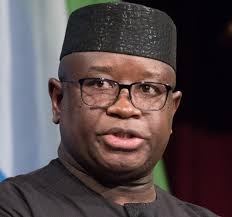
In a world where leadership is often measured by applause and popularity, President Julius Maada Bio stands as an exception. A man of many promises, admired abroad and criticized at home, he walks the tightrope of governance with a kind of stoic determination. Though political storms swirl around him, and a national sense of unity remains elusive, Bio appears undeterred—doing the work, pushing the agenda, and giving what many describe as blind eyes and deaf ears to the noise. But perhaps that is the cost of trying to transform a country as complex and fractured as Sierra Leone.
The Man Behind the Mandate:
From the moment he stepped into office in 2018, President Bio has positioned himself not as a populist, but as a reformer. His presidency was born out of a promise: to end corruption, fix education, revive agriculture, and lift Sierra Leone out of the shadows of poverty and dependence. The “New Direction” became his rallying cry—a declaration that the old ways of doing things had to go.
His flagship Free Quality Education program, rolled out nationwide, won him praise across Africa and beyond. Critics and supporters alike agree: this was a bold step, and despite challenges in implementation, it marked a genuine attempt to tackle one of the root causes of Sierra Leone’s underdevelopment—illiteracy and lack of opportunity.
In addition to education, Bio has taken steps to fight corruption, digitize public services, and strengthen institutions. Under his leadership, Sierra Leone became one of the first countries in Africa to abolish the death penalty, a move that earned him applause on the international stage. He has addressed global platforms—from the United Nations to Davos—advocating for Africa, for peace, for development, and for a fairer world order. Yet back home, his presidency tells a different story.
A House Divided:
For all his efforts, Bio governs a nation that remains painfully divided—ethnically, politically, and emotionally. The lack of collective national love is glaring. In the South and East, he is hailed as a son of the soil. In the North and West, suspicion lingers. Allegations of tribalism and political exclusion have stained his administration’s perception. Opposition voices cry foul over electoral processes, governance style, and security crackdowns.
In a country still haunted by the ghosts of a brutal civil war, the idea of national unity feels more like an aspiration than a reality. Social media has become a battleground of misinformation, political attacks, and tribal undertones. And through it all, President Bio seems unmoved—choosing not to explain, not to retaliate, but to press forward with the work.
Is that strength, or stubbornness? Is it political focus, or aloofness? To his supporters, this is a man who refuses to be distracted by noise. To his critics, he is detached from the mood of the nation.
International Applause, Local Frustration:
Interestingly, President Bio enjoys significant international recognition. He has been invited to the highest tables, honored with speaking opportunities, and praised for his stance on human capital development and gender equity. His wife, First Lady Fatima Bio, has also garnered global attention for her “Hands Off Our Girls” campaign, advocating against gender-based violence and child marriage.
But international recognition does not feed the people. It does not fix the price of rice or reduce fuel costs. It does not heal the wounds of political violence or the silence around justice.
At the street level, frustration simmers. The cost of living is high. Electricity and water are still inconsistent. Youth unemployment remains a ticking time bomb. Agricultural projects, though promising on paper, have yet to transform food security in meaningful ways. For many, patience is running thin.
Yet, amid it all, the President is still standing—somehow; working, launching new projects and cutting ribbons; embarking on foreign trips, and delivering flowery speeches and poignantly disregarding heckles.
The Pitfalls and the Persistence:
No administration is without its pitfalls. For President Bio, the criticism has been intense. Accusations of overspending, bloated delegations on foreign travel, and slow responsiveness to key crises have all made headlines. The 2023 elections brought renewed tensions, with many calling for electoral reform and deeper national dialogue.
But perhaps Bio’s greatest political challenge is not policy—it is perception. In a nation where leadership is often equated with populism, he remains a paradox: a president who is seen to care deeply, but shows it with stoic reserve; a leader who speaks less about loyalty and more about results and a head of state who seems unwilling to chase love, yet clearly wants to leave a legacy.
A Lonely President?
There is certain loneliness to leadership, especially when the nation does not move in one direction. President Bio often seems alone—not in a physical sense, but in spirit. The sense of a collective dream, a national identity we all own, has frayed. And so, he moves on—a solitary figure at the center of a noisy nation, keeping his eyes on long-term goals, even as many demand short-term miracles.
And yet, it must be said: in a political climate where many leaders lose their way, Bio has stuck to certain convictions. He continues to preach discipline, education, and national development. Whether or not the nation is ready to walk with him remains uncertain.
The Final Chapter Is Still Being Written:
President Bio’s story is far from over. The coming years will determine whether his presidency will be remembered as one of quiet transformation or missed opportunities. The people are watching; some with hope, others with skepticism; but they are watching cautiously.
He may not always speak to the heart of the people. He may not win every headline. But for now, President Julius Maada Bio remains focused—deaf to the insults, blind to the hatred, and determined to finish what he started. Only history will judge whether that determination was enough.