


By Alie Badara in Bo
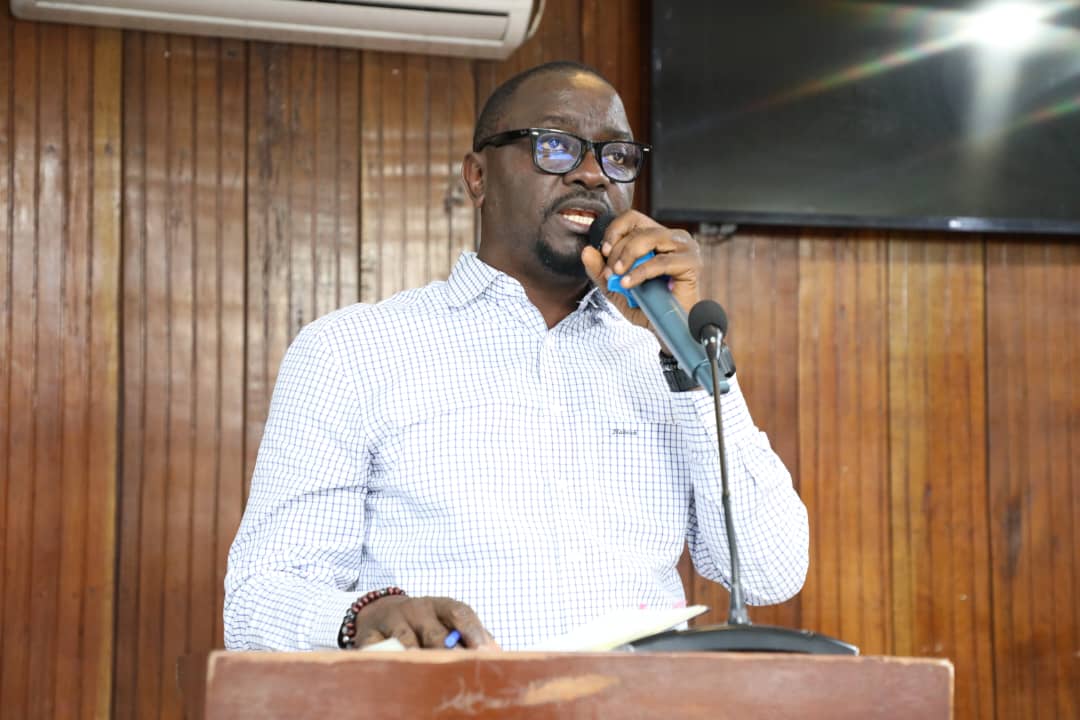
On Monday, 13th April, 2026 the Ministry of Agriculture and Food Security (MAFS), in collaboration with the Livestock and Livelihoods Development Project (LLDP) marked another milestone in expanding agricultural interventions across Sierra Leone.
The day’s engagement, supported by the active participation of traditional leaders, stakeholders, and local farmers, was aimed at strengthening inclusive ownership of the LLDP and advancing the livestock sector agenda at community level across the country.
The stakeholders engagement process forms part of MAFS and LLDP’s broader commitment to ensure that agricultural development interventions are not only planned by institutions, but also guided by the realities, priorities, and leadership structures of the communities where the projects will operate.
The Ministry of Agriculture Food Security, working closely with the LLDP, successfully concluded this maiden regional stakeholders’ workshop, inviting participants from traditional leaders across three districts in the Southern Region-namely Bo, Pujehun, and Moyamba districts.
The meeting was highly consultative and served as a platform to gauge the minds of stakeholders regarding the project, its implementation pathway, and -most importantly-where to begin and how to move forward effectively.
The engagement brought together stakeholders from diverse sectors within the Southern Region, with the primary purpose is to: educating participants about the LLDP, its approach, its expected outcomes; and to further support the smooth process of the LLDP’s operational planning.
A keynote reason for convening the workshop was to contribute to the selection of chiefdoms that are potentially viable for LLDP operations, as well as to support the formation of clusters and cluster communities.
These structures are essential for organizing beneficiaries, improving targeting, enhancing coordination, and ensuring accountability during implementation.
Beyond consultation and planning, the workshop also aimed to encourage participants to serve as community ambassadors of the LLDP. As ambassadors, traditional leaders and stakeholders are expected to help:
. Raise awareness of the project’s goals and objectives
. Promote community understanding and acceptance.
Strengthen public support for LLDP activities at the local level.
This approach supports a more inclusive and transparent engagement model, where communities actively participate rather than only receiving project services.
The project coordinator explained that the LLDP is designed to function as an enabler in achieving the FEED -SALONE initiative under the Ministry of Agriculture and Food Security.
The livestock initiative is expected to address longstanding challenges within Sierra Leone’s livestock sector by supporting actions that will help to:
. Boost livestock production and productivity
. Improve veterinary services
. Strengthen market and agribusiness linkage
. Expand access to credit facilities
. Promote policy dialogue to build a resilient and inclusive livestock structure in Sierra Leone.
The project coordinator further noted that the overall objective of the stakeholders’ engagement is to:
. Expand community engagement
. Initiate discussion on cluster formation in participating localities
. Enhance transparency and stakeholders’ involvement.
. Ensure the nutrition is clearly reflected in project operations within communities.
In a related contribution, Alpha Yayah Mansaray the Director of Extension, commended stakeholders for their strong participation in regional engagement. He highlighted that participants played a critical role in the profiling, clustering, and ranking of chiefdoms linked to selected value chains.
Director Mansaray emphasized that the project is being designed under the strategic leadership of the Ministry, guided by Dr. Henry Musa Kpaka, and noted that the LLDP is a flagship initiative under the FEED-SALONE Program. He encouraged all participants to take full ownership of the ‘baby project ‘ and provide their strongest support for its successful implementation at every stage.
Representing LLDP, Tejan Koroma (Project Coordinator) provided a brief overview of the project and its expected impact. He stated that the LLDP aims to contribute to:
. Poverty reduction
. Food security and nutrition for rural households
. Creation of employment opportunities for rural women and youths
He further explained the project’s targeting approach: LLDP will focus on eleven (11) districts out of the sixteen (16) districts across Sierra Leone, representing the concentration of livestock farmers and livestock-based livelihoods.
In presenting the project priorities, the experts and facilitators highlighted major areas that the LLDP will address, including:
. Poverty level and vulnerability of targeted households
. Weak veterinary and extension services
. Market potential and value chain linkages
Existing donor footprints and complementary to reduce duplication and improve effectiveness
At the apex of the interactive engagement, experts organized group work sessions to assess how well participants understood the scope of presentations made by specialists from different disciplines.
This activity reinforced the participatory nature of the engagement and helped ensure that stakeholders could translate knowledge into action within their communities.
The LLDP is jointly funded by:
The Government of Sierra Leone (GOSL)
. IFAD
. ISDB
. OPEC fund for international development
The project is expected to benefit over 373,000 households across the eleven operational districts, targeting:
. 40% women
. 30% youth
. 5%person with disabilities (PWDs)
The LLDP is aligned with the MINDP 2024-2030 and the FEED SALONE program. The project supports objectives including:
. Economic diversification
. Job creation
. Gender inclusion
. Climate resilience
These contributions are expected to strengthen food systems, reduce poverty, and support national food self-sufficiency.
The Ministry of Agriculture and Food Security (MAFS) and the Livestock and Livelihoods Development Project ( LLDP) stakeholders engagement-beginning with the Southern Region workshop 13th April 2026-demonstrate a strong commitment to inclusive rural development.
By involving traditional leaders, stakeholders, and local farmers in chiefdom selection, clustering processes, awareness-building, and project understanding. The LLDP is laying a foundation for effective implementation grounded in community leadership and practical local realities.
As the process continues into the Eastern, Northern, and North-Western regions, the LLDP will continue to build partnerships that strengthen livestock Livelihoods and advance Sierra Leone’s agricultural and nutritional transformation.