


Sierra Leone joined the European Commission’s high-level conference in Brussels on Wednesday 4 November to mark the 25th anniversary of the Everything But Arms (EBA) arrangement and the launch of the renewed EU Generalised Scheme of Preferences (GSP).
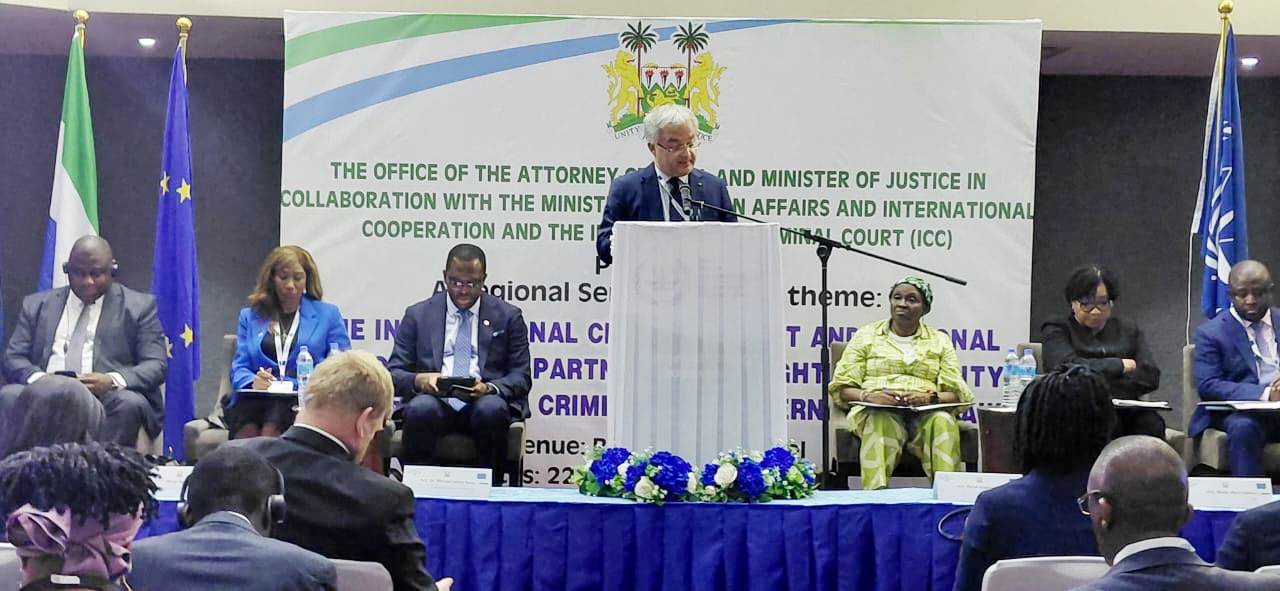
To mark the occasion locally, EU Ambassador to Sierra Leone, Jacek Jankowski convened a round-table discussion with the business community, chambers of commerce and policymakers to examine how Sierra Leone can make better use of the EU’s trade preferences and address bottlenecks limiting exports.
The discussion focused on what duty-free and quota-free access to the EU market means in practice for Sierra Leone. Under EBA, Least Developed Countries can export all products to the EU free of duties and quotas, except arms and ammunition.
Ambassador Jankowski said the scheme has played an important role over the past 25 years in opening the EU market to African goods and remains a key platform for Sierra Leone’s trade with the European Union.
“Sierra Leone has rich natural resources, a strategic Atlantic location and a young, entrepreneurial population. Its ambition to add value, create decent jobs and build resilience depends in part on how well it uses this access,” he said.
He noted the country still has significant untapped potential, particularly in agribusiness, fisheries and minerals.
In agribusiness, the Ambassador identified cocoa as a key opportunity, especially as European demand grows for products that are traceable, deforestation-free and sustainably produced. He said similar prospects exist for coffee, cashew, palm-based products, spices and fruit.
On fisheries, he said Sierra Leone could strengthen its position in the EU market by investing in processing capacity, cold-chain infrastructure, traceability systems and stronger action against illegal fishing.
In the minerals sector, Ambassador Jankowski said Sierra Leone should look beyond exporting raw materials and use its natural resources to promote value addition, job creation and economic diversification. He added that predictable trade relations with the EU, supported by the Global Gateway strategy, can help attract responsible investment, improve governance, raise environmental and social standards, and strengthen links between the minerals sector and broader industrial development.
However, he emphasised that compliance with EU standards is essential for accessing higher-value markets and noted that the EU can support Sierra Leone through technical assistance, training and investment.
He also stressed that compliance with EU standards is essential for accessing higher-value markets and said the EU can support Sierra Leone through technical assistance, training and investment.
Looking at the wider regional picture, Ambassador Jankowski said Africa’s use of EU preferences shows what is possible. Goods exported under EU preferences by today’s 37 African beneficiary countries rose from €112 million in 2002 to €4.82 billion in 2025. Over the same period, the share of eligible goods for which exporters claimed EBA preferences increased from 41% to 95%.
At the same time, he noted that although African countries account for 57% of EBA beneficiary countries, they generate only 7.4% of total EBA trade, underlining the room for further growth.
The event also enabled participants to join the Brussels conference online, where representatives of EU institutions, partner countries, international organisations, business, civil society and academia reflected on the achievements of EBA and discussed its future under the renewed GSP.
It ended with an interactive exchange between public- and private-sector participants on how Sierra Leone can better use the scheme.