


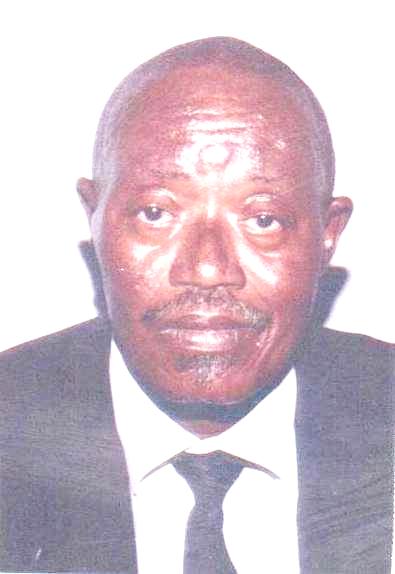
BY VANDIE S. NABIE (SOK)
INTRODUCTION
Classical scholarship holds that even ‘Good Homer sometimes NODS’.
In everyday usage, it means even the best, or cleverest, people have lapses and make mistakes. The Phrase comes from Horace- DE ARTE POETICA, who said “1 am aggrieved when Good Homer sleeps ” or “I am indignant when worthy Homer nods” (c. 8 B.C)
Homer was the great Greek epic Poet regarded by the Ancients as the author of the ILiad and Odyssy, works of literary excellence. If ever a mistake is found in these works, it may be in a momentary feat when Homer may have nodded for Homer cannot consciously commit a slip.
As with people, so with Justice. Anyone familiar with the courtroom may have come across the plea –Fiat Justitia, Ruat Coelum,- ‘Let Justice be done, though the heavens should fall’.
When I was a law student, I thought this plea has a respectable origin.
I have however since discovered that it was first used to excuse the most outrageous injustice. It comes from a story told by Seneea in the DIALOGUES (Dialogues iii, 18).
Piso sentenced a soldier to death for the murder of Giaus. He ordered a Centurion to execute the sentence. When the Soldier was about to be executed, Giaus came forward himself alive and when the Centurion reported it to Piso, he sentenced all three to death: the Soldier because he had already been sentenced, the Centurion for disobeying Orders and Giaus for being the cause of the death of two innocent men. Piso excused it by a plea Fiat Justitia, Ruat Coelum (Denning- The Family Story, 1981:172).
This is how justice nods. “Infact, in Sierra Leone , Justice on many occasioned in the lower Bench is many a time in a comatose if not drugged Rip- Van Winkle-like slumber. Indeed, if justice is done the heavens should not fall. They should rejoice”.
BACKGROUND
This critique was initially dedicated to International Womens’ Day in 2008 when I was in the employ of the Sierra Leone Human Rights Commission as Director, Complaints, Investigations and Legal Services.
On 26th January 2010, I was shocked and appalled at the reasoning contained in a judgement in the Court of Appeal in a suit intituled:
Civ. App. 27/2006
Ejatu Jalloh
and
Abdul Turay (unreported)
First, a word about the COURT OF APPEAL.
To a lay observer, Proceedings in the Court of Appeal resemble the Celebration of High Mass. Perched as it were and receiving corresponding reverence are three justices, with one presiding. Each judge is aware of the shortcoming of his colleague but not of his own.
The interesting feature of an Appellate Tribunal is summed up in the perceptive observation in the TADIC CASE:
It is important to note that two judges, both acting reasonably, can
Come to different conclusions on the basis of the same evidence.
(Prosecutor V. Tadie IT. 04- 1A (AC) 15th July, 1999).
Here les the majestic and beauty of the law.
In the instant case, however, the three judges were all of singular mind-set. There was no dissenting or separate concurring opinion which would have rendered the judgement more animating, refreshing and full of verve.
This though is not entirely surprising if the other two members of the Panel have nothing useful to add but simply ‘I agree’. In some, like in the instant case, no reasons are proffered for such concurrence.
Cyril Asquith, the gifted son of a former British Prime Minister, reminds us decades ago as follows:
“The ideal Judge of first instance is one who is short, Simple and wrong, but that is not to say that the Court of Appeal should be long, tedious and always right for that Would be to usurp the prerogative of the Supreme Court With these brief prefatory words, I feel impelled to make a legal detour from the path along which the distinguished Justices traveled in the matter”.
THE CASE: CIV APP 27/2006- JALLOH AND TURAY
The facts of this case bristle with simplicity
The parties entered into a Customary Marriage in 1986. They had a son in 1987. The marriage broke down in 1988.
Between 1988 and 1995 the husband acquired property in Freetown. In 2002, the parties went through another customary marriage. The wife moved into the home in Freetown.
In 2003, the parties again divorced. The husband then served notice on the wife’ (Appellant) to quit and vacate the home. The wife resisted the notice and pleaded that she has a beneficial interest in the home/property.
In the High Court, Justice Nylander held that “since the property was in in the sole name of the husband and the wife has not demonstrated to the Court that she substantially contributed to the purchase, she has no interest in the said property and must quit and vacate accordingly”. The wife appealed against the said decision.
A.P. Herbert once made pun of Smith’s LEADING CASES (1837) when he used the title ‘Misleading Cases’. In the same vein, the “misleading cases” in this critique may be turned to with relief by many who find the Leading Case in JALLOH V.TURAY a little dull.
THE JUDGEMENT
The tightly readable judgement relies in whole on H.M Joko Smart’s SIERRA LEONE CUSTOMARY FAMILY LAW, (1983).
“In order to determine the status of a divorced wife in the matrimonial home, we have to take cognizance of the position under customary law. In customary law, there is a general consensus of opinion among tribes that the husband owns the matrimonial home absolutely if he acquired it without the “contribution’ of the wife…
Whether or not she contributes to it, a customary law-wife resides at the matrimonial home at the pleasure of her husband. If she is driven away by the husband or marriage comes to an end and she cannot stay in the house …. Therefore, whatever service she renders, personal or financial, towards the achievement of that goal is regarded more as a “help” to the husband rather a ‘contribution” by her towards a common enterprise”.
As the issues revolve around the human and legal rights concerns of women, it is important to interject a few remarks about the text which the Court of Appeal so hallowed and followed as its cardinal guide very religiously. The Text itself, SIERRA LEONE CUSTOMARY FAMILY LAW, was conceived out of the Doctorial Thesis of Prof. Joko Smart in 1973 on a much wider topic of the Received Law, Islamic Law and Customary Law of Sierra Leone. Hitherto this was an unexplored terrain and we applaud Joko Smart for this venture. There are however obvious problems associated with a Thesis especially one germinating into a textbook in the legal arena.
- The process of authorship is entirely different from that of judicial decision. The author has the benefit of a broad and comprehensive study of a chosen subject together with intermittent opportunity for reconsideration. But he is exposed to the perils of yielding to pre-conception and lacks the focus which the detailed facts of a particular case bring to the judge. (see CORDELL V SECOND CLANFILD PROPERTY LIMITED (1968) 3 WLR 804 AT 872).
- For a textbook to be authoritative, it must appeal to Practitioners as well as students but especially the former. For example, Cross on Evidence, Dicey on Conflict of Laws, Rayden on Divorce, Jarman on Wills, Maxwell on Interpretation of Statutes, Archbold on Criminal Pleadings Evidence and Practice, Elias on the Nigerian Legal System or Rattery on Ashante Law and Constitution. These names certainly evoke in any Commonwealth Lawyer a Pavlovian respectful response.
It is arguable if SIERRA LEONE CUSTOMARY FAMILY LAW, although a pioneering work, attracts the patina of respect available to a Practitioners’ text as listed above. Lord Justice Megarry, the acclaimed author on Real Property, points out that many other works, (like Sierra Leone Customary Family Law) ‘are only fertilizers of thought to be exposed to ‘the testing and refining process of argument’.
Megarry concludes that ‘by good disputing shall the law be well known’ (Cordell, Supra)(see also Michael Zander, The Law Making Process 4th ed. 1994: 391).
Even a Dictionary can only be used as reference if it is well-known and authorized (see Marquis of Camden V. IRC (1914) IKB 641 of 647 per Cozen- Harding MR; (See also Sorie Kennedy Conteh V. Minister of Local Government and Community Development & Ors. C/APP 2006 (Unreported) per Renner Thomas, CJ.
In a study like SIERRA LEONE FAMILY CUSTOMARY LAW, the views of the author may be persuasive but do not mean that they should always be followed and adopted, in the familiar cliché, root, stem and branches. Prof. Joko Smart himself was aware of the confusion surrounding the concept of matrimonial property under Customary Law in Sierra Leone. He admits with impressive candour;
‘there is a great deal of uncertainty about the law of matrimonial property in Sierra Leone(pp.110ff)
He then went on to distinguish between early traditional society where a woman was a mere chattel and modern traditional society where a woman could acquire property for herself; between traditional type of property and non-traditional type of property. He concludes that in the latter the wife has an interest in the property should the marriage dissolve. (pp.111-116)
The unanimous judgement of our learned brethren may not have given the most anxious consideration to the pages before pages 118 quoted in extenso by Court.
There were evidently judicial selective raiding into the text of Prof. H.M. Joko Smart’s, SIERRA LEONE FAMILY CUSTOMARY LAW (1983). The Court cited and adopted with approval propositions from the text which the Author himself admits to be “in a great deal of uncertainty” (p.110) and indeed “in a muddle” (p.120)
In addition, the Court selected portions of text without due regard or anxious consideration for the comments and analysis preceding the coveted page (p.118);(also see p.116) Note the Prequel to p.18 is most illuminating.
TO BE CONTINUED