


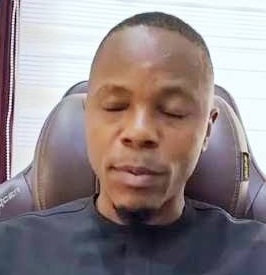
When asked how much does he receive for a month for the chief ministerial duty, Chief Minister, David Sengeh declined to disclose his monthly take-home package.
The move is apparently to avoid public scrutiny about the wealth he has amassed as compared to tasks he carries out.
The Chief Minister is third-in-command in the executive, as he supervises other ministers and provides strategic policy direction of the government. Mr. Sengeh has served for about three years since his appointment in mid-2023 years ago.
Mr. Sengeh was the third SLPP politician to occupy the Office of Chief Minister since the coming to power of President Julius Maada Bio in April, 2018.
He Succeeded Jacob Jusu Saffa and Professor David Francis, the first to serve in that office.
Sengeh’s refusal to tell how much he makes for a month during a media interview with BBC, has raised questions about his appointment as Chief Minister. Other important public officers like the Financial Secretary, the Anti-Corruption Commissioner and even the President of the Republic of Sierra Leone make their salaries public because they are paid out of tax-payers’ money.
Owing to his stance, Many Sierra Leoneans doubt whether he was given an appointment letter or officially recruited apart from going through parliament for approval.
However, many people believe that it is correct to say that he is a casual worker at State House if he is not given an appointment letter, and his refusal to inform the public about his pay deprives the people of vital information.
A popular public view also holds that his appointment by the President may be mutual and not contractual although he went through parliament.
The Office Chief Minister has lately generated huge public debates hinging on its relevance to state governance when there is an Office of Vice President provided for by the Constitution of Sierra Leone, 1991.
The provision in section 54 of the country’s Constitution establishes the Vice President as the principal assistant to the President.
While few Sierra Leoneans see the Office of Chief Minister important and central to the dispensation of government work, others do not see it that way since the Office of Vice President was the one responsible to exercise much of the powers exercised by the Office Chief Minister. Suffice it to say that the creation of the latter leads to the dormancy and near death of the former.
The argument holds true since Mohamed Juldeh Jalloh appears to be the least active Vice President since the advent of modern politics in Sierra Leone.
Mr. Jalloh is not in the moulds of Sorie Ibrahim Koroma, Solomon Ekuma Berewa, Chief Sam Sumana and Victor Bockarie Foh among others since the Office of Chief Minister seemingly overshadows the vice presidency.
Sorie Ibrahim Koroma popularly known as S.I. Koroma served President Siaka Stevens of the APC from 1968-1985 with remarkable achievements.
Those familiar with Sierra Leone’s political history have confirmed that S.I. Koroma was much more active than even Siaka Stevens himself.
Koroma was popularly known for the implementation of the Self-Help initiative in the 1970s and 80s which produced good success stories in agriculture, construction of roads, hospitals, mosques, churches and other facilities. The famous Oil Palm plantation of Magbingbira in PortLoko district is a testament to the legacy of S.I. Koroma.
Solomon Ekuma Berewa was also one of the active Vice Presidents who ably assisted his boss, Tejan Kabba who was President between 1996 and 2007. Berewa played an active and critical role in the consolidation of peace and stability in post-war Sierra Leone.
Berewa attended most of the international conferences that ushered peace to Sierra Leone. It was also the same for Sam Sumana and Victor Bockarie Foh who gallantly stepped into the shoes of their boss in the running of the state.
But, it is a different case for Juldeh Jalloh who rarely performed any legacy-making function because of the creation of the Chief Minister’s office.
The Office of Chief Minister which was later transformed into Prime Minister was popular in the politics of the 1950s with Sir Milton Margai of the Sierra Leone People’s Party being the first to occupy it. The office was dissolved in 1971 when Sierra Leone became a Republic, with Siaka Stevens being the first executive President.
However, a semblance of the Office of Chief Minister was created by the government of former President Ernest Koroma when she appointed Dr. Sylvia Blyden Chief of Staff in the Office of the President. But, Blyden’s administrative and supervisory powers stopped only within the Office of the President.
However, Bio’s chief ministers wield enormous powers almost equal to those of Vice Presidents in any government, one of the factors which has plunged the Office of Vice President into oblivion.
But, the current Vice President is very much complacent about such situation, and Moinina Sengeh continues to influence major government policies while his pay remains a closely guarded secret.
Despite doubt about his monthly pay, David Sengeh has been playing crucial roles in the Bio regime albeit his taunts and retorts to the opposition, All People’s Congress (APC).
Sengeh represented government in signing of the October, 2023 Agreement for National Unity (ANU) which contains very important resolutions on the investigation of the June 24, 2023 elections, the release of political detainees and the discontinuation of politically motivated court cases.
But, none of those resolutions have been sufficiently carried out as the Bio regime could account for only 15 inmates, a clear mismatch with the list of 318 submitted by the APC executive.
The court cases were also not stopped immediately as demanded by the APC and the international community. Despite SLPP’s commitment to the ANU, political cases continued from start to finish.
The resolution on the election probe however remains the most crucial to the ANU since it hinges on good governance, peace, security and stability of the state of Sierra Leone.
The government has also not done well in the implementation of the 80 recommendations meant for electoral reforms. Instead of tabling and opening debates on the ANU for ratification and domestication, lawmakers in the two political parties, SLPP and APC spend too much time for the passage into law of a constitutional amendment bill that will help SLPP tighten its grip on power.
The 2023 ANU gave birth to the Tripartite Committee, a body set up to look into alleged irregularities which marred the 2023 general elections. In spite of the roadblocks along the way, the Tripartite Committee has done its work with 85 recommendations up for implementation.
If everything remains equal, the convergent 80 will be implemented by the government of Sierra Leone in close partnership with the opposition party, APC and Development Partners while the divergent five will be enforced by the international community with the United Nations and ECOWAS playing a lead role.
The full implementation of the 85 tripartite recommendations will see President Bio hand over power to the winner of the 2023 elections and the law falling heavily on those who play a significant role in rigging the election.
Doubt greatly abound on the coming to power of the SLPP if the tripartite recommendations are unreservedly carried out.
Senghen, Within the SLPP ranks, is currently one of the most hated politicians with fingers of blame pointed at him for signing a document that will hunt the party for generations to come. Sengeh is being blamed for appending a signature on a dangerous document without reading between the lines and interpret.
Signing without reading well and digest the content is almost equal to a leap in the dark.