



Sierra Leone’s critical minerals plan risks failing communities if longstanding injustices remain unresolved
By Daniel Sesay
The walls of the only school in Tanyehun Community are cracking – not from age, not from neglect, but from dynamite blasts—violent shockwaves from a nearby mining operation that ripple through classrooms and homes alike. In that same community, representatives from eight nearby villages have gathered to voice their grievances over the mining operations of Ganfeng Lithium Co. Ltd. —only to be ordered by police to disperse. Twice.
These thoughts were fresh in my mind as I sat in an air-conditioned conference room in Freetown, listening to praises being heaped on Ganfeng Lithium Co. Ltd. locally known as Leone Afric Metals by the Sierra Leone government. The event was a stakeholders’ engagement convened to review a new five-year national strategy for critical minerals that the government has been developing. For decades, mining has been promoted as a pathway to economic growth and national development. According to the Ministry of Mines and Mineral Resources and the National Minerals Agency, this new “critical minerals strategy” is meant to position the country to benefit from rising global demand for resources essential to modern technologies— such as energy transition systems, electronics, and infrastructure.

The strategy, they said, goes beyond extraction and export, aiming to drive inclusive economic transformation. The approach is intended to ensure value addition, job creation, stronger linkages between mining and other sectors of the economy, and, more importantly, prosperity for communities.
I listened in silence as speaker after speaker lavished praise on the government for “reforms in the mining sector.” But as the lithium mining operation of Leone Afric Metals in Ngowahun Chiefdom was singled out as particularly praiseworthy, I started to get angry. The disturbing part was not the ambition of the strategy—but the selective amnesia in the room. Namati
Sierra Leone and other NGOs have repeatedly brought this company’s violations of the Customary Land Rights Act of 2022 to the attention of government ministries, departments, and agencies.
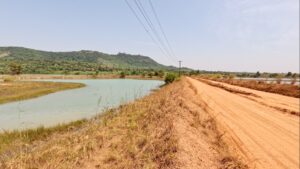
Violations include disregarding the principles of Free, Prior, and Informed Consent (FPIC), imposing poorly drafted and one-sided lease agreements, and failing to provide adequate compensation for damaged crops. Rent payments are reportedly routed through third parties, creating opportunities for fraud and corruption. Families lack clarity on the size of land taken from them, as proper surveys have not been conducted in accordance with the law.
Intimidation by police and local authorities has been reported, while environmental impactspollution and unsafe blasting near settlements—are increasingly evident. The Customary Land Rights Act of 2022 and the Mines and Minerals Development Act of 2023, meant to safeguard communities and restore balance to the sector are largely being ignored.
However, neither the Ministry of Mines and Mineral Resources nor the National Minerals Agency has shown any inclination to address these issues. In other parts of the country, crop owners in Moyamba District have filed a lawsuit against Jinshi Mining (SL) Ltd., alleging the company failed to pay compensation for crops destroyed during its mining operations on their farmland. For years, landowning communities in Marampa and Maforki Chiefdoms have raised concerns over the massive bauxite-mining operation being undertaken by CTC Mining Ltd. in Port Loko District.

The longer these violations are overlooked, the more the poorest members of those landowning communities continue to bear the social, environmental, and economic impacts. The fact that these issues were not at the center of the critical minerals strategy discussion is deeply concerning, to say the least. Can such a strategy genuinely deliver inclusive prosperity when longstanding grievances remain unresolved? Or does it risk becoming yet another policy framework that prioritizes revenue generation and foreign investment over the rights and well- being of Sierra Leoneans?
A credible strategy cannot be built on a foundation of exclusion. Yet evidence suggests that key decisions—such as the signing of lease agreements—are often made far from affected communities, sometimes in private residences of officials, without the knowledge or consent of the people whose land is at stake. At the same time, ecologically sensitive areas, including forest reserves like Kangari Hills and Kambui Hills, continue to be allocated for mining concessions.
For too long, mining in Sierra Leone has followed a predictable pattern: grand promises at the top, while those at the bottom suffer. The new critical minerals strategy risks becoming just another chapter in that story—another document that looks impressive on paper but changes nothing on the ground.
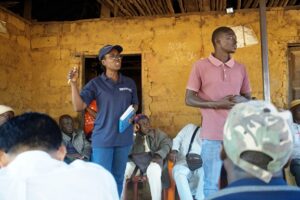
Civil society organizations are therefore calling on the President, the Ministry of Mines, and the National Minerals Agency to take immediate and decisive action. This must begin with addressing the grievances of communities affected by mining activities, including those in Ngowahun Chiefdom. A real commitment must be made to confronting the injustices that have defined the mining sector—and finally putting community people at the center of the development agenda.